COEY Cast Episode 140
MiniMaxed Out: Open Weights, Agent Teams, and AI Ads
MiniMaxed Out: Open Weights, Agent Teams, and AI Ads



Episode Overview
03/23/2026
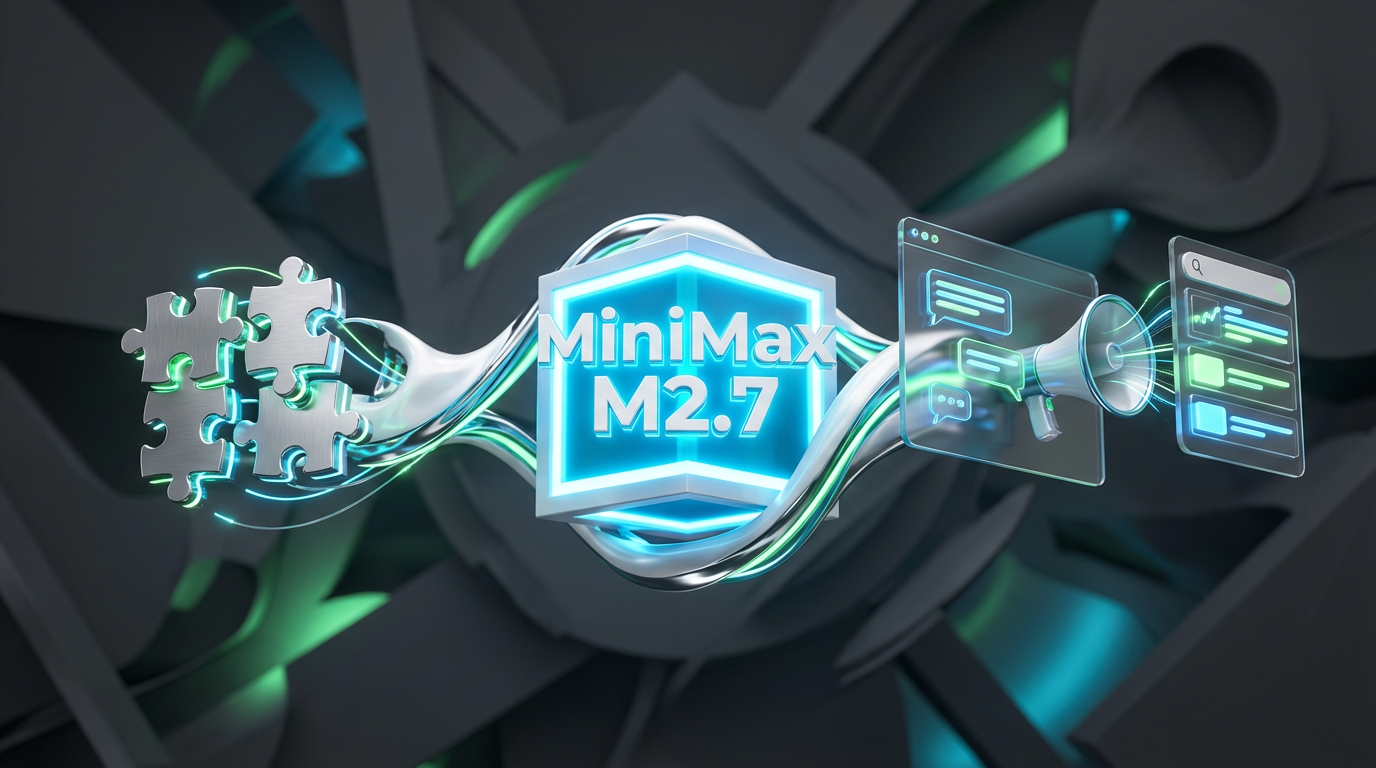
Open weights are getting real, agent teams are getting practical, and generative interfaces are starting to shape ad distribution. This conversation tracks why MiniMax M2.7 matters beyond benchmark hype, especially for teams that want more control over internal workflows without betting everything on one closed vendor. It also breaks down where multi agent coding systems like Codex can actually help and where they just create expensive digital meetings. The bigger shift is what happens when the same AI interface that helps create content also decides what gets surfaced to users. For creators, marketers, and media operators, the advantage comes from building structured workflows, keeping humans near judgment calls, and staying machine readable without becoming generic.

Episode Transcript
Hunter: Happy Monday, March 23rd, 2026, and welcome back to COEY Cast. It is apparently Puppy Day, which feels correct because the AI news cycle has the same energy as six puppies and one unplugged router. I’m Hunter.
Riley: And I’m Riley. Also, yes, this episode was assembled by our weird little machine orchestra, so if a bot somewhere spiritually trips over a cymbal, we respect the art and keep rolling.
Hunter: Fully synthetic assembly line, human taste still on quality control. That’s the deal. And today we’ve got a really interesting one because the story is not just, hey, new model dropped. The story is open weights getting a lot more serious, agent teams getting more real, and ad distribution itself starting to look generative.
Riley: Yeah, this one feels like three plotlines crashing into each other. MiniMax M2.7 shows up and people on X are basically like, wait, hold up, this thing is actually cooking. Then OpenAI keeps pushing Codex toward multi-agent engineering. And then the ad chatter inside ChatGPT is like, oh cool, now the machine that helps write the ad may also decide where the ad goes. Love that. Terrifying. Love it.
Hunter: Totally. Let’s start with MiniMax M2.7 because that feels like the clearest model-launch story right now. The excitement online is basically that it feels frontier-adjacent without forcing you into a permanently rented relationship with one closed vendor.
Riley: Which, honestly, marketers should care about way more than leaderboard chest-thumping. If an open-weights model gets close enough, the conversation changes from who has the fanciest demo to who can actually build a system they control.
Hunter: Exactly. If I’m a company looking for leverage here, my smartest first move is not, let’s rip everything out and self-host the universe by Friday. It’s more like, pick one high-friction internal workflow and make it your proving ground. Something like campaign QA, content repackaging, reporting summaries, maybe internal coding support for marketing ops.
Riley: Mmm. Not the whole castle. Just one room.
Hunter: Right. One room with receipts. You want an eval set, clear success criteria, and human review. Open weights are attractive because they give you portability. If M2.7 is strong on coding, now you can start thinking about internal agents that touch your systems, help write automation scripts, or connect all the annoying little glue jobs in your stack.
Riley: And that glue job category is so underrated. Everybody wants the cinematic demo. Meanwhile the real pain is, can this thing fix the broken parser, update the content schema, clean up metadata, and stop making my ops person cry into a dashboard.
Hunter: That’s the whole game. But, and this is the part people skip on X because it gets fewer likes, open models still hit a rude awakening when you ask them to become reliable coworkers instead of shiny demo goblins.
Riley: Say goblins again.
Hunter: Demo goblins.
Riley: Thank you. And yes. Because “we’ll just run it ourselves” sounds cool until security, observability, governance, and maintenance walk into the room like uninvited wedding guests.
Hunter: Totally. Self-hosting can become a lovable little budget-eating monster if you don’t know what you’re doing. The model cost might go down, but the ops burden goes up. You need logging, permission boundaries, fallback behavior, versioning, and somebody who can actually maintain the thing.
Riley: Also, a lot of teams confuse privacy with maturity. Local or open does not automatically mean enterprise-ready. Sometimes it means congrats, you now own your own weirdness.
Hunter: That’s a great way to put it. Open gives you control, but control is work. So the sane middle path for a lot of orgs is what we’ve been talking about lately with local-first and frameworks like OpenClaw. You can get more privacy and routing flexibility without pretending everyone wants to debug agent memory at eleven at night.
Riley: Yeah, if your hobby is YAML and emotional resilience, go off. But for most teams, the real win is hybrid. Use open where it gives you leverage or lowers long-run cost. Use hosted systems where reliability and convenience are worth paying for. You do not get bonus points for ideological purity.
Hunter: Amen. And this ties directly into the Codex update. Because the multi-agent angle is powerful, but it also invites a classic mistake, which is assuming more agents always means more productivity.
Riley: Ah yes, the digital committee. My favorite genre of waste.
Hunter: Exactly. If one coding system can spawn sub-agents with separate memory, that’s useful when the work can actually be decomposed. Like one agent handling analytics scripts, another checking data quality, another packaging outputs for a dashboard, another writing tests.
Riley: That part I buy. Especially for marketing ops. Like, one sub-agent audits your campaign naming mess, another checks landing page tracking, another maps content into a CMS format, another drafts summaries for stakeholders. That’s real.
Hunter: Yep. Parallelism matters when tasks are separable and outputs can be validated. But when agent swarms start debating vague strategy, rewriting each other, or duplicating effort, you’ve basically invented a very expensive meeting.
Riley: Which, to be fair, is also a historic tech pattern. We had browser tabs. Then Slack channels. Then Notion docs. Now we have agent committees. Humanity keeps finding new ways to multiply context loss.
Hunter: That’s strong. So I’d say use multi-agent setups for bounded work with clear handoffs. Code generation, testing, structured research, metadata prep, reporting assembly, localization checks. But leave brand positioning, spicy messaging, crisis response, and nuanced judgment to one competent human with a pulse.
Riley: Thank you. Because some jobs still want a nervous system. If the task involves taste, politics, ambiguity, or “will this make us look dumb on the internet,” a human should stay extremely nearby.
Hunter: Very nearby. And that gets us to the ads story, which I think is sneaky big. The chatter about OpenAI testing an Ads Manager product and broader ad integrations inside ChatGPT matters because it suggests the interface is becoming both the creative assistant and the distribution layer.
Riley: This is the part that makes my little marketer brain sit up. If generative interfaces start handling discovery, placement, and maybe even commerce, then we are not just making better assets anymore. We are designing for machine-mediated journeys.
Hunter: Exactly. The customer path starts looking less like a funnel and more like a conversation with a machine that decides what gets surfaced, summarized, or recommended.
Riley: Which means brand strategy changes. You’re no longer only optimizing for a person scrolling. You’re optimizing for a model that may paraphrase you, compare you, compress you, and maybe flatten your nuance into oatmeal.
Hunter: That’s the risk. Brands need structured truth, strong product data, clear claims, memorable language, and consistency across surfaces. If AI becomes the layer between you and the audience, then being machine-readable without becoming generic is suddenly a huge competitive advantage.
Riley: Ooh, say that again. Machine-readable without becoming generic. That’s the whole assignment.
Hunter: And Google’s reported opt-out path for generative AI in Search reinforces the point. Platform control is still platform control. Visibility can be granted, shaped, throttled, or revoked upstream.
Riley: Yeah, that one is such a reminder. Publishers and brands are like, wait, we’d love a choice, actually. And the platforms are like, absolutely, here is a choice wrapped inside our existing power structure.
Hunter: Exactly. So brands should prepare by diversifying traffic sources, strengthening owned audiences, and making sure their content systems are structured enough to survive whatever the discovery layer becomes.
Riley: And maybe don’t build your entire future on one giant platform pinky promise. Just a thought.
Hunter: Just a thought. Also, quick side note, the rest of AI news remains completely unwell. We’ve got an AI cow herding startup worth billions now, which means somewhere a founder said “Cowgorithm” in a serious investor meeting and won.
Riley: Honestly iconic. Also the dad who turned piano practice into basically a live AI-powered rhythm game for his kid? That’s the version of AI I want more of. Less fake thought leadership, more making practice feel like Guitar Hero for tiny musicians.
Hunter: Totally. And then there’s Larry, the AI crypto anchor in Japan, doing nonstop streams with jokes. Which, if I’m being honest, is either the future of media or a very specific warning.
Riley: Both. It’s both. Also weirdly relevant to this show because it proves the format layer is getting automated too. Voice, scripting, personality, publishing cadence. The stack is all moving.
Hunter: Which brings us to the practical forecast. If you’re AI-positive but not totally delusional, what should you plan for over the next year or two? My answer is: expect stronger open models, more agent teamwork, more generative discovery, and more pressure to build governance into the workflow instead of taping it on later.
Riley: Mine is: stop shopping for one god-model and start building a system. Pick the best setup for each job. Maybe open for internal workflows. Maybe hosted for high-reliability tasks. Maybe local-first where privacy matters. But the winners are gonna be the teams who can route work intelligently and keep humans near the sharp edges.
Hunter: That’s it. Model choice matters, but workflow design matters more. Human review matters more. Operational sanity matters more.
Riley: Put that on a hoodie. Also maybe put a puppy on it since it’s Puppy Day.
Hunter: I’d wear it. Alright, that’s our Monday sprint through MiniMax M2.7, multi-agent Codex, ads inside generative interfaces, and the increasingly weird future of search and discovery.
Riley: Thanks for hanging with us on COEY Cast. Go give a puppy some respect today, and maybe also give your automations a human approval layer. Same general vibe.
Hunter: Subscribe if you haven’t already, and check out COEY.com slash resources for AI news and updates.
Riley: We’ll catch you later.