Rewiring the Marketing Machine: How AI’s Unbundling Unleashes Infinite Automation
Rewiring the Marketing Machine: How AI’s Unbundling Unleashes Infinite Automation
July 16, 2025
Why the Stack is Splintering (and Why That’s a Good Thing)
There was a time—a whole, like, three years ago—when the phrase “end-to-end AI solution” made founders’ eyes light up. The vision: one monolithic platform to generate your content, strategize your outreach, manage your customer data, and even wiggle its robotic fingers at the creative. Now, suddenly, marketing pros are watching with bewilderment as AI-powered apps unbundle faster than a vintage iPod playlist.
Product launches clog Twitter/X and LinkedIn feeds with AI copilots for social, niche generators for memes, ultra-personalized email writers, and multimodal content remixers. Open-source model releases are accelerating, new APIs pop up weekly, and silicon-based upstarts challenge old-guard clouds with uncanny results. Old platform loyalty is a punchline; workflows adapt, not the other way around.
But what lies beneath this chaos? For businesses serious about automation, especially in marketing and content, this “great unbundling” is not mere trend—it’s an inflection point that quietly rewrites the rules of efficiency, oversight, and creative scale.
From Monoliths to Microservices: The Rise of the Click-Stack
Once, your stack was your strategy. The phrase “marketing automation” meant licensing something big and expensive, wrangling with IT to force legacy tools to speak, and quietly dreading quarterly calls with sales reps who charged for every integration. In this world, AI was a feature, maybe a chatbot bolt-on or a suggestion box inside your CMS.
Those days are fading. Now, powerful narrow models and clever APIs disassemble the value chain—each function, each workflow, each data handshake up for reimagining. Even some of the boldest automation suites admit it: keeping speed with specialized AI startups is a losing game.
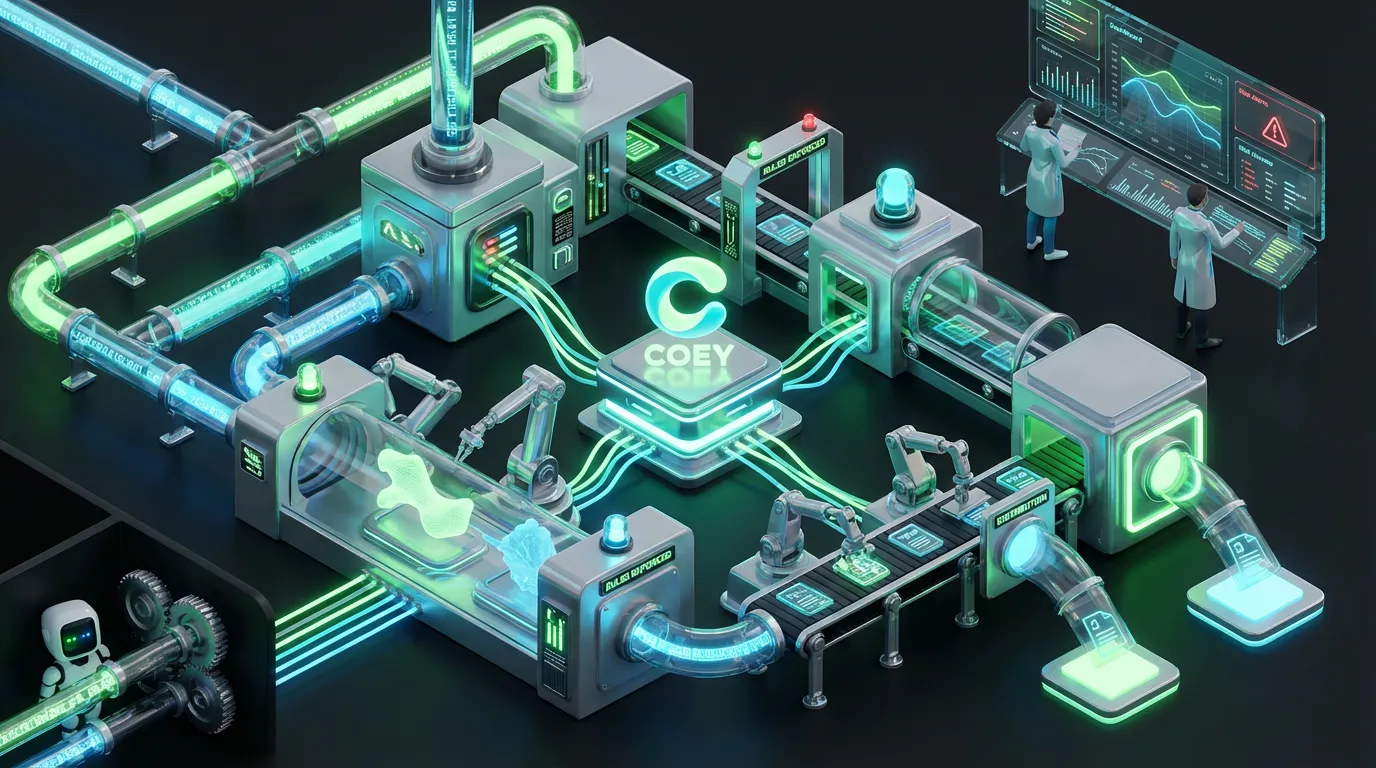
What’s replacing the monolith? A “click-stack” of composable tools, connected by no-code and low-code magic, optimized by AI middlemen—each one an expert in its specific swim lane. The modern marketing technologist is part-integrator, part-conductor, orchestrating dozens of services that jostle, prompt, and compete.
| Old Approach | Modern Reality |
|---|---|
| All-in-one automation suits | Specialized modular AI bots |
| Proprietary walled gardens | APIs and open standards |
| Script-based integrations | No-code drag-and-drop connectors |
| Monthly lock-in contracts | Pay-per-use, mix-&-match pricing |
It’s not just a shift in tooling. Deep under the hood, these changes realign who controls what—and where new risks and creative leverage appear.
What’s Fueling the Unbundling? Four Catalysts You Can’t Ignore
Four fundamental shifts are colliding to power the current AI ecosystem’s fragmentation:
- Explosion of Open-Weight Models: Open-source AI models have leapfrogged ahead in quality, responsible stewardship, and enterprise features. Companies spin up private endpoints, reducing dependency on a single vendor’s roadmap or price hikes.
- Low-friction Integration Platforms: Modern no-code tools allow even non-technical staff to stitch together AI services, databases, analytics, and creative outputs. Building a “once-impossible” workflow is now afternoon work.
- Benchmark Churn: Leaderboards change weekly as new models top old ones in text, vision, or audio tasks, making it impossible for suite vendors to “own” the best engine for long.
- Composable UX and Meta-APIs: User experience is less about where you click and more about how microservices interoperate—whether it’s a Chrome extension, Slack prompt, or RESTful API call. The AI is everywhere, not locked inside any one dashboard.
Use Case: Automating the Modern Content Pipeline
Let’s look at a marketing team orchestrating a product launch. In the bad old days, you’d manage briefs, draft copy, get design assets, generate social snippets, assign reviews, and stagger launch posts—right down a clunky pipeline of handoffs and human bottlenecks.
Now? The click-stack might look like this:
- Brief: A strategist enters campaign data into a slick spreadsheet or Notion doc.
- Ideation: A language model auto-generates creative directions based on persona data and trending search queries, then fine-tunes for past brand tone using custom vectors.
- Asset Creation: Art gen API creates dozens of visual variations—images, videos, memes—auto-matched to copy and sized for each channel.
- Review Loop: An integration platform routes outputs for feedback; watermarking and approval signatures happen through a Slack/Teams flow, tracked in real time.
- Distribution: Another AI-driven connector publishes, schedules, and personalizes assets across channels, optimizing for performance as engagement rolls in, flagging anomalies for human review only when something weird (or wonderful) happens.
The result is not just speed—it’s dramatically increased campaign iteration, a/b testing at invisible scale, and creative that stretches with every new model drop.
The Myth of “Set It and Forget It”: Oversight Still Matters
Blissful marketing automation is never actually “automatic.” Here come the caution flags:
- Model Drift: That content generator you wired in? When its open-weight sibling improves, but your workflow sticks to the old model, quality and compliance can slip.
- Data Silos Return: Counterintuitively, hyper-specialized tools can make it harder to spot redundancy, inconsistencies, or privacy snafus—if you don’t architect connective tissue from day one.
- Brand Risk: Automated outputs boost quantity, but left unchecked, they can drift off-brand, say something embarrassing, or even hallucinate. Creative review is easier than ever to automate—but not to skip entirely.
- Workflow Fragility: As service-by-service connections deepen, a tweak in one API or permissions structure can ripple through dozens of automations. Every click-stack is a snowflake. If you don’t monitor actively, breakage will sneak up on you.
Smart teams build in real-time feedback loops, multi-model redundancy, and have “kill switches” for any escalating weirdness, just in case the robots get a little too creative.
Monetizing the Click-Stack: The New Creator Economy Engine?
Unbundling doesn’t just empower big-brand marketers. Indie creators, solo businesses, and upstart agencies now wield “enterprise-class” automation without ever talking to an IT department. By strategically automating content production, A/B testing, analytics, and outbound messaging, these nimble players often out-iterate larger teams.
Consider:
- A TikTok influencer auto-generates dozens of video hooks daily, using multimodal AI remixers chained via no-code connectors, iterating faster than any traditional agency.
- A SaaS startup pipes user-generated support tickets straight to language models for instant triage and response, freeing their human team to focus on edges and escalations.
- Niche e-commerce sites layer product photo gen, dynamic copy, and real-time personalized retargeting—each spun up via specialized plug-ins and swapped seamlessly as benchmarks shift.
The agility unlocked by this ecosystem is more than time-saving—it lowers the barrier to entry and tips the balance in favor of the quick, experimental, and hyper-relevant.
What to Do (and Not Do) As You Build Your Own Stack
Do:
- Embrace smaller, best-in-class tools for each workflow piece, and expect to reshuffle quarterly as models and APIs improve.
- Build monitoring layers to catch failures, model drifts, or compliance breaches before they cause trouble.
- Empower non-technical staff by giving them access to visual/no-code tools, so they can adapt integrations on the fly.
- Stay close to the movement of benchmarks, and budget for experimentation—today’s leader may be overtaken next month.
Don’t:
- Expect set-it-and-forget-it results—active management and iteration are necessary to ensure quality and brand alignment.
- Underestimate the security or privacy impact of sprawling toolchains and overlapping data flows.
- Lock yourself into all-in-one tools out of fear of complexity; agility is the best bet in a market this fast-moving.
The Only Constant: Change
Automation in marketing and content is no longer a destination; it’s a continuous, hands-on adaptation. The “AI-powered” label is not enough. Thoughtful orchestration, oversight, and a willingness to swap, connect, and retire tools as things change will define the winners of the next wave.
The age of the monolith may never return. The great unbundling is here—embrace it, wrangle it, and let your stack become your strategic advantage. Just don’t take your eyes off the dashboard for too long.