COEY Cast Episode 141
Luma UNI1, Pika 2.2, and ElevenLabs Raise the Floor
Luma UNI1, Pika 2.2, and ElevenLabs Raise the Floor


Episode Overview
03/24/2026
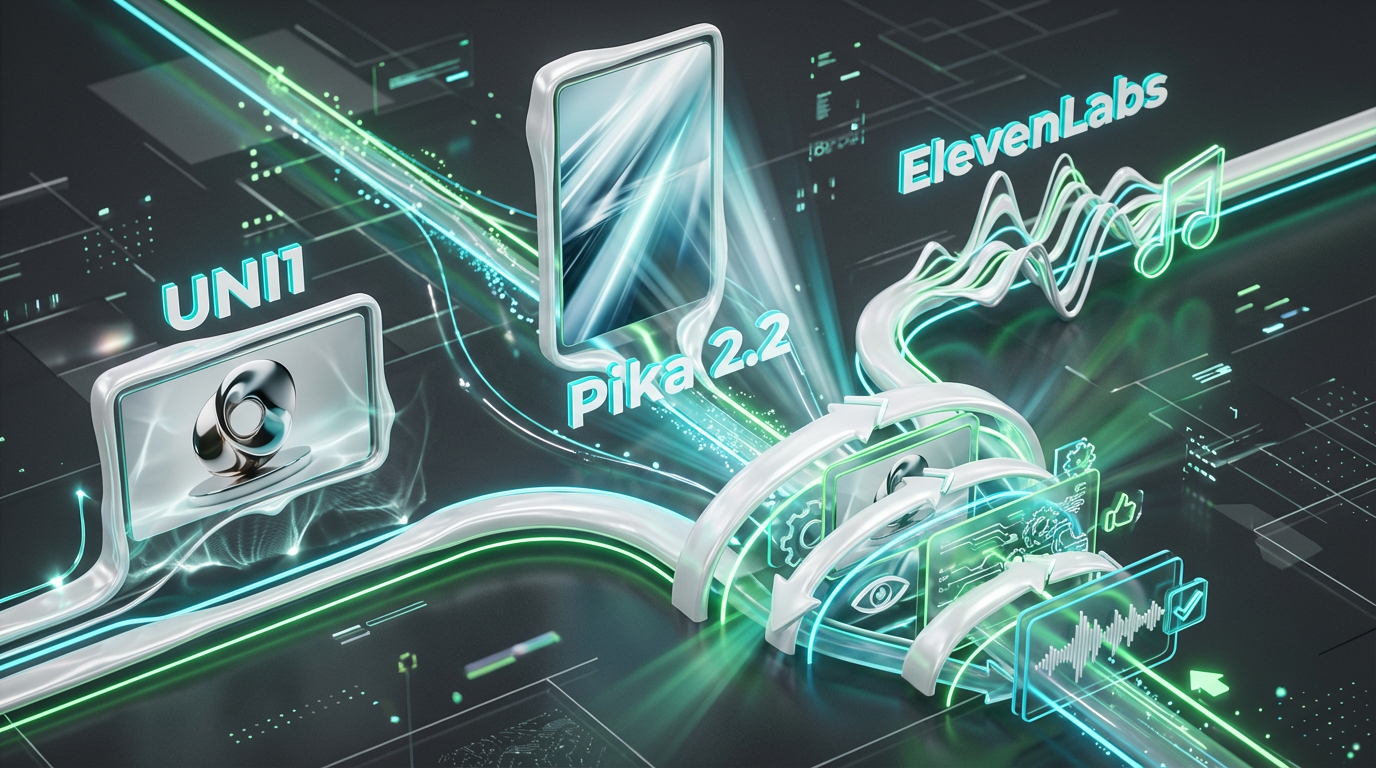
Luma UNI1, Pika 2.2, and ElevenLabs all point to the same shift: polished creative output is getting faster, cheaper, and easier to slot into real workflows. Better image reasoning means fewer prompt gymnastics and more usable first drafts. Stronger short form video generation makes social production more reliable at the speed marketing teams actually need. ElevenLabs is pushing beyond voice tools into marketplace infrastructure, which puts creator payouts, licensing, and trust at the center of the audio conversation. The real story is not magic buttons. It is what happens when content generation gets easy and the bottleneck moves to taste, approvals, governance, and process. The winners will be teams with cleaner systems and better human judgment.
Episode Transcript
Hunter: Happy Tuesday, March twenty fourth, twenty twenty six, and apparently happy Chocolate Covered Raisins Day, which feels like a holiday invented by an AI that lost a brand brief halfway through. You are listening to COEY Cast, the podcast that was assembled by a chaotic little orchestra of machines, automations, and synthetic duct tape. I’m Hunter.
Riley: And I’m Riley. Honestly, that intro tasted like a vending machine in the best way. Also yes, this whole episode was basically produced by robots with supervision, which means if it gets weird, that is not a bug. That is the art direction.
Hunter: That is the spirit. Alright, today we’ve got a really interesting cluster of stories because they all point at the same bigger shift. Luma drops UNI-one, Pika rolls out Pika two point two, and ElevenLabs keeps expanding from voice tool into full creator economy machine with a music marketplace and reported payouts around eleven million dollars to voice creators. Different categories, same pressure. Creative production is getting faster, cheaper, and way more modular.
Riley: Yeah, and the vibe online is very much, oh cool, now everybody can ship polished content at goblin speed. Which is exciting, but also slightly terrifying if your whole competitive advantage was, um, looking competent on the internet.
Hunter: Exactly. Let’s start with UNI-one because that’s the one getting framed like it can think while making pixels. That’s a big claim. And to be fair, the interesting part is not just image quality. It’s that people are describing better reasoning, stronger prompt adherence, and more usable branded outputs without as much prompt gymnastics.
Riley: Which marketers love, by the way. Nobody in a real marketing team wants to become a prompt poet. They want to say, make me a luxury product visual with clean typography, a believable layout, and a campaign feel that doesn’t scream AI slop, and then move on with their life.
Hunter: Right. But here’s my pushback. Even if UNI-one is genuinely better at interpreting intent, I don’t think marketers should expect the model to suddenly become their strategist. It can get you prettier first drafts, maybe smarter compositions, maybe fewer rerolls. But the real bottleneck moves immediately to taste, approvals, and decision-making. Once pixels are easy, judgment becomes expensive.
Riley: Mmm. I agree, but I’ll challenge you a little. Better reasoning in the model does matter because it shrinks the gap between idea and usable draft. That changes who gets leverage. The scrappy social lead with good instincts can suddenly punch way above their weight. They don’t need a whole design queue just to test three campaign looks before lunch.
Hunter: That’s true.
Riley: But, and this is where it gets messy, the brand team and legal team gain power too. Because if generation gets cheap, volume explodes. Suddenly you do not have one concept to review. You have fifty. So the workflow win can become a governance nightmare if the org is not set up for it.
Hunter: Yes. That’s the hidden tax. AI does not remove process. It exposes bad process. If your approval system already feels like medieval parliament, UNI-one is not saving you. It’s just delivering a larger stack of things for three stakeholders to say maybe to.
Riley: Medieval parliament is so real. Also, this connects to stuff we’ve been talking about lately around faster video and better reasoning. The pattern is kind of obvious now. Generation speed keeps improving, but humans are still the choke point for brand risk, messaging, and final taste. Which is fine. Human in the loop is still the move.
Hunter: Totally. And that’s why I think UNI-one matters less as a magic art machine and more as a workflow upgrade. If it really is cheaper per output and better at following complex briefs, then creative ops teams can run more concept testing, more ad variations, more rapid mocks without pulling in five tools and a prayer.
Riley: Alright, but let’s bring Pika two point two into this because that one feels more instantly legible to marketers. Better ten second clips, cleaner ten eighty, improved motion, lighting, consistency. That’s not abstract. Social teams understand that in their bones.
Hunter: They do. Pika two point two feels like a very practical update. It’s not saying, behold, a new intelligence paradigm. It’s saying, hey, your short form promo video has a better shot at not falling apart halfway through. And honestly, that matters more in day to day marketing.
Riley: Fully. Because good enough for marketing is not the same as perfect cinema. Good enough means the clip looks intentional on a phone screen, survives compression, doesn’t have cursed limb energy, and can be turned around fast enough to catch the moment before the meme is already dead.
Hunter: Exactly. That’s a great definition. Most brands are not trying to win an Oscar with a six second teaser. They’re trying to stop the scroll, land the message, and stay on brand. So cleaner motion and more reliable outputs are huge because reliability is what turns a toy into a workflow.
Riley: Though I do think there’s a hilarious new danger here. If every brand can generate suspiciously competent video, then average quality rises and distinctiveness drops. We may be entering the era of everyone having decent visuals and nobody having an actual point of view.
Hunter: That is brutally accurate. The floor rises. The ceiling stays human. If tools like Pika make decent execution available to everybody, then creative advantage shifts even harder toward concept, timing, audience insight, and distribution. You cannot prompt your way into cultural relevance.
Riley: Say that louder for the startup founders in grayscale hoodies.
Hunter: Also worth noting, this isn’t happening in isolation. Over the last week we’ve seen more movement around reasoning, open workflows, and marketing orchestration more broadly. That matters because the story is no longer just one better model. It’s stacks. Teams are mixing image generation, video generation, voice, review layers, and automation tools into one pipeline. Faster media models from different vendors keep showing up, and the conversation is shifting from wow to okay, where does this slot into production. At the same time, there’s still a lot of noise around local and open setups for privacy and control, while commercial platforms keep winning on polish, compliance, and speed to deployment. Then you layer in legal pressure, trust issues, and brand governance, and suddenly the winners are not necessarily the teams with the flashiest demo. They’re the teams with the cleanest workflow and the fewest handoff disasters. That’s the real ecosystem story right now.
Riley: Yeah, and online chatter totally reflects that. People are hyped, but they’re also comparing cost, quality, and whether these tools actually fit inside an existing content machine. Nobody serious cares about model mythology if the export breaks, the approvals stall, or the output still needs a human rescue mission.
Hunter: Which brings us to ElevenLabs. This one is super interesting because it is not just a model update story. It’s a market structure story. Voice creators getting paid, music marketplace launching, more infrastructure for licensing and distribution. That starts to look like an actual creator economy layer instead of just a feature add.
Riley: I’m torn on it. On one hand, I love seeing creators get paid through these systems. That’s better than the old fantasy where platforms just absorb all the value and call it innovation. On the other hand, whenever talent becomes a marketplace unit, I start hearing the faint sound of spreadsheets breathing.
Hunter: Fair. There is always a risk that creative labor gets flattened into interchangeable inventory. But if ElevenLabs is building a marketplace where voices and music can be licensed cleanly and creators get recurring upside, that is still a meaningful step. It’s way healthier than a gray market of random cloning and rights confusion.
Riley: Yes, and for marketers, podcasters, and global content teams, the appeal is obvious. Dubbing, narration, multilingual campaigns, scalable audio versions, custom music beds. That is real operational leverage. But trust becomes the whole game. If audiences feel like every ad voice is synthetic wallpaper, the human touch becomes luxury packaging.
Hunter: That’s the tension. Synthetic audio can absolutely improve reach and efficiency. But brands need rules. Where do we use synthetic voice, where do we use a real person, how do we disclose, how do we keep it aligned with the brand’s actual character. Because once audio gets frictionless, overuse is the easy mistake.
Riley: Basically, just because you can auto-generate a heartfelt message in twelve languages does not mean you should turn your customer relationship into an airport announcement.
Hunter: That should be on a poster.
Riley: Thank you. I contain multitudes.
Hunter: There’s also this bigger open versus closed question floating around right now. People on X keep cheering local-first and open stacks as the safer long term path, and I get it. Control, privacy, less vendor lock-in, all good things. But for most organizations, open wins when you have a real need for custom workflow control or sensitive data handling. It loses when you need something working fast, with support, inside the quarter.
Riley: Exactly. Open is amazing if you actually want to build. It is less amazing if your team says we want sovereignty and what they mean is we want a miracle by Friday with no ops burden. Be serious.
Hunter: Be serious is the right phrase. Most companies are not choosing between ideology and ideology. They’re choosing between speed and control. Usually the smartest move is hybrid. Use commercial tools where polish and reliability matter. Bring pieces in-house where data sensitivity, cost control, or repeatable automation justify the overhead.
Riley: Which, by the way, is why the next two years are going to be so funny. Everybody says they want AI-native workflow redesign. A lot of them are actually going to produce a beautiful graveyard of pilots, copilots, executive demos, and abandoned dashboards.
Hunter: Oh, absolutely. My honest forecast is that expensive pilot pile comes first for most organizations. Real redesign only happens when someone maps the actual work, removes handoff chaos, and builds around human review instead of pretending autonomy solved management.
Riley: Mmm, yes. The future is not one giant magic button. It’s more like, can your team move from brief to asset to voiceover to edit to approval without twelve tabs and emotional damage.
Hunter: That’s the dream.
Riley: Also can we take a second for the side quests happening in AI culture right now? We’ve got dramatic fruit and vegetable videos making people emotional for produce. We’ve got smart farming with a so-called cowgorithm. We’ve got a dad turning his daughter’s piano into basically musical Guitar Hero with ChatGPT. This industry contains both the future of media operations and, um, tragic cucumber cinema.
Hunter: Honestly, that is the correct ratio. Enterprise automation on one side, emotionally devastating eggplant lore on the other.
Riley: And somehow both are signal. The weird stuff matters because it shows how fast these tools are becoming expressive, personal, and embedded in everyday life. Not just in agencies and studios.
Hunter: That’s a great point. Alright, final takeaway. UNI-one suggests image generation is getting more strategically useful, not just prettier. Pika two point two shows video quality is becoming dependable enough for real marketing workflows. ElevenLabs is turning synthetic audio into a more structured economy, not just a toolbox. But in every case, the advantage goes to teams that combine automation with judgment.
Riley: Yep. If you’re a creator or marketer listening to this, don’t ask, can AI make the asset. Ask, where does it remove drag, where does it create review risk, and where does my taste become more valuable because everyone else got the same shiny button.
Hunter: That is COEY Cast for this Tuesday, March twenty fourth, also Chocolate Covered Raisins Day, so please celebrate responsibly and maybe do not let an agentic system pick your snacks.
Riley: Thanks for hanging with us. Go check out COEY.com slash resources for AI news and updates, and make sure you subscribe so the robots know you care.
Hunter: Thanks, everybody.
Riley: Catch you next time.