COEY Cast Episode 143
Open Mic Night: Lyria, PrismAudio, and Mistral
Open Mic Night: Lyria, PrismAudio, and Mistral


Episode Overview
03/26/2026
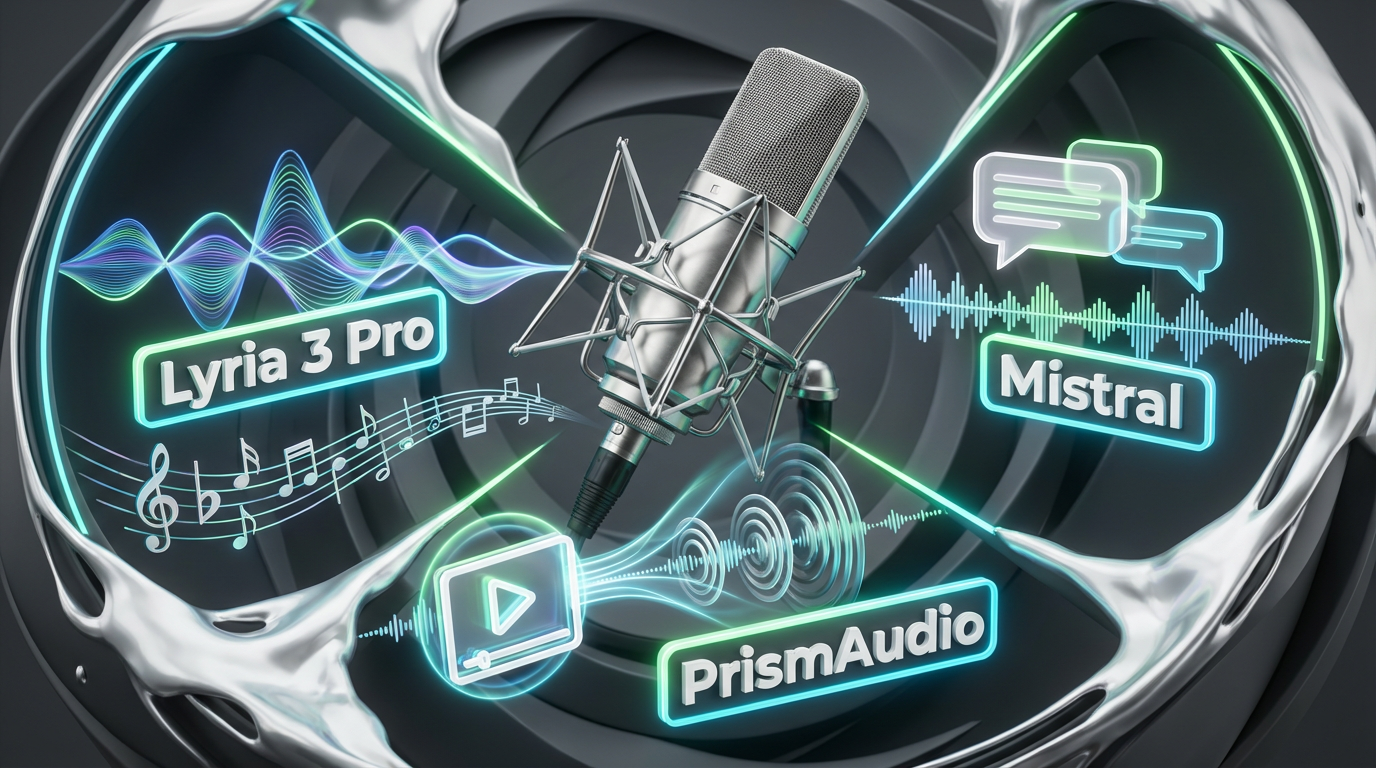
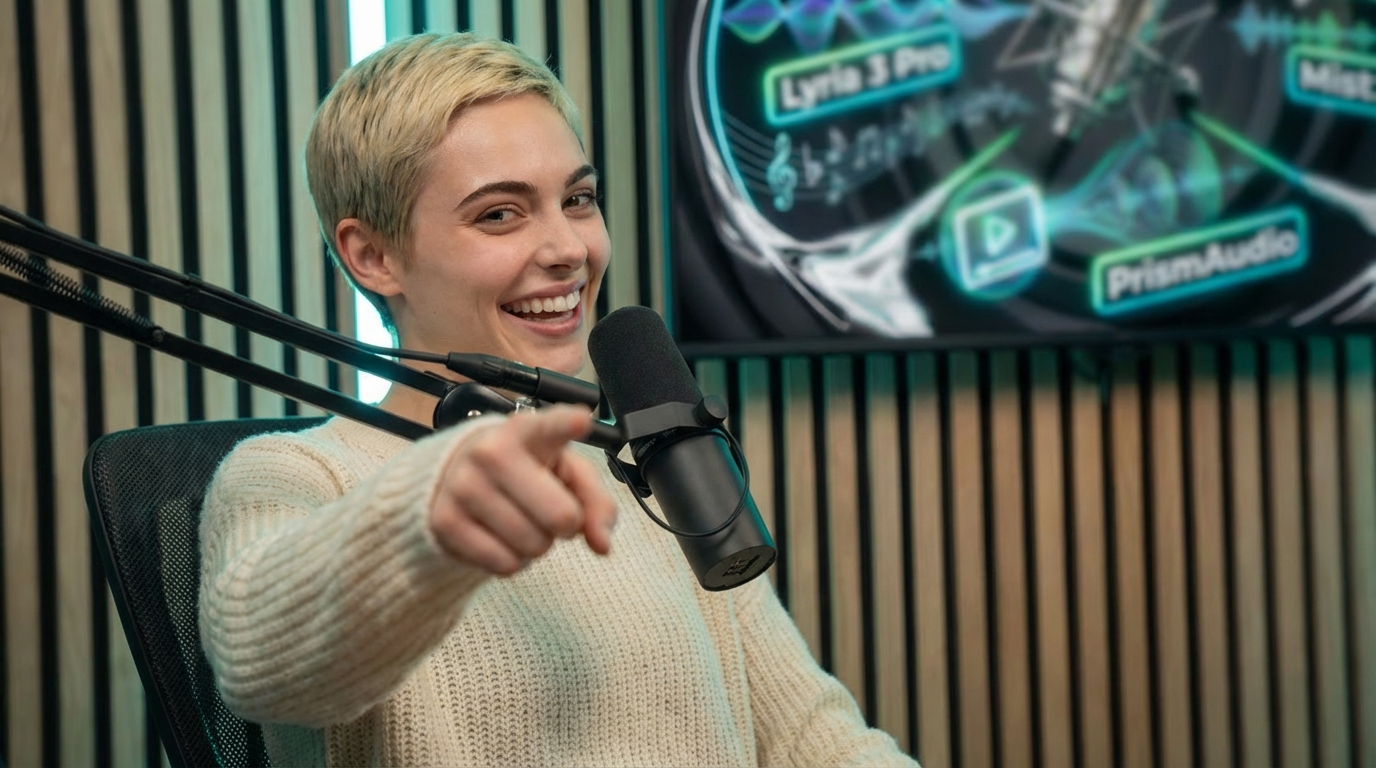
Audio just jumped from nice to have to workflow priority. Google’s Lyria 3 Pro pushes AI music closer to usable campaign assets with longer, more structured tracks that fit real production needs. Open source PrismAudio tackles one of post production’s most annoying problems by matching sound effects and environmental audio to what is actually happening on screen. Mistral adds another important signal with open speech, giving teams more control over voice pipelines, localization, and costs. The bigger story is not just better demos. It is how brands, creators, and media teams build smarter audio systems that save time while keeping humans in charge of taste, trust, approvals, and final creative judgment.
Episode Transcript
Hunter: It is Thursday, March twenty sixth, twenty twenty-six, which apparently is Make Up Your Own Holiday Day, so honestly, perfect vibes for COEY Cast because half the AI world wakes up and invents a new category before lunch. I’m Hunter.
Riley: And I’m Riley. And yes, this episode was assembled by an unruly little orchestra of AI tools, automations, synthetic helpers, and probably one digital gremlin who touched a fader he was not cleared to touch.
Hunter: We let the robots cook, then we taste the sauce.
Riley: That is such a weird sentence. But also true. Let’s do it.
Hunter: So the big thing today is audio. And not fake futuristic audio, like, oh wow it can hum a melody. I mean workflow audio. Google’s Lyria three Pro, PrismAudio from Alibaba’s ModelScope world, and Mistral pushing further into open speech. This is one of those weeks where audio stops feeling like the side quest.
Riley: Yeah. It’s not just, can AI make a song. It’s, can AI remove the annoying parts of production that make teams stall out in post. Because everybody loves AI video until they remember sound exists.
Hunter: Exactly. Silent AI video has always been the friend who says, I’m almost ready, and then still needs music, effects, voiceover, cleanup, timing, approvals, and three emotional support exports.
Riley: Wait, emotional support exports is too real.
Hunter: Lyria three Pro is the flashy headline because Google moved from those shorter music generations into longer tracks, up to around three minutes, with more structure. Intro, verse, chorus, that kind of thing. That matters more than people think.
Riley: Mm, say why though. Because I can already hear listeners going, cool, the robot made a song, now what.
Hunter: Because most brand teams do not need a masterpiece. They need usable music that fits a format, fits a vibe, and clears the workflow. If you can generate a track that actually has progression, you stop treating music like random wallpaper and start using it like a real campaign asset.
Riley: I kinda agree, but I’m pushing back a little. I still think a lot of brands treat AI music like a shiny intern. Like, thanks for the ideas, sweetie, now the adults are doing the final cut.
Hunter: That’s fair.
Riley: And honestly, maybe that’s healthy for now. Because music is emotional. If the tone is off, the whole thing feels cursed. A product launch with slightly wrong music feels like a wedding DJ who misread the room and dropped club chaos during the vows.
Hunter: Totally. But I think the shift is this: Lyria is becoming less of a toy and more of a surface. It’s in Gemini, it’s showing up in enterprise paths like Vertex, and the broader message from Google is, hey, music generation is not a science project living in a corner anymore. It’s getting stuffed into the workflow stack.
Riley: Which is such a Google move. They’re basically saying the best model is nice, but distribution wins. Like, if procurement blinks and suddenly the thing is already in the tools your team uses, congrats, now it’s a workflow.
Hunter: Yep. And that may be the real story. Not who has the coolest demo. Who can make audio generation feel boring in the best possible way.
Riley: Boring is underrated. Boring means repeatable. Boring means your social team can use it without summoning a sound designer and a lawyer into the same Slack thread.
Hunter: And speaking of sound design, PrismAudio might be the nerdier story, but it’s maybe the more operationally important one.
Riley: Oh, I am obsessed with this one. Open source video-to-audio is such a painkiller product. Because sound matching video has been weirdly bad for too long. Like, if a car door closes on screen, I do not want the AI giving me some haunted kitchen cabinet thunk from another dimension.
Hunter: Exactly. PrismAudio is getting attention because it’s focused on semantic and temporal alignment. Which sounds fancy, but really means the sound happens when it should happen and matches what’s actually on screen.
Riley: Which sounds like the lowest possible bar until you’ve been trapped fixing nonsense in post for hours. Then suddenly you’re like, wow, the footsteps match the feet, we are so back.
Hunter: That’s the thing. In production, low bars are often the whole game. If a model can consistently give you environmental sound and effects that line up with motion and scene context, that cuts a bunch of manual work. Ads, trailers, product demos, social edits, all of it.
Riley: And because it’s open, creative teams can actually do grown-up stuff with it. Tune it, wrap it, route it into their own systems, keep sensitive media inside their walls if they need to. This is where open models stop being the scrappy side project and start becoming the practical choice.
Hunter: Yeah, though I’d still say there’s a catch. Open is powerful, but open also means you inherit the mess. Hosting, governance, quality control, versioning. The model is not the system.
Riley: Thank you. Because people romanticize open source like it’s automatically freedom. Sometimes it is. Sometimes it is a weekend project that eats your Sunday and then asks for GPU budget on Monday.
Hunter: Spoken like someone who has seen a local deployment go sideways.
Riley: I’ve seen things, Hunt.
Hunter: But PrismAudio really does point to a broader trend we’ve been talking about lately. Audio bottlenecks are finally getting attacked directly. We touched this in recent episodes too, with all the audio-native video talk and even ElevenLabs pushing deeper into the ecosystem side of sound.
Riley: Yeah, and the bigger pattern is that content generation is getting easier, but approvals and taste are becoming the choke point. We said that with video. It’s true with audio too. If the machine can make ten sound options in a blink, your team still has to know which one actually feels right.
Hunter: Which brings us to Mistral. Less flashy details floating around, but the signal is important. Open speech generation matters because voice is becoming infrastructure.
Riley: Mmm. Voice used to be this premium thing you rented from closed vendors and prayed the pricing stayed cute. Now open speech means more control, lower cost paths, easier localization, and less building your whole strategy on someone else’s rate card.
Hunter: That last part is huge. If you’re a brand doing explainers, podcast inserts, synthetic presenters, internal enablement, multilingual campaigns, open speech gives you optionality. You can shape the pipeline around your needs instead of adapting everything to a closed product.
Riley: But here’s my challenge. Open voice is not automatically safe voice. Companies love the democratic vibes until they realize they also need governance. Who approved this voice. Where can it be used. Does it sound too much like a real person. What happens when a team scales synthetic speech faster than trust policies scale with it.
Hunter: Completely. This is the less glamorous part nobody tweets with fire emojis. Brand safety, consent, disclosure, internal rules, escalation paths. If you skip that, open voice gets messy fast.
Riley: And voice is intimate. People forgive weird images more than weird voices. A janky visual can be artsy. A janky voice can be deeply unsettling.
Hunter: Very true. So when leaders talk about this stuff, I think the honest framing is: yes, these tools save real time. Yes, some roles and workflows will absolutely get remodeled. And yes, humans still matter even more at the judgment layer.
Riley: Right. Not cluelessly bullish, not apocalypse cosplay. Just honest. The repetitive assembly work gets compressed. The value shifts toward direction, brand sense, review, system design, and trust.
Hunter: And honestly, that is very on-brand for enterprise AI. The bottleneck stops being model quality and becomes creativity, legal review, and change management.
Riley: The most corporate sentence ever, but also true. The future arrives and then immediately gets sent to approvals.
Hunter: That should be on a shirt.
Riley: I’d wear it. But let’s place the bet. Two-year view. For brands, what matters more: closed platforms like Google productizing everything, or open stacks giving you more control if you can handle the responsibility?
Hunter: If I have to bet, I’d say the near-term winner is closed distribution with selective open components. Teams will use Google-style productized audio because it’s easy to adopt, but the more mature orgs will quietly layer open speech and open audio pieces where control really matters.
Riley: Yeah, same. The hybrid era. Closed for convenience, open for leverage. Basically everybody wants freedom until a deadline hits, then suddenly they love the big shiny button.
Hunter: That is painfully accurate.
Riley: Also, tiny aside, we talked recently about OpenClaw and local stacks becoming the safe sandbox for orgs experimenting with automation. I still think that’s true here too. Privacy-first playgrounds are great for testing, but they’re not magic. Somebody still has to maintain the sandbox and clean up after the digital raccoons.
Hunter: Digital raccoons is strong.
Riley: Thank you, I work hard.
Hunter: So bottom line, audio is no longer the forgotten stepchild of generative media. Lyria three Pro says music generation is getting packaged for real workflows. PrismAudio says open video-to-audio can actually solve production pain. And Mistral says open speech is becoming a real strategic option, not just a hacker flex.
Riley: And for creators and marketers, the move is not to worship the model. It’s to design the pipeline. Where does AI start the draft, where does it speed up the boring parts, and where do humans stay glued to taste, trust, and final judgment.
Hunter: That’s the game.
Riley: And on Make Up Your Own Holiday Day, maybe invent a new one called Please Review The Synthetic Voice Before Publishing Day.
Hunter: I’d celebrate that annually.
Riley: Daily, honestly.
Hunter: Thanks for hanging with us on COEY Cast.
Riley: Appreciate you being here. Go check out COEY.com slash resources for AI news and updates, and subscribe so you don’t miss the next one.
Hunter: Catch you later.
Riley: And if you’re making up your own holiday today, make it something useful, like Human In The Loop Appreciation Day.