COEY Cast Episode 147
OpenClaw or Open Chaos? The Open Source Agent Reality
OpenClaw or Open Chaos? The Open Source Agent Reality



Episode Overview
03/30/2026
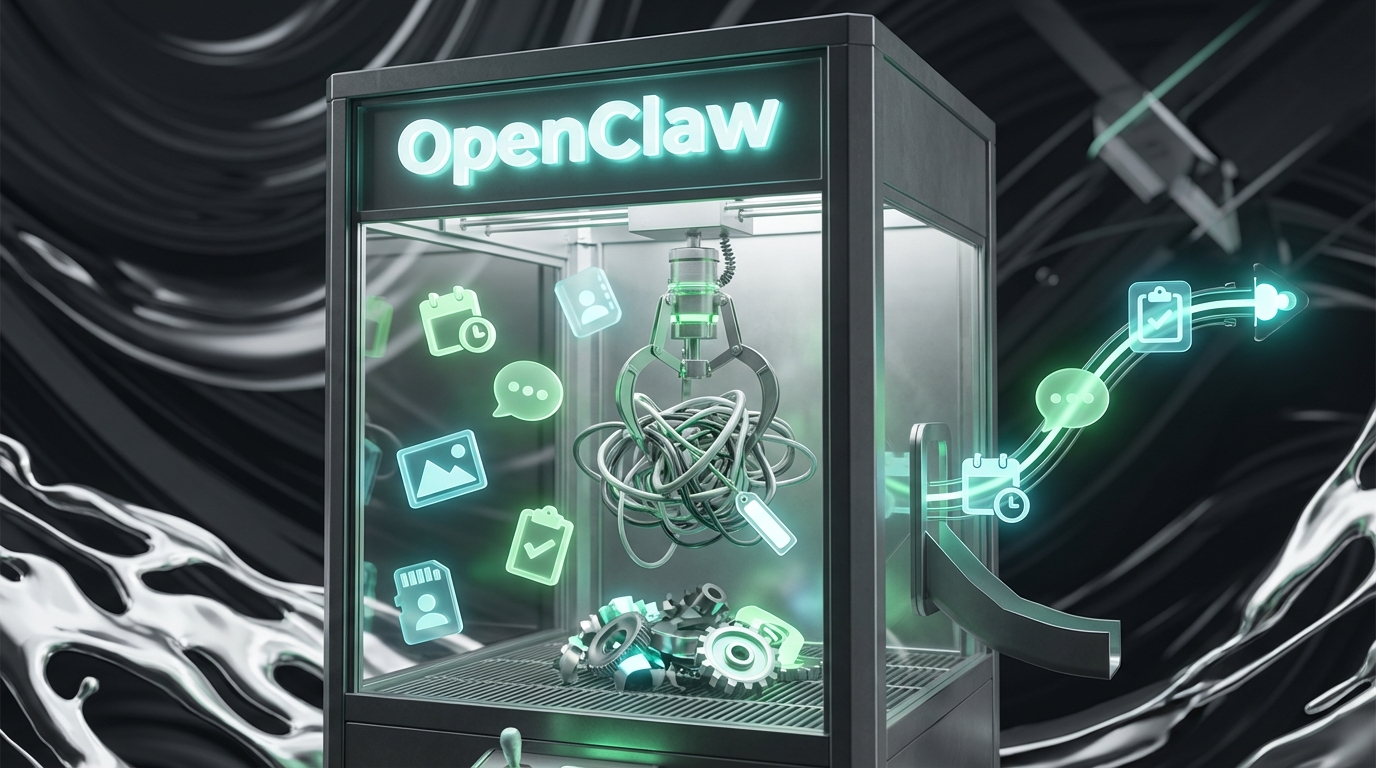
OpenClaw is getting hyped as an open source agent framework that can handle content, scheduling, asset creation, memory, and workflow coordination for lean teams. The real story is less about replacing your whole marketing team and more about building systems that can manage repeatable work without creating automated chaos. Persistent context, reusable templates, Telegram based coordination, and local model setups all sound powerful, but they still need strong briefs, clear approvals, and actual human judgment. The payoff is faster operations for monitoring, triage, summaries, and first drafts. The risk is scaling bland output or messy workflows. Automation can remove the boring middle, but brand voice, taste, and strategy still need humans in the loop.


Episode Transcript
Hunter: Monday, March thirtieth, twenty twenty-six. If you’re hearing this, congrats, the robots successfully assembled another COEY Cast without summoning a support ticket. I’m Hunter.
Riley: And I’m Riley. Also, apparently it is Take a Walk in the Park Day, which feels perfect because today’s story is basically about taking your AI agents off the leash and hoping they do not chase a squirrel into your brand guidelines.
Hunter: That is very fair. And yes, this episode was stitched together by a whole little stack of AI tools, automations, and machine helpers, so if something gets a tiny bit uncanny, that is not a bug, that is the art project.
Riley: Mmm. The experiment lives. So let’s get into it, because OpenClaw has been absolutely everywhere on X. Founders are talking about it like it is a tiny open-source marketing team in a trench coat.
Hunter: Yeah, and the pitch is seductive. You have an agent framework that can draft content, manage scheduling, create assets, remember context, reuse skills, and coordinate workflows through chat tools like Telegram. For lean teams, that sounds amazing.
Riley: It sounds amazing because every founder wants to believe they can hire software instead of people. Like, be honest. That is the fantasy. Not transparency, not open-source ideology, not some noble movement. It is, can I get output without adding payroll?
Hunter: Oh, absolutely. Cost and speed are the headline. The open-source philosophy is the warm lighting in the ad. But I do think there is real value here beyond cheapness. The strongest part of this trend is not, wow, the bot wrote a post. It is that the system can keep context across tasks and coordinate repeatable work.
Riley: Right, and that is the difference between prompting and operations. A prompt is like texting one intern. An orchestrated agent setup is like having a weird little group chat of interns who actually remember the campaign brief.
Hunter: That is exactly it. But this is where I want to slow the hype train a bit. The real value ends where people start claiming one agent replaces an entire content team. That is demo theater. It can replace pieces of the grind. It does not replace taste, strategy, approvals, timing, and knowing when a joke is dead on arrival.
Riley: Thank you. Because every time I see one of those posts that is like, my agent now does content, PR, community, research, and design, I’m like, babe, does it do brand instinct? Does it know when your audience is rolling their eyes? Does it know your founder sounds haunted on LinkedIn?
Hunter: Haunted LinkedIn is a real tone problem. And this is where agent templates come in. There is a second wave of hype around open-source templates for social monitoring, PR review, competitor tracking, email triage, all of that. In theory, super useful. In practice, a lot of template libraries become automation graveyards.
Riley: Fully. Template graveyards are so real. It is giving twenty fifteen growth hack folder on somebody’s Dropbox. Just because a template exists does not mean it survives contact with a real company.
Hunter: The useful template library is the one that helps a team get to first value fast, then customize. The bad one is just a pile of brittle automations with cute names and no maintenance plan.
Riley: Wait, say that again, because that is the whole thing.
Hunter: Sure. A good template gets you eighty percent of the way to a workflow that matters. A bad template gets you eighty percent of the way to confusion.
Riley: Mmm, yes. Because if I pull a competitor tracking template, I do not just need it to scrape and summarize. I need it to fit my categories, my alert thresholds, my tone, my review rules. Otherwise now I have automated noise. Love that for nobody.
Hunter: Exactly. And the people winning with this stuff are not treating templates as finished products. They treat them like starter kits. You still need a human to define what matters, where approvals happen, and what gets surfaced versus ignored.
Riley: Also, can we talk about persistent context? Because everybody on X is acting like this is some mystical breakthrough. And I’m like, um, is this innovation or are we just finally getting AI to remember the stuff we already told it?
Hunter: It is both. Persistent context is meaningful, but yes, some of the marketing around it is basically, good news, the system now remembers your stuff this time. Which, to be fair, has been a huge missing piece.
Riley: Totally. I do not want to re-explain the campaign every single time like I’m in a time loop. That part is real. But I also think people oversell memory like memory equals judgment. It does not.
Hunter: Right. Memory helps with continuity. It does not magically produce discernment. A system can remember every brand doc you fed it and still write something painfully mid.
Riley: Ah, painfully mid, the true enemy of modern marketing.
Hunter: And that brings us to the local model angle, which is really interesting. OpenClaw plus Ollama-style local setups are getting attention because teams want privacy, control, and lower costs. If you are handling campaign plans, customer data, internal docs, unreleased creative, that matters.
Riley: Yeah, this part I buy. Especially for smaller companies that do not want every internal draft flying through five random APIs. Running more locally feels less like a flex and more like basic hygiene.
Hunter: Agreed. But there is a tradeoff. Local models can be safer and cheaper, but they are not always setting the world on fire creatively. So teams have to think in lanes. Use local setups for structured, sensitive, repeatable work. Things like classification, triage, summaries, tagging, routing, maybe draft generation for internal use.
Riley: And maybe not for the big swing hero campaign concept where you need actual spice.
Hunter: Exactly. You do not ask your safest cheapest local model to become your creative director. That is not fair to anyone.
Riley: Hunter, I’m gonna challenge you a little though. Because I think some teams hide behind the creativity excuse when really their workflow is the problem. If your brief is vague, your examples are weak, and your review loop is chaos, even a great cloud model will give you soup.
Hunter: That is a great point. The orchestration layer matters as much as the model. A clean workflow with solid references, reusable skills, and clear checkpoints can make a decent model feel much smarter than it is.
Riley: Thank you. Because sometimes the secret sauce is not a frontier model. It is that you finally built a system that knows where to send what and when.
Hunter: Yep. And OpenClaw seems to be gaining traction because it is moving from experimental to operational. The recent chatter is less about one-off magic tricks and more about shipping workflows people can actually run every day.
Riley: Which is very much the vibe across AI right now. We talked recently about voice becoming workflow infrastructure, audio becoming core ops infrastructure, agents moving from chat buddy to actual operator. This sits right in that same lane.
Hunter: It does. The industry keeps drifting away from, look at this cool demo, and toward, can this reliably do useful work on Monday morning.
Riley: Speaking of useful work, I need founders to understand that an always-on content operation from Telegram sounds cool until you realize you have built a beautifully automated mess. If your team has no editorial spine, no escalation rules, no review owner, congrats, you made a machine that can publish confusion at scale.
Hunter: That is so well put. The companies that can pull this off are the ones with clear positioning, tight content rules, and someone accountable for final judgment. Agents are multipliers. If the underlying system is messy, the mess gets faster.
Riley: Faster mess is the whole AI economy in one sentence.
Hunter: It really is. And there is a bigger brand question here too. If every lean team gets access to the same open-source workflows for drafting, scheduling, monitoring, optimizing, what happens to differentiation?
Riley: Ooh. This is the scary part. Everybody starts sounding like the same productivity goblin with slightly different adjectives. Same structure, same pacing, same fake confidence, same weird obsession with the word unlock.
Hunter: Which is why the human layer matters more, not less. Your taste, your point of view, your editorial choices, your creative risks, that is the moat. Automation can help produce volume and consistency, but it cannot be the source of identity.
Riley: Yeah, if your brand voice is just whatever the template shipped with, good luck out there. That is not strategy. That is cosplay.
Hunter: And I think this connects to another fun story floating around right now. Anthropic’s CEO basically admitted even experts do not fully understand how these systems develop intelligence. The black box conversation is back.
Riley: Which the internet turned into memes immediately, of course. Like, awesome, even the people building the brain are like, ah yes, the brain, mysterious. Very reassuring.
Hunter: It is funny, but also important. Open source gets framed as the antidote to black-box AI, but honestly, most organizations do not want transparency for its own sake. They want enough control to manage risk and cost.
Riley: Yup. They want receipts, not philosophy. They want to know where the data goes, how to swap models, what breaks when a vendor gets weird, and how much this all costs.
Hunter: Exactly. And open-source agents can give teams more flexibility there. But that does not remove the need for governance. It just shifts more responsibility onto the team.
Riley: Oh, and quick side quest, because the AI internet remains deeply unserious in the best way. There is that Feathered Foodies creator challenge, where emotionally unstable chickens are doing cinematic cooking adventures with AI video tools. Honestly, that may be a better use case than half the fake B to B thought leadership flooding my feed.
Hunter: I mean, I would absolutely rather review emotionally unstable chicken content than another generic post about ten hacks to dominate your niche.
Riley: Same. Also, Club dot fun turning profile pictures into AI NFT earning machines on Solana is another reminder that the future is still extremely online and a little bit feral.
Hunter: Feral is the word. But weirdly, that is why the OpenClaw conversation matters. Under all the hype, teams are trying to answer a very normal question. How do we automate more of the boring middle without turning the brand into sludge?
Riley: Mmm. And my answer is, start with workflows where the output is easy to review and the downside is low. Monitoring, triage, summaries, tagging, rough drafts, first-pass research. Keep humans very close to voice, final publishing, relationship-driven comms, and anything sensitive.
Hunter: That is my advice too. Orchestration now for structured repeatable tasks. Human-first for strategy, taste, positioning, and anything that could create brand risk if it goes sideways.
Riley: So no, your team is not actually becoming three people supervising twelve bots tomorrow.
Hunter: Not tomorrow. But the supervision layer is becoming a real job. More teams will manage systems made of models, tools, prompts, routing, approvals, and fallbacks. That is the shift.
Riley: Which means if you are a creator or marketer listening to this, the move is not panic. It is learn how to direct the bots without becoming one.
Hunter: That is the episode. Thanks for hanging with us on COEY Cast this Monday, March thirtieth, also known as Take a Walk in the Park Day.
Riley: So go touch grass, but like, maybe after you audit your automations.
Hunter: And check out COEY.com slash resources for AI news and updates.
Riley: And subscribe, please. Feed the algorithm before the emotionally unstable chickens do.
Hunter: Catch you next time.
Riley: Later.