COEY Cast Episode 133
Sub Agents and Safe Chaos in GPT 5.4 Mini, V8, and Covo Audio
Sub Agents and Safe Chaos in GPT 5.4 Mini, V8, and Covo Audio


Episode Overview
03/18/2026
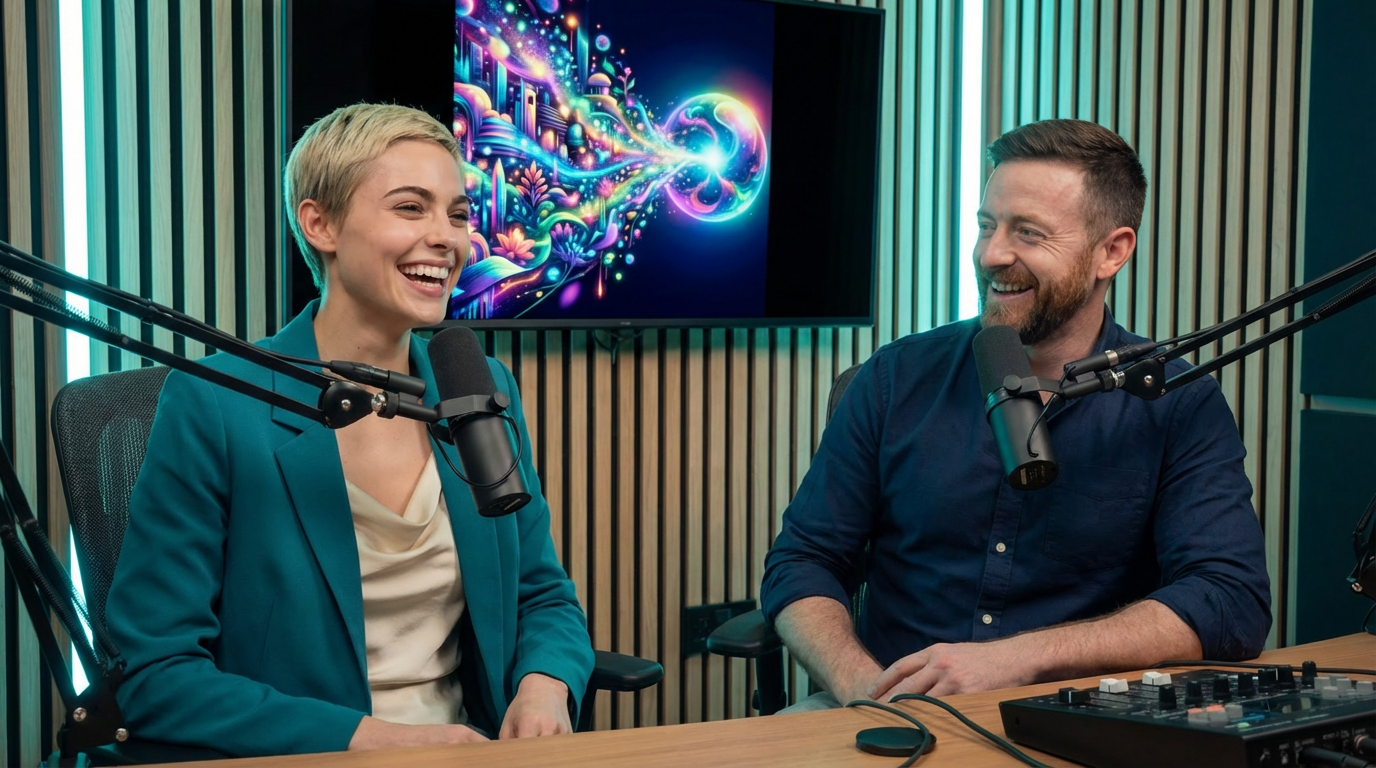
GPT 5.4 Mini and Nano are shifting from hype to actual workflows, powering routing, content ops, and tightly scoped creative sub agents that package work without hitting publish. Midjourney V8 levels up speed and text-in-image but introduces “confident compliance” risks as almost-right visuals slip past tired reviewers. Tencent’s Covo Audio pushes open voice models toward real-time agents while raising serious questions about brand voice cloning, governance, and disclosure. Expect more value for creative leaders, brand guardians, and marketing systems builders while low-opinion first draft work gets automated away. The through line is human plus machine collaboration with strict guardrails and a ruthless taste filter.

Episode Transcript
Hunter: It’s Wednesday, March eighteenth, two thousand twenty six, and apparently it’s Awkward Moments Day. So if your AI agent accidentally emails your boss “hey bestie,” congratulations, you’re celebrating. This is COEY Cast. I’m Hunter.
Riley: And I’m Riley. Also, quick disclaimer: this episode was assembled by a small army of bots in a trench coat. We just show up and argue with the output. If it gets a little weird, that’s not a bug, that’s the genre.
Hunter: Today’s big three: OpenAI dropped GPT-five point four mini and GPT-five point four nano, Midjourney opened community testing for V eight, and Tencent AI Lab’s Covo Audio is making the open audio people do that thing where they whisper “this changes everything” and immediately start a repo.
Riley: Wait, hold up. Can we start with GPT-five point four mini? Because X is acting like we just discovered fire, but for sub-agents.
Hunter: Yeah. The hype is basically “finally fast enough for real workflows.” And the least glamorous thing I’m seeing people actually ship is not like, a cinematic short film. It’s routing. It’s classification. It’s extraction. It’s “read this inbox, tag it, draft the response, and file it where it belongs without me spiraling.”
Riley: The unsexy stuff that makes you money.
Hunter: Exactly. Like content ops. Brief intake forms, campaign request triage, turning call transcripts into clean CRM notes, and spinning up first drafts for internal docs. Mini is the worker that doesn’t complain, and nano is like… the intern who’s weirdly good at sorting laundry.
Riley: Okay but I’ve seen people on X saying mini is built for sub-agents. You know I love a good agent moment. What’s the first agent workflow you’d recommend that won’t become, like, a fragile expensive Rube Goldberg machine by week two?
Hunter: I’d start with a “creative production concierge” that has very limited powers. Not “go run my whole brand,” but “take inputs and produce structured outputs.” So: you feed it a landing page, a product doc, and your brand rules. It outputs a campaign kit: ad angles, a few hooks, a short script, and a checklist of claims that need verification.
Riley: Mmm. So it’s not posting. It’s packaging.
Hunter: Yes. Then the human picks. And here’s the non-negotiable: you keep the agent dumb about final decisions. You let it do the grind, but it can’t hit publish and it can’t invent facts.
Riley: That’s where people mess up. They’re like “I gave my agent access to everything” and then it’s like, why did it buy seven domains and subscribe you to a Bulgarian newsletter?
Hunter: Yup. Also, mini and nano make it cheaper to do this properly, because you can split the work. You can have a “planner” model that decides the steps, and then mini does the heavy drafting, and nano does the tiny tasks like label, summarize, or pick the best variant.
Riley: Wait, I love that. Nano as the vibe bouncer. Like “this headline is too long, try again.”
Hunter: Exactly. And for creators listening: the win isn’t that the model is smarter. It’s that you can run more iterations without feeling the latency tax.
Riley: Okay, but open-source folks are side-eyeing this. The whole lock-in thing. Where’s the tipping point where open-weight models catch up enough that marketing teams can bet on them without sweating every roadmap tweet?
Hunter: The tipping point is when open models become boringly reliable in three areas: tool calling, long-context recall, and brand voice consistency. Not “it can write a poem.” It’s “it can pull the right product details every time, follow a style guide, and not randomly decide the brand is edgy today.”
Riley: So like, operational consistency over raw vibes.
Hunter: Yeah. And we’ve talked on recent episodes about open weights getting way more practical, especially with tool calling improving. But marketing teams don’t adopt ideology. They adopt outcomes. If an open model can run inside your environment and you can lock the version and audit outputs, that’s when people start switching.
Riley: Also, cost predictability. Brands love predictability. It’s why they still buy billboards even though we all pretend we don’t look at them.
Hunter: Facts.
Riley: Alright, Midjourney V eight. People are raving about speed and better text-in-image, but also complaining it’s alpha chaos. When do “good enough creatives” become “brand-safe creatives” without a human babysitter?
Hunter: Honestly? Not soon. Not fully. But we can get closer. The brand-safe moment is when your workflow has automatic guardrails before a human even sees it. Like a pre-flight check.
Riley: Say more.
Hunter: You generate a batch in V eight because it’s fast and higher-res native, great. Then you run a quick automated check: does it contain banned words, competitor logos, accidental medical claims, weird body horror, or the classic cursed typography?
Riley: The cursed typography is real. It’s like the model tries to spell “SALE” and accidentally summons a demon.
Hunter: Exactly. V eight is improving text rendering, and that’s huge for posters, thumbnails, product callouts. But in alpha, you still need a human to approve anything that represents your brand in public.
Riley: Okay, but if V eight is a ground-up rebuild, what’s the most interesting new failure mode marketers are going to discover? Besides hands being haunted.
Hunter: I think it’ll be “confident compliance.” Like images that look more real and more legible, so teams trust them more, but there’s subtle brand-rule drift. Colors slightly off. Typography close but not correct. The new failure mode is almost-right assets that sneak into production because they pass the vibe test.
Riley: Oooh, that’s scary. Because when it was obviously broken, you caught it. Now it’s like, tasteful wrong.
Hunter: Exactly. Also, with better prompt adherence, you can accidentally overfit your creative to your prompt template. Everyone uses the same prompt skeleton, and suddenly every ad in the feed has the same Midjourney fingerprint.
Riley: Which leads into the debate I keep seeing: do these tools make brands more distinctive or more same-y? What actually differentiates teams? Taste, data, prompts, or the willingness to throw away most outputs?
Hunter: The willingness to throw away most outputs is underrated. Taste is the real moat. Prompts are like camera settings. They matter, but they’re not the photo.
Riley: Yes. Also data. Like if your team has real customer language, real objections, real reviews, you can prompt with reality. Otherwise you’re just generating the same “revolutionary game-changing” copy soup.
Hunter: Totally. And speed matters because it lets you audition more ideas. Midjourney V eight being faster means you can explore more directions, which actually gives taste more room to show up.
Riley: Okay, audio time. Tencent’s Covo Audio is getting attention as an end-to-end audio language model. How close are we to real-time voice agents that don’t sound like a hostage negotiation when the conversation goes off-script?
Hunter: We’re closer on latency and naturalness, but the off-script problem is still the beast. The moment a user says something weird, like a joke or a complaint with sarcasm, the agent can go from “helpful” to “corporate panic” instantly.
Riley: Or it laughs at the wrong time. Which is, like, instant unfollow energy in real life.
Hunter: Exactly. The practical near-term win is using models like Covo Audio for prototyping voice experiences fast, and then putting strict boundaries on what the live agent can do. Narrow domains. Clear escalation. And logs.
Riley: But Covo being open-ish through Hugging Face vibes makes people want to do voice transfer and cloning. So what’s the responsible path for “brand voice” when cloning is easy? Policy, watermarking, or just pretending it won’t happen?
Hunter: Pretending won’t work. You need policy and technical measures. For brands: treat voice like a credential. You have an official voice, you restrict who can deploy it, and you disclose when it’s synthetic.
Riley: And watermarking?
Hunter: Helpful, but not magic. It’s part of a stack. Provenance, disclosure, and internal governance. Also, don’t build workflows that normalize “just clone a voice” for convenience. That’s how you end up with a brand scandal because someone made your CEO say something unhinged.
Riley: Yeah, and social platforms are basically a rumor factory already. Adding perfect audio fakes is like handing everyone a lightsaber and hoping they only do good.
Hunter: Great metaphor. Also, the best brand voice isn’t just the sound. It’s the behavior. The pacing, the empathy, the refusal style, the way it handles uncertainty. That’s why human-in-the-loop still matters.
Riley: Speaking of human-in-the-loop, I wanna poke you, Hunt. Everyone’s like “sub-agents, sub-agents,” but where do you draw the line between fun automation and “congratulations, you built an unsupervised intern with root access”?
Hunter: The line is: can it spend money, can it message customers, can it change production systems, and can it do those things without a review gate. If the answer is yes, you’re not automating, you’re gambling.
Riley: Thank you. Because I love automation, but I also love not waking up to an agent that rebranded my company into a frog meme.
Hunter: Although… depending on the company, that might improve performance.
Riley: Stop. Some startups would absolutely do that and call it “authentic.”
Hunter: Alright, last thing. Brutally honest prediction: over the next year or so, which roles in marketing get more valuable because of AI, and which ones get politely labeled “strategic” right before they disappear?
Riley: Oof. Okay. More valuable: creative directors with actual taste, brand leads who can build guardrails, and operators who can design workflows. Like the people who can orchestrate humans plus machines.
Hunter: Yup.
Riley: Less valuable: anyone whose whole job is first drafts with no point of view. Like if you only produce the starting blob, the blob is now free.
Hunter: I’d add: the new power role is “marketing systems builder.” Not in a boring way, but someone who can set up the pipeline so a campaign goes from idea to assets to approvals to performance learning without chaos.
Riley: The person who can make the machine behave.
Hunter: Exactly.
Riley: Alright, let’s land this plane before Awkward Moments Day claims another victim.
Hunter: Thanks for hanging with us on COEY Cast. Subscribe so you don’t miss the next drop of AI chaos turned into something useful.
Riley: And check out coey.com slash resources for AI news and updates. Go celebrate Awkward Moments Day by letting your agent draft an email, then maybe, like, read it before it gets you fired.
Hunter: Catch you next time.