NVIDIA’s Nemotron-3 Super (120B) Lands as a “Callable” Model for Enterprise Agents
NVIDIA’s Nemotron-3 Super (120B) Lands as a “Callable” Model for Enterprise Agents
March 16, 2026
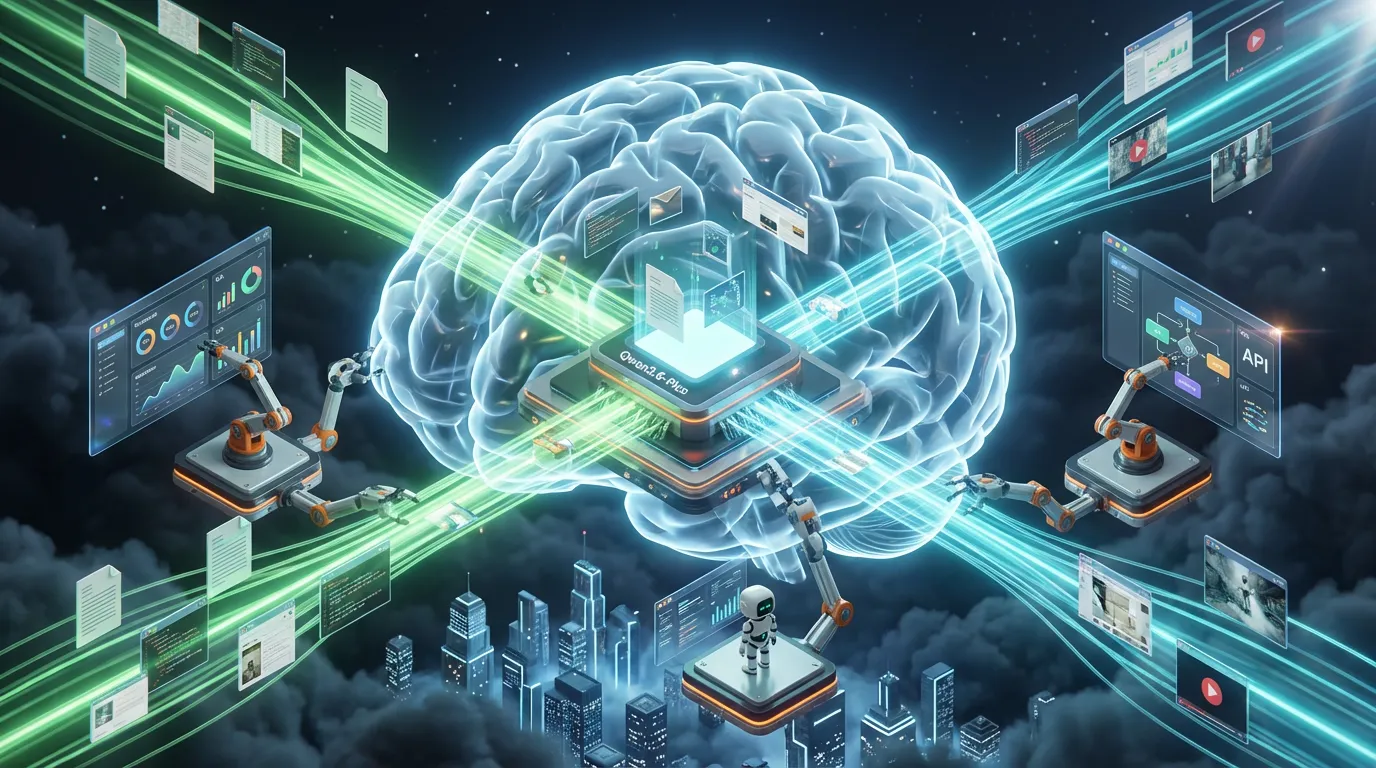
NVIDIA just made a very specific claim about the future of enterprise AI: it’s not about having the smartest chatbot. It’s about having a model you can actually run, control, and wire into workflows. The new release, Nemotron-3 Super (120B), is an open weight, sparse, agent first LLM designed for tool use, multi step reasoning, and production automation, available both as downloadable weights and as a deployable API via NVIDIA’s serving stack. The primary launch hub is NVIDIA’s research page: Nemotron-3 Super.
For teams building internal copilots, marketing automation engines, research agents, or compliance aware content systems, this is one of those releases that’s less “wow demo” and more “okay, this can become infrastructure.” And that’s the point: COEY’s world is human intent + machine execution, and Nemotron-3 Super is clearly built to be the execution layer, not just the idea generator.

What actually shipped
Nemotron-3 Super is a 120B parameter hybrid model that uses a sparse Mixture of Experts style design so that 12B parameters are active per token during inference. That’s the efficiency trick: big capability, smaller “awake at once” compute footprint.
NVIDIA is also leaning hard into long context as an operational feature, not a flex: Nemotron-3 Super supports up to 1M tokens of context. That means whole codebases, entire brand bibles, campaign history, legal policies, and internal wikis can sit in the same working memory window without turning your RAG system into an elaborate Jenga tower.
The official narrative is “agentic reasoning,” but the practical translation is: this model is tuned to read a lot, plan a sequence, call tools, and stay coherent across many steps. NVIDIA’s technical blog post adds more color on the architecture and design choices: Introducing Nemotron 3 Super.
Why sparse + long context matters in business
Most enterprises don’t fail at AI because they lack model IQ. They fail because the model is too expensive to run at scale, too unpredictable to trust, or too locked behind a closed API to fit governance requirements.
The enterprise requirement isn’t “best answer.” It’s “repeatable output under constraints, at a cost that survives success.”
Nemotron-3 Super’s sparse activation is a direct attempt to make heavy reasoning workloads more economically viable. It’s also an intentional move away from the “one model for everything” vibe and toward what’s actually working in production: specialized models that can be deployed like services, measured like services, and swapped like services.
And the 1M token context isn’t just for nerd points. It’s a workflow unlock:
- Fewer retrieval calls for giant “read everything and decide” tasks (policy review, audit prep, competitive intelligence).
- Better multi step continuity for agents that need to reference earlier constraints (brand voice, regulated claims, product SKU details).
- More reliable orchestration when the model can keep the full plan and supporting evidence in memory.
Availability: open weights and API paths
NVIDIA is shipping Nemotron-3 Super in multiple ways, and that’s where it gets real for automation.
1) Open weights (self host)
The model is published on Hugging Face in multiple formats, including FP8 and BF16 variants. Example listing: NVIDIA Nemotron-3 Super 120B A12B FP8.
Non technical translation: open weights means your organization can run it inside your own cloud account or data center, keep data inside your security boundary, and fine tune or adapt behavior without asking permission.
Reality check: self hosting is only “cheaper” if you already operate GPU infrastructure efficiently. Idle GPUs are the new unused gym membership: expensive and guilt inducing.
2) NVIDIA NIM microservices (API deploy)
NVIDIA is also positioning Nemotron-3 Super as something you can consume like an internal product API through NVIDIA’s NIM ecosystem. The NIM model page is here: nemotron-3-super-120b-a12b (NIM).
What this implies for workflow teams: if it’s exposed as a standard service endpoint, it becomes callable from:
- internal apps (CMS, DAM, content calendars)
- automation orchestrators (queue based pipelines, scheduled jobs, event triggers)
- agent frameworks that need tool calling + memory + evaluation loops
This is the difference between “AI strategy” and “AI that ships.” An API endpoint can be versioned, rate limited, logged, monitored, and governed. A model file on a drive is just vibes.
What marketers can automate with it (for real)
Nemotron-3 Super is still a language model, so it won’t magically generate your final product renders or shoot your campaign footage. But it can become the brain of a creative ops system, especially where the work is decision heavy, document heavy, and repetitive.
High leverage automation patterns
- Campaign research agents: ingest analyst reports, competitor pages, internal win loss notes, then produce structured briefs and positioning options.
- Compliance aware drafting: draft copy while checking against your approved claims library, legal constraints, and regional rules.
- Content QA at scale: run thousands of pages through automated checks for tone drift, factual mismatches, missing disclaimers, or inconsistent product naming.
- Long horizon repurposing: turn a single webinar transcript + deck + Q&A into a whole content set (blog outline, email sequence, sales enablement snippets), with fewer “what was the main point again?” errors.
The win isn’t “more content.” The win is “more content with automated review gates, provenance, and consistency.”
Readiness table: hype vs shippable
| Question | Nemotron-3 Super reality | What it means operationally |
|---|---|---|
| Can it plug into automation? | Yes (self host or NIM endpoints) | Can sit inside n8n or Make style flows, CI pipelines, or internal tools via HTTP calls |
| Is there an API story? | Yes (NIM deployment path) | Enables logging, guardrails, SLAs, and treat it like software, not a toy |
| Is it marketer plug and play? | Not directly | You’ll want an ops owner (MLOps, DevOps, or partner) to productionize prompts, evals, and governance |
| Is long context useful? | Yes, but test it | Great for big doc tasks; requires careful prompting + validation to avoid confident nonsense at scale |
What changes in the enterprise AI stack
This release is part of NVIDIA’s larger bet: enterprises are moving from “LLM app” to “agent platform,” and those platforms need:
- predictable throughput (so costs don’t explode with adoption)
- governance (so compliance doesn’t become the villain in every AI meeting)
- deployability (so you can run it where your data lives)
Nemotron-3 Super hits that middle lane: more capable than small fast draft models, but intentionally engineered for operational efficiency. It also reinforces the broader trend COEY has been tracking: models are becoming modular components in a workflow factory, not destinations where work goes to die in chat threads. For adjacent context on NVIDIA’s earlier positioning around production agent models, COEY previously covered the Nemotron-3 family here: Nemotron-3 Makes Open Agentic AI Production-Ready.
Reality checks before you bet the quarter
Nemotron-3 Super is promising, but grown up teams should keep three practical constraints in view:
- Agent reliability isn’t just the model. You still need tool permissioning, retries, evaluation, and human approval steps for high risk outputs.
- Long context can amplify mistakes. A 1M token window can hold your entire policy manual and still misunderstand it. You need automated tests and grounded references, not blind trust.
- Open weights shift responsibility to you. You get control (good), but you also own safety, monitoring, and incident response (also good, just not free).
Bottom line: Nemotron-3 Super (120B) is less about winning a leaderboard and more about making enterprise grade agent automation economically and operationally plausible. If your roadmap involves scalable creative and knowledge workflows where humans set intent and machines execute the grind, this release is a meaningful step toward AI that’s not just impressive, but integratable.