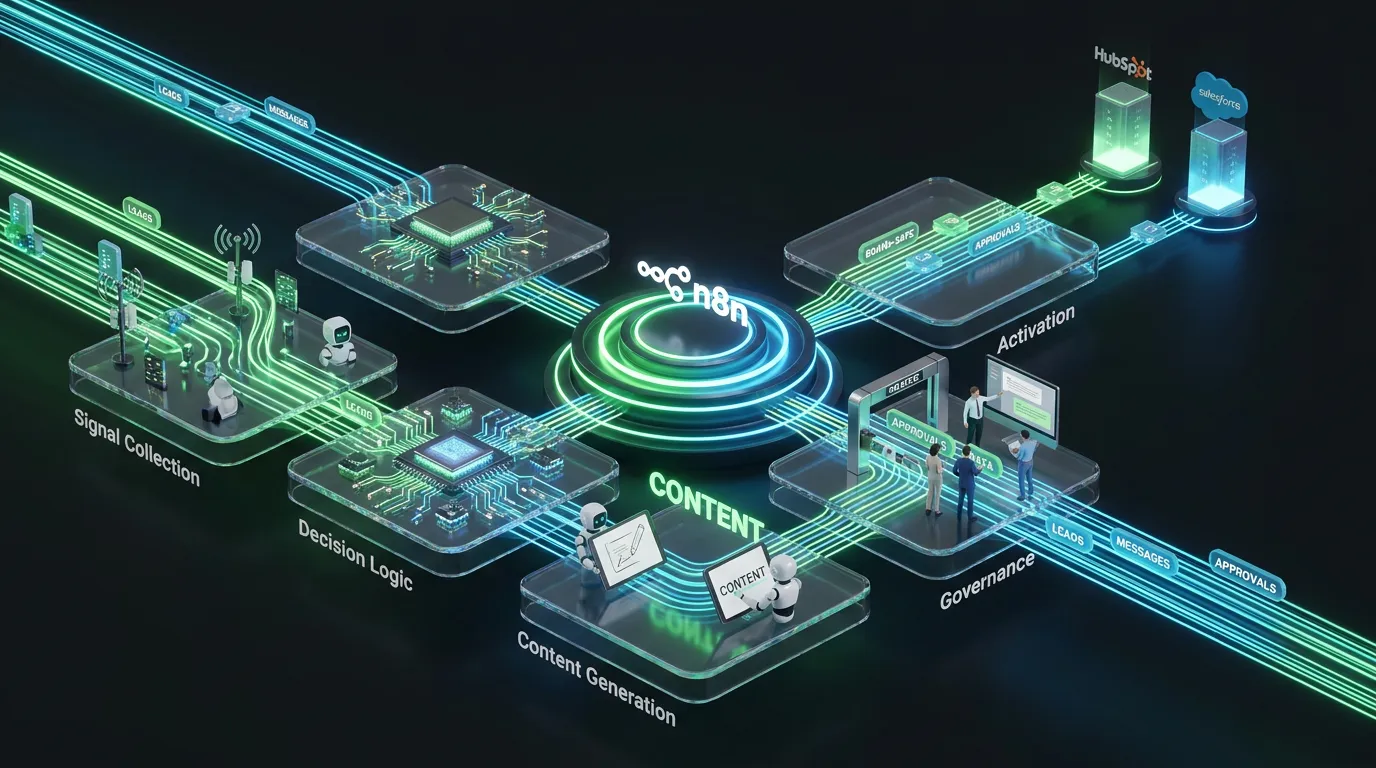
Creative Diffing: How AI Marketing Agencies Run Smarter Content QA
Creative Diffing: How AI Marketing Agencies Run Smarter Content QA
December 23, 2025
If you thought missing deadlines and appeasing Legal were the final bosses of marketing, welcome to the age of the silent change. Here, your “final” asset turns into an evolving organism: one second compliant, the next subtly mutated, and suddenly republished, indexed, localized, fed into the jaws of AI agents, and picked apart by every digital touchpoint. The net result: changes slip by, errors scale out, and brands learn (painfully) that infinite content means infinite risk.
Generative AI did not just crash the content cost curve. It demolished the very idea of what “done” means. Change is now dirt cheap, and so is shipping micro-edits at industrial scale. But what happens when your blog post, price table, or compliance disclaimer mutates invisibly on its way to a thousand screens? You get content that is technically branded, probably packed with little landmines, and definitely not what you signed off on.
Deep Dive Thesis: In the era of agentic marketing, the most crucial artifact is not the content draft. It is the diff: a precise, machine-readable record of what changed, why, and whether it was allowed to change at all.
Why Now Diffing Matters More Than Ever
We are at the part of the curve where “AI inside the tool” is no longer aspirational. It is shipping now, with platforms like Acquia’s latest AI-infused SaaS CMS surfacing model-assisted writing, editing, translation, and governance checks right where you publish, not as a bolted-on service. These tools promise to solve bottlenecks but usually create a new one: silent, untracked change at meaningful scale.
The trend is not the machines getting “smarter.” It is content platforms getting agentic: able to automate, personalize, and update experiences and assets autonomously. On the budget side, marketing leaders are dropping the pretense. If they can automate content ops, they will slash agency and production spend fast. According to eMarketer, 83% of marketing leaders would cut agency budgets if they could fully automate content creation, and 73% of teams that have successfully adopted AI agents have reduced agency content creation spend.
This is not a philosophical problem. It is an operational one. If your only speed governor is traditional QA, you will be left with a high-throughput mistake factory that can unwind brand value in milliseconds.
The Legacy QA Model: Built for Humans, Broken by AI
Classic marketing QA was a ceremony:
- Read the full draft.
- Edit with a vengeance.
- Rubber-stamp approval.
- Publish and cross your fingers nobody screenshots the mistake.
This worked, as long as content volumes were human-sized. Now, the bottleneck is gone:
- Hundreds of ad variants per persona? Check.
- Fifty landing page versions per promo? Easy.
- Automated localization? Continuous updates? Metadata on autopilot? Yes, yes, and yes.
- Bulk changes triggered by a single product feed update? Of course.
Your human QA process just hit a wall, and “keeping humans in the loop” is not a solution. It is an endless to-do list of unresolved review tickets.
What Is Creative Diffing Actually
At its core, diffing is a developer’s practice: show the difference (the diff) between versions A and B, surgically exposing every change. “Creative” diffing lifts this to content ops, catching not just typos but swapped claims, edited offers, silent design updates, or localization misses across every asset relevant to brand, risk, and commerce.
- Text diff: Headlines, body copy, legal text, and CTAs
- Structured diff: JSON fields like prices, features, geo eligibility, tiers
- Design diff: Layout swaps, palette tweaks, image replacements
- Media diff: Caption, transcript, or scene-level edits
- Metadata diff: Rights, provenance, tag changes, UTM shifts
This is not about flooding your dashboards. It is a process guarantee: nothing ships without a machine-readable audit trail and a clear validation workflow.
Why Diffing Beats Reviewing Everything Blind
Nobody reads 1,000 words with full-fidelity attention. Everyone, whether lawyer, compliance pro, or brand manager, is better at spotting what is different. “Review the whole thing” scales poorly. “Review just the change” works, consistently.
How QA Models Compare
| QA Style | What Humans Actually Do | Breakage Point |
|---|---|---|
| Full-asset review | Scan all, approve all | Overwhelmed by volume, inconsistent outcomes |
| Checklist review | Search for specific red flags | Novel risk, changes in context |
| Diff-first review | Approve only new or changed elements | Relies on accurate, structured diffs; fails if data is messy |
The Subtle Threat: AI Makes Small Changes Big Problems
Modern AI is fluent, fast, and sometimes wrong in subtle ways. The worst failures hide in what almost looks right:
- “Up to 10%” claims mutate into “up to 12%,” no source cited
- Important disclosures drop mid-localization
- Brand names roll back to deprecated terms
- Localization introduces illegal claims in a certain market
- Background images with rights problems slip into a campaign
Blaming the prompt is useless. These are failures of structured change control, the gap diffing is designed to close.
Why Structured Content Is Required for Effective Diffing
Unstructured content, the blob, is a one-way ticket to red-green diff hell. Vibes do not validate, and blobs are impossible to audit. If you want to make diffing work, assets must be typed objects with explicit fields.
Key fields to define and diff:
- Headline
- Subhead
- Body sections
- Each claim (always with a supporting source)
- Disclosures and compliance
- Rights, territories, durations
- Risk assessment tier
- Channel and locale constraints
Diffing works when the difference is not “what changed somewhere,” but “which specific, typed property changed.”
Example: Diff-Friendly Marketing Asset Object
{
  "asset": {
    "type": "ads_campaign",
    "locale": "fr-FR",
    "channel": "social",
    "headline": "",
    "subhead": "",
    "sections": [
      {"id": "hero", "heading": "", "body": ""},
      {"id": "features", "details": [{"claim": "", "source_id": ""}]}
    ],
    "disclosures": [""],
    "rights": {"territories": ["FR"], "expires": "2030-10-31"},
    "risk_tier": "high"
  }
}
Building a Diff-Driven Content Pipeline
[Truth Layer]
product specs | pricing | approved claims | brand rules | rights management

[Content Generation and Editing]
Latest LLMs | CMS and design agents

[Normalization]
Convert everything to schemas and typed objects

[Diff Engine]
Compute structured diffs vs previous approved state

[Critic Layer]
Run fact, compliance, rights, and schema validation

[Risk Routing]
Auto-approve low risk | escalate medium and high

[Publish]
Push to CMS, Ads, Email, CRM, Social

[Receipts]
Store diffs, approvals, compliance status, audit logs
Notice what is not here: reread the draft. Humans see only the change delta, the piece that matters most.
Risk-Tiering: The Only Way to Survive the Volume
If every edit demands equal scrutiny, your diff inbox becomes the new bottleneck. The solution is to define precise risk classes, then automate routing.
- Low-risk diffs: Alt text, formatting, non-claim metadata
- Medium-risk diffs: Headline rewrites, reordering content, region-specific SEO
- High-risk diffs: Offers, guarantees, metrics, regulated or claim-heavy sections
Diff Routing Rules Table
| Diff Type | Example | Auto Action |
|---|---|---|
| Metadata only | Internal tags, non-visible classification | Schema-check and auto-approve |
| Copy rewrite | Body, CTA, subhead edits | Pass critic checks, escalate if risky |
| Claims and offers | Numbers, discounts, regulated language | Escalate for mandatory human approval |
Diffing as FinOps: Controlling Agent Sprawl and Cost
Agentic content tools will endlessly tweak, regenerate, and iterate, sometimes at churn rates that make even cloud bills blush. With diff tracking, you can tie spend to actual, approved outcomes, not just cycles of “improved” drafts.
- Cost per accepted diff: How much compute, software, or API cost went into each shipped change?
- Diff churn rate: How many edits get reversed or further changed, signaling unclear governance or shifting requirements?
Sample Policy for Budgeting by Diff Type
{
  "diff_policy": {
    "max_cost_usd": {
      "metadata_only": 0.03,
      "copy_rewrite": 0.40,
      "claims_or_offers": 0.95
    },
    "retry_limit": 2,
    "escalate_on": ["schema_fail", "missing_source", "policy_violation"]
  }
}
This approach keeps your automation budget focused on valuable and allowed change, not endless iteration.
Multi-Format Diffing: Text, Images, and Video
Modern marketing is a media menagerie: text, visuals, and video in constant interplay. Diffing cannot be text-only.
Text
Diff structured fields and claims; instantly see what changed, what was dropped, and what now needs review.
Images and Design
Design systems that render every creative as objects and layers can expose diffs: product swapped, background altered, logo nudged. The more atomic your design data, the easier to precisely diff and route changes.
Video and Audio
Diff captions, transcripts, and scene manifests. Track which visuals, overlays, and scripts change. Many video updates that slip are ultimately tiny transcript edits or scene swaps, not major creative shifts.
How Creative Diffing Fits COEY’s Automation Playbook
Diffing is not a buy-one-tool win. It is a wiring challenge, one we automate every day at COEY. Odds are you already own the key parts:
- Modern CMS
- CRM with content hooks
- Email automation
- Ad platform access
- DAM stack
- The ever-critical truth-source spreadsheet
The real work is integrating these so each asset triggers a diff, passes critic checks, gets routed by risk, and leaves a compliance receipt. For more on the governance glue, see The Receipts Gap: Why AI Content Fails and Unsexy Revolution in AI Automation Contracts.
Rollout: Getting to Diff-First Without Burning Everything Down
- Start small: Pick one painful asset (ads, product pages, onboarding flows).
- Define your schema: Capture fields for headline, main claim, disclosures, etc.
- Store each approved version: This becomes your baseline.
- Apply AI edits in shadow mode: Compute diffs and run critic checks, then hold the publish.
- Set up risk-based routing: Automatically escalate or auto-approve depending on change class.
- Expand thoughtfully: Test, collect receipts, then broaden to other formats or business lines.
Reality Check: Humans Still Essential, Now Focused Where They Matter
AI will keep making mistakes; agentic workflows will multiply changes and potential errors at machine speed. Diffing is not autopilot. It is the only way to focus expensive human review where it matters: approving and investigating real, material changes.
If your reviewers are stuck reading whole assets, congratulations: you are wasting the most expensive minutes of your most critical people.
The COEY Verdict
The deluge of AI-generated content is not a productivity victory unless you can control, approve, and track change at human and machine scale. That is the missing layer: creative diffing. Suddenly, your content supply chain starts looking like modern software deployment: typed objects, policy enforcement, automated checks, receipts, and controlled releases. Not sexy, but reliable, scalable, and safe. That is the only way to survive when your brand is the prize and the target.
If you are building sales, marketing, or content automation, do not chase volume for its own sake. Put your effort into the only question that matters now: How do we catch and approve the right changes fast, with almost no mistakes? The answer is not “better prompts.” It is diffs.
Let COEY Handle the Automation
Brands and agencies hire COEY to build the AI marketing systems they can’t build alone. From n8n workflows to Claude Cowork integrations, we make the tools work together so your team can focus on strategy. Request a proposal.