Why LLM Routers Are Marketing’s New Backbone
Why LLM Routers Are Marketing’s New Backbone
July 7, 2026
Marketing automation has officially entered its “everything is an agent” phase, a déjà vu of the “everything is a blockchain” era—except now it’s your email queue in distress. But here’s the plot twist: The true challenge isn’t just more content, it’s how smart teams route high-stakes work across a zoo of models and tools—balancing cost, compliance, and context before your budget (or brand) melts down.
Together, Meta’s Llama 4, Google Gemini, and a herd of others have flooded the market—making the model itself the new commodity. Now, the flex is in building an LLM router: a control layer that actually picks the right model, validates outputs, and calls in a human when things get spicy.
Thesis: If your AI stack runs on one default model, you’re lighting money on fire and testing fate. A real strategy means having a router that decides, validates and escalates. Otherwise, you’re outsourcing your risk profile to a single call-and-hope API.
Why Single-Model Setups Are Over
Three industry tremors killed the single-model fantasy:
- Premium models got pricey, fast. Lazy, always-best routing is now an expensive luxury.
- Agent features keep shipping, but guardrails lag. Orchestration is in, but oversight is still catching up.
- Valid output isn’t meaningful without business rules. Schema alone can’t keep you safe or legal.
Bottom line: Don’t “pick one LLM” and hope. Build a system to intelligently route and check models—for every task, every time.
How Router Stacks Actually Work
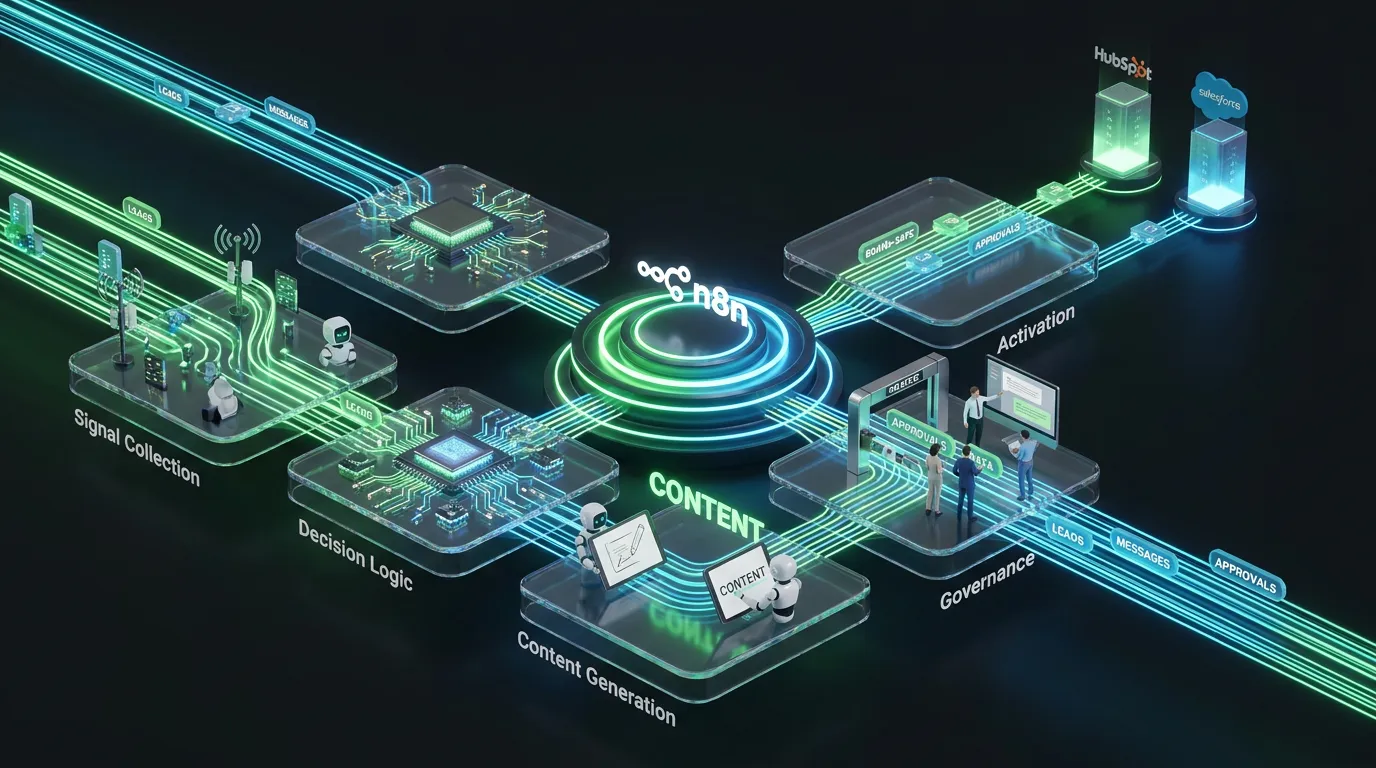
Stop thinking “one model to rule them all.” Routers orchestrate a model portfolio. Typical roles include:
| Role | Best Model Type | Main Responsibilities |
|---|---|---|
| Fast operator | Low-cost, low-latency | Classification, tagging, summarization, data extraction |
| Creative engine | Mid-tier generative model | Drafts copy, outlines, variant generation (within guidelines) |
| Premium reasoner | Top-tier reasoning model | Handles ambiguity, complex synthesis, strategic and regulated messaging |
The router decides:
- Which model runs for which task
- When to use or restrict tool calls
- What schema to expect
- Which validators, critics, or humans need to sign off
Why It Matters: Reliability, Cost, and Survival
Single-model stacks get you soaring cloud bills, buggy output, and blurred governance—all dangerous (and common) failures. Well-designed routers catch:
- Runaway premium model costs
- Fake or hallucinated claims
- Broken tool calls
The future? Automation platforms are no longer a one-model show. LLM routers are the real difference between a scalable, auditable machine—and an AI-powered slot machine you can’t afford.
Build the router. Enforce the guardrails. Automate the boring, escalate the risky. The model will change next quarter. Your control plane is what lasts.