The Agent QA Stack That Saves Automation
The Agent QA Stack That Saves Automation
August 16, 2026
The new automation flex is not agents it is receipts
Everyone craves the latest AI agent. Nobody dreams about the Slack postmortem, phantom costs, or the “what did it just do to my lead database” moment. But modern marketing automation is now built on multistep, agent-powered workflows: sourcing data, classifying, updating, shipping, posting, and then gaslighting you about how hands-off it all was. The problem isn’t that agents are hype. The problem is that most teams are racing toward “agentic” before they’ve gotten “operational” down pat. In marketing, operational means predictable outputs, controlled spend, and receipts you don’t have to reconstruct from three log files and divine inspiration.
Instead of betting your credibility on a vendor demo, anchor your agent QA thinking in concrete, testable failure modes. One of the most expensive is infinite looping: the agent keeps replanning and re-calling tools until your budget becomes a forensic accounting project. A 2026 paper, When Agents Do Not Stop: Uncovering Infinite Agentic Loops in LLM Agents, shows how static analysis can surface these loop risks before you deploy.
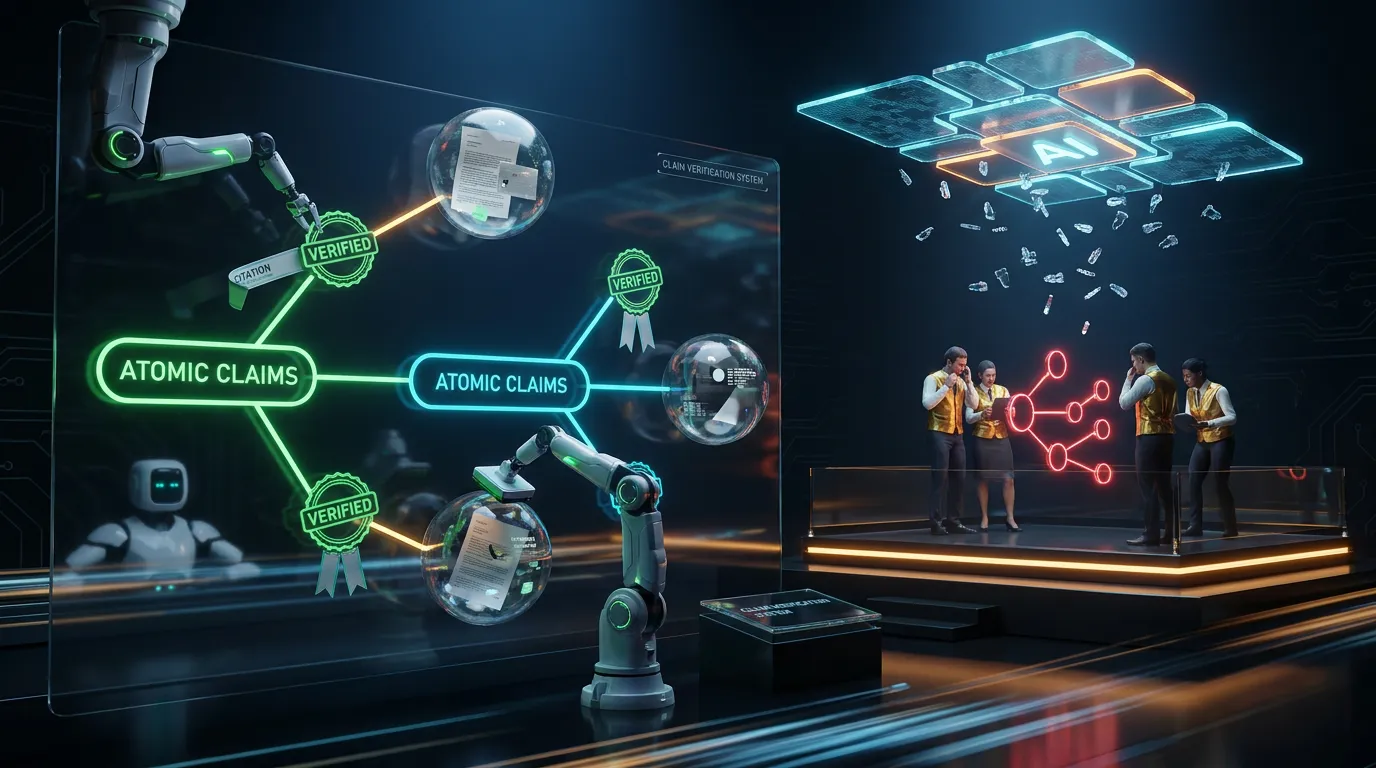
Deep Dive Thesis: The new game in AI marketing automation is agent QA. The win is a testable, automated QA stack: tracking tool calls, catching infinite loops, validating structured outputs, and routing true risk to people before your budget and brand become collateral damage.
Why this suddenly matters to marketers and CEOs
Remember when “AI in marketing” meant writing a catchier subject line or summarizing a meeting? That’s prehistoric. Now it means: update CRM fields, generate assets, open tickets, publish to the CMS, and launch whole campaign flows on autopilot. The result is a seismic shift in failure modes.
- Old failure: your subject line is vanilla.
- New failure: your agent performed five tool calls, updated the wrong record, output technically valid JSON, and convinced you everything was fine.
If your business runs on scaled publishing, personalized outreach, or automated sales ops, the threat isn’t a hallucinated summary. It’s quiet procedural mistakes, hard to spot, brutal to fix after the fact.
The agent problem in one sentence
Agents don’t just write text. They make decisions for you.
This is why the relevant questions have shifted from “does it sound good?” to:
- Did the agent use the intended tools, in the right order?
- Did it hand off correct arguments?
- Did it properly interpret the tool’s output?
- Did it stop or escalate at the right moment?
- Can you reconstruct and prove what actually happened?
Recent research confirms what ops teams already know
This is not just a SaaS ops fever dream: research is now catching up to the pain practitioners have felt since agents started making real decisions. Correctness is not binary, and “well, it worked last week” is not a reliability plan. Two research threads stand out:
- Procedure-aware evaluation: Agents can “complete” a workflow by skipping steps, reaching an apparently correct result through the wrong process.
- Loop and cost drift: Left unchecked, agents retry, replan, or endlessly re-execute tool calls until your budget becomes a post-mortem exercise.
The loop risk is not theoretical. The 2026 work linked above demonstrates how loop patterns show up in real agent repositories and how static analysis can flag them before production.
Agent QA is not one thing it is four interlocking tests
The real-world options today?
- Most teams ship agents with zero QA, cross fingers, and keep the schedule clear for incident response.
- Others over-correct by sticking a human in every loop, grinding your time savings into confetti.
Agent QA is the rational middle: automated checks for the fatal but predictable failures, and gated human review only on true edge cases.
| QA Layer | What It Checks | What It Catches |
|---|---|---|
| Format QA | Schema validity, required fields, type correctness | Parsing breaks, downstream crashers |
| Semantic QA | Valid field values, enums match, IDs exist | Valid-but-wrong updates, mismatches |
| Procedural QA | Steps, order, checks, policy adherence | Success that skipped required steps |
| Economic QA | Caps, budgets, retries, tool call limits | Infinite loops, stealth cost overruns |
The dirty secret of structured outputs
Structured outputs are catnip for automation pros because JSON parses, tables import, and logs look tidy. But parsing is not truth. You can have flawless adherence to a schema and outputs that are spectacularly incorrect, which is worse because they flow downstream cleanly.
Perfectly structured, terribly wrong is the new silent failure mode for agentic workflows.
This is why COEY keeps returning to the importance of structured outputs plus active verification. See Structured Outputs Are AI Automation’s Secret Weapon.
Reference architecture for agent QA in modern marketing automation
QA cannot be a checkbox. It is a control layer, embedded in every workflow. Here’s a reference pattern every mature ops team should build toward:
[Trigger]
  - form submitted, CRM event, scheduled process
[Normalize]
  - generate machine-readable context object
[Plan]
  - agent drafts a tool plan, step-by-step
[Validate plan]
  - run procedural, risk, and tool allowlist checks
[Execute]
  - execute (and log) tool calls with input/output
[Validate outputs]
  - run format + semantic QA on agent outputs
[Loop control]
  - enforce budget and retry caps, detect infinite loops
[Route]
  - auto-publish low risk, hold or escalate everything else
[Publish/update]
  - perform official updates (CMS, CRM, tasks)
[Receipts]
  - capture entire trail for auditability
The core artifact the tool plan object
Want to test agents? Force them to show their plan before execution. Mandating a formal tool plan that is machine-readable, saved, and version-controlled lets you:
- Catch dumb plans before the agent touches real data
- Create stable QA gates because you know what was supposed to happen and what really did
{
  "workflow_id": "",
  "risk_tier": "low|medium|high",
  "tool_plan": [
    {
      "step": 1,
      "tool": "crm.lookup_contact",
      "args": {"email": ""},
      "required": true
    },
    {
      "step": 2,
      "tool": "llm.generate_asset_pack",
      "args": {"schema": "EmailVariantV2"},
      "required": true
    },
    {
      "step": 3,
      "tool": "crm.update_contact",
      "args": {"contact_id": "", "fields": {}},
      "required": false
    }
  ],
  "stop_conditions": {
    "max_tool_calls": 12,
    "max_retries": 2,
    "max_cost_usd": 2.00
  }
}
Economic QA the failure mode no one budgets for
Agentic workflows blow up in bursts. One mistake, one token loop, and your spot budget is gone. Economic QA means:
- Set output, retry, and cost caps for every run
- Abort repeated, identical tool calls, especially those “just one more try” retries
- Auto-escalate to a human with log receipts and a short error summary
“It ran four thousand times because the endpoint threw a 404” is not a joke. It is a recurring incident category.
Procedural QA for catching corrupt success
What’s worse than a failed workflow? One that “succeeds,” but cut corners in silent, brand-ending ways. Classic corrupt success:
- Publishing announcements without checking regulatory flags
- Updating CRM status without running suppression checks
- Outreach blasts honoring the wrong compliance region
- Generating ad copy with missing required disclosures
Fix: represent process rules as machine-checkable constraints. Force the agent to pass, or escalate.
| Procedure Rule | Automation Check | Failure Response |
|---|---|---|
| Consent required pre-outreach | tool_plan includes consent verification step | Halt workflow, flag record |
| Claims require explicit approval | claim_ids in output are on approval list | Reject and block publish step |
| High-risk tier mandates review | risk_tier == “high” triggers manual approval | Create urgent human review task |
Semantic QA the field where good intentions die
Semantic QA is the difference between “looks valid” and “is correct.” Your structured output parsed. Your field types align. And you just attached an offer ID that’s expired, a region code for the wrong locale, or a pricing claim no one’s updated since last February. What to watch:
- Does the CRM field actually exist in prod?
- Does that offer or partner ID map to something live?
- Do URLs resolve, and are they whitelisted?
- Is that pricing backed by current official pricing tables?
- Did we flip the wrong region or language rule?
Rule: let QA code validate these first. Critics can supplement, but never let the agent self-certify.
Hybrid flows win because irreversibility is real
Once published, a mistake is instantly screenshot, archived, and turned into brand lore. High-stakes, fully autonomous agents are still unrealistic for most orgs. The sustainable pattern remains:
- AI drafts and proposes.
- Automation validates, logs, and receipts.
- Humans approve only exceptions and high-stakes items.
See LLM Control Planes: The Secret to Scalable AI Ops for more on orchestrating human-in-the-loop patterns for agent workflows.
What to automate first if you want fewer agent disasters
Start with agent QA primitives. Scale responsibly:
- Structured intake objects: standardized briefs and requests.
- Tool plan declarations: agent must submit a plan pre-execution.
- Schema validation: every agent output gets hard-validated.
- Semantic validation: deterministic, rule-based checks on field values.
- Loop and budget caps: hard-coded stop rules for each workflow.
- Risk routing: anything flagged gets escalated automatically.
- Receipts: store the full trail for every attempt.
What success actually looks like
You will know agent QA is working when:
- The majority of runs complete with no human involvement.
- Failures are caught early and routed with context, not chaos.
- Human review time drops, but the items they see are high-signal.
- Costs get boring, because loops are capped and retries are grounded.
- When a CMO asks “why did it do that,” you have a timeline, not a war story.
The bottom line
Agents are infrastructure, not magic. Workflows are the actual product. QA is what makes them shippable, sane, and scalable.
Automation first doesn’t mean human absent it means humans get their time back for judgment calls and accountability, not solving mysteries.
For a deeper look at making outputs reliably machine-usable, see Structured Outputs Are AI Automation’s Secret Weapon.