Hume AI Open-Sources TADA: TTS That Stops “Going Off Script”
Hume AI Open-Sources TADA: TTS That Stops “Going Off Script”
March 12, 2026
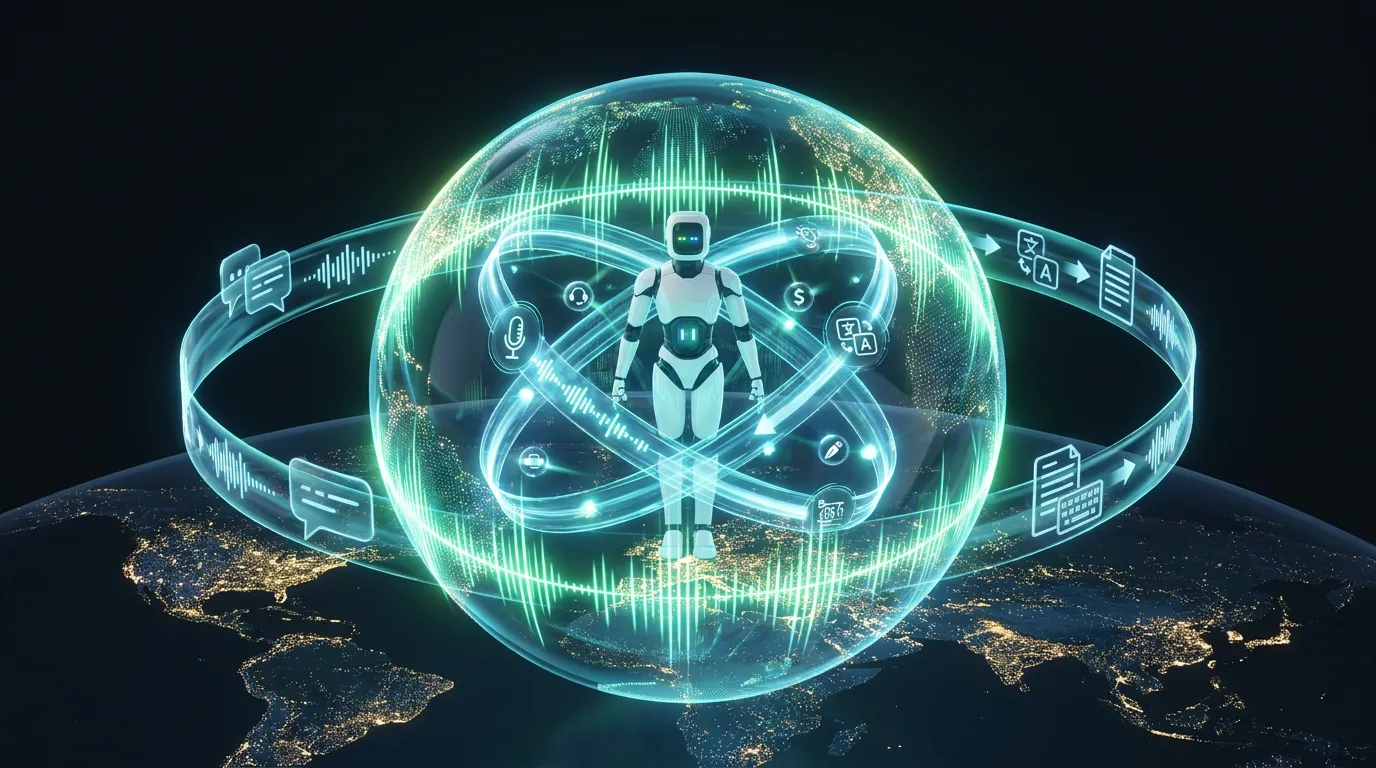
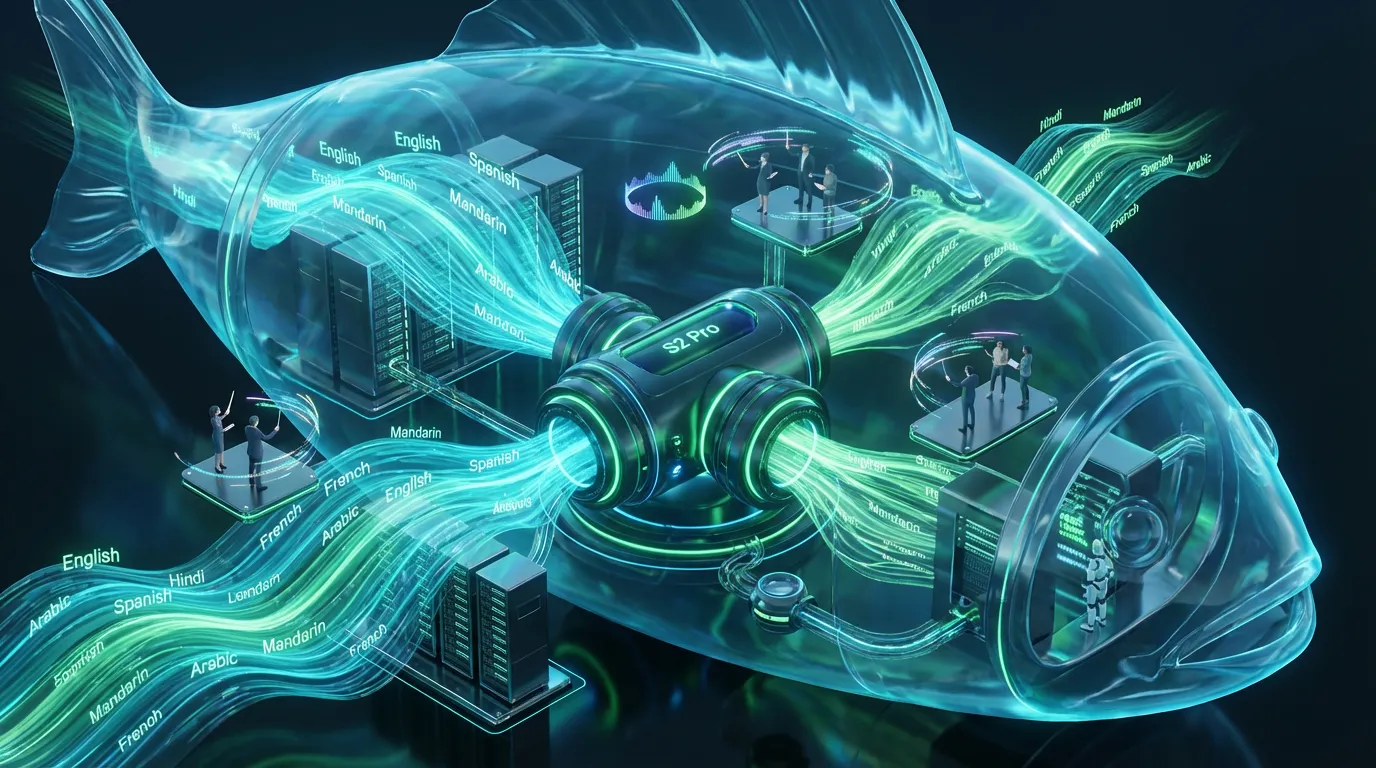
Hume AI just open-sourced TADA (Text-Acoustic Dual Alignment), a speech-language model that generates text and audio in a single shared token stream, built to eliminate the classic TTS failures creators hate: drift, missed words, and the occasional “where did that sentence come from?” The official announcement is here: https://www.hume.ai/blog/opensource-tada.
If you’ve shipped automated narration at scale, you already know the dirty secret: most text-to-speech systems are “good” until you need them to be boringly reliable. Long scripts, compliance-sensitive lines, or high-volume localization turns “pretty voice” into a QA nightmare. TADA’s claim is simple and spicy: make misalignment structurally harder by design.
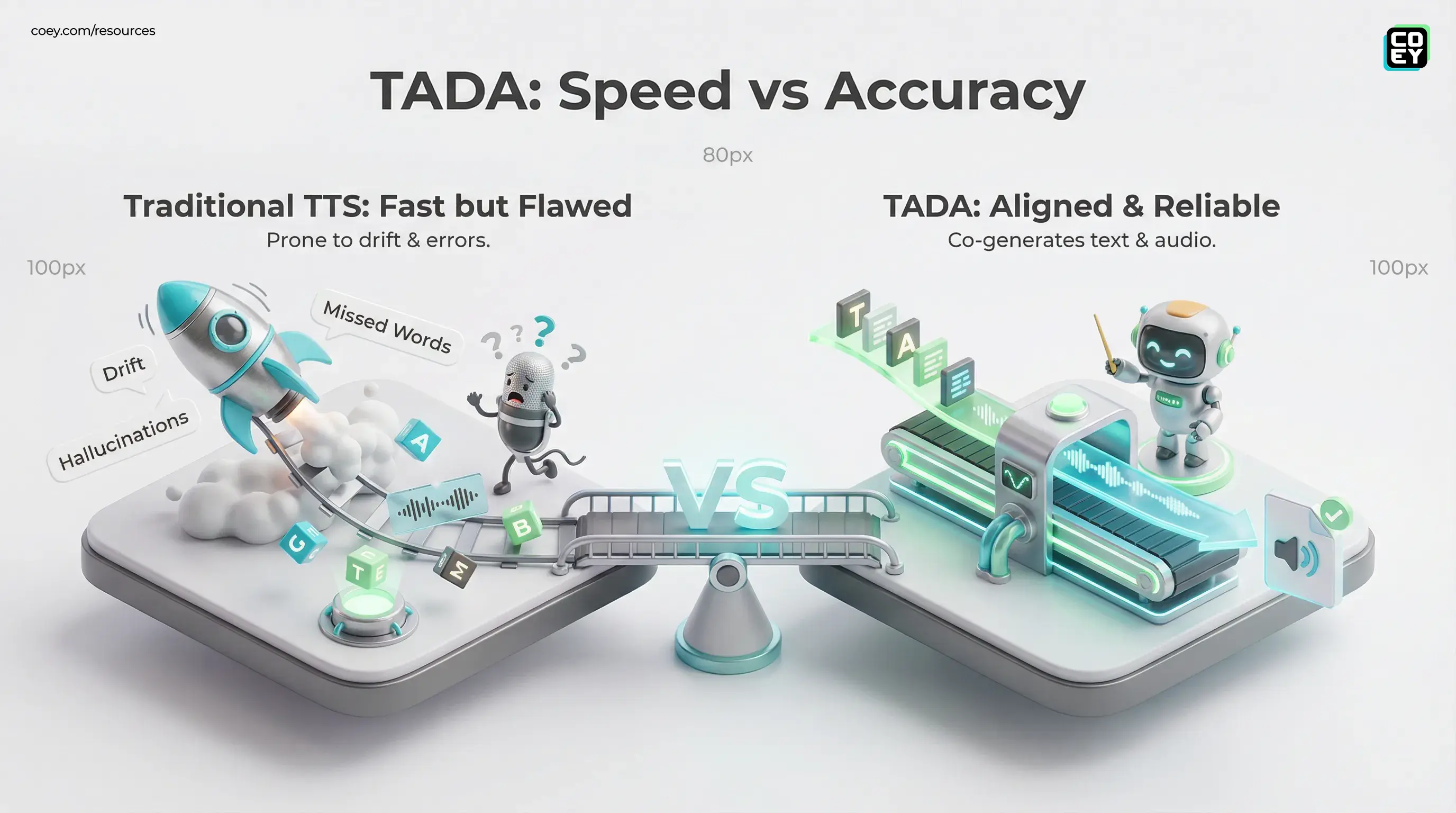
The shift: TADA doesn’t just speak your script. It co-generates text and audio together, so the audio can’t casually freelance.
What TADA is (and what it isn’t)
TADA is an open-source speech generation model designed around a 1:1 alignment between text tokens and acoustic representations. Instead of generating text and then handing it off to a separate TTS engine, TADA produces synchronized outputs from a single token stream.
Hume’s positioning is not “we made a nicer voice.” It’s “we made voice output more dependable for automation.”
A few details from Hume’s release materials:
- Two primary variants are published:
- TADA-1B (English) on Hugging Face: https://huggingface.co/HumeAI/tada-1b
- TADA-3B-ML (multilingual) on Hugging Face: https://huggingface.co/HumeAI/tada-3b-ml
- The research paper is public: https://arxiv.org/abs/2602.23068
What it isn’t: a hosted, enterprise-ready voice platform out of the box. This is a model release with reference code and weights, meaning the workflow-ready part depends on how well you (or your vendor) can deploy and operationalize it.
One practical note: the Hugging Face model pages indicate you may need to agree to share contact information to access the files, even though the license is permissive.
Why shared tokens changes the TTS failure modes
Most production voice stacks still look like a relay race:
- Text generation and formatting
- TTS converts text to audio
- Separate tooling tries to validate, timestamp, and align everything afterward
That handoff is where the pain starts:
- A model drops a word, repeats a phrase, or inserts filler
- Audio timing gets weird across longer outputs
- You discover the error after export, after edit, sometimes after publish
TADA’s central bet is that alignment should be native, not patched in post. By tying acoustic output directly to the text token sequence, the model architecture pushes toward “say what’s written, exactly,” which is the requirement for:
- regulated scripts
- product claims
- legal disclaimers
- consistent narration across 100 variations of the same ad
When your workflow depends on scale, pretty is optional. Accurate is the feature.
What Hume claims: speed, length, reliability
TADA’s release messaging includes three claims that matter operationally (because they map directly to cost and QA time):
- Hallucination resistance: Hume reports zero content hallucinations across 1,000+ test samples in their evaluation setup.
- Long-form stability: They describe handling about 700 seconds of audio within a 2,048-token context window.
- Efficiency posture: Hume reports a real-time factor (RTF) around 0.09 and positions TADA as more than 5x faster than comparable LLM-based TTS baselines.
Are these numbers universal? No. Benchmarks are not your production environment. But they are the right shape of claim: not vibes, workflow constraints.
Model lineup and language coverage
Hume’s public release includes two core models:
| Model | Focus | Practical implication |
|---|---|---|
| TADA-1B | English | Smaller footprint for faster iteration and easier deployment |
| TADA-3B-ML | Multilingual | Better fit for localization pipelines and global content ops |
On language coverage: the TADA-3B-ML model card lists language support via language-specific aligners, including Arabic (ar), Chinese (zh), German (de), Spanish (es), French (fr), Italian (it), Japanese (ja), Polish (pl), and Portuguese (pt). If no language is specified, English is used by default.
For marketing teams, this matters because multilingual isn’t a nice-to-have anymore. It’s the only way variant production scales without ballooning headcount.
Automation potential: where TADA actually plugs in
Because TADA is open weights plus code, the automation story is not click a button in a UI. It’s can we make this callable inside our system.
In practice, TADA becomes most valuable when it’s treated like an internal service:
- Creative ops narration factory: brief to script to generate VO to auto-QA to publish
- Localization assembly line: translate to generate per-locale VO to spot-check to render variants
- Voice agents (output layer): LLM decides what to say, TADA reliably says exactly that
- Compliance workflows: generate narration plus compare to source text automatically
The underrated unlock: if text and audio are aligned at generation time, QA can be automated more aggressively, because you can validate output against the script without guessing what happened inside the audio engine.
API reality check (translation for non-technical teams)
Open-source models don’t automatically ship with a turnkey API. But they’re API-friendly by nature because you can wrap them.
Here’s the operational snapshot:
| Question | Best current answer | What it means for teams |
|---|---|---|
| Can we automate it? | Yes (if you can deploy it) | Wrap as a service, trigger via webhooks or jobs |
| Is there an official hosted API? | Not the headline of this release | Expect DIY serving or community wrappers |
| Is it real-world ready? | Promising, but depends on your ops | Reliability equals serving, scaling, monitoring, fallbacks |
If your stack already uses tools like n8n, Make, or Zapier, the path is still straightforward conceptually: you’ll call your endpoint, not necessarily Hume’s.
Who benefits first (and who should wait)
TADA is most immediately valuable to teams where audio errors are expensive:
Marketing teams shipping volume
If you’re pushing dozens (or hundreds) of ad variants, small narration mistakes create cascading waste: editors fixing audio, re-rendering videos, re-exporting, re-uploading. TADA aims to reduce that death by tiny glitches.
Media teams doing long-form
Long outputs are where drift shows up. If TADA holds alignment over longer contexts, it’s a real productivity unlock for podcasts, explainers, audiobooks, and episodic content workflows.
Product teams building voice experiences
If your agent is only as trustworthy as its voice layer, the model added a sentence is not a cute bug. TADA’s design is pointed directly at that failure class.
Who should wait
If you need plug-and-play SaaS, this isn’t that (yet). Open source is power, but it’s also responsibility: deployment, latency tuning, scaling, monitoring, and governance.
Hype check: what this doesn’t magically solve
Even if TADA nails alignment, voice systems still break in other ways:
- Voice consistency: alignment isn’t the same as perfect brand voice
- Prosody and emotional control: synchronized doesn’t mean great performance
- Infrastructure reality: GPUs, batching, streaming, retries, this is where open weights gets real
- Governance: if you’re generating voices at scale, you still need approvals, logging, and asset provenance
The model is not the workflow. The workflow is the model plus automation plumbing plus human taste and accountability.
Bottom line
TADA is one of the more operations-shaped open-source speech generation releases we’ve seen, because it targets the problem that actually blocks scale: reliability, not novelty. The shared token stream approach is a clear architectural attempt to prevent the kinds of alignment errors that turn automated narration into a constant clean-up job.
If you’re building high-throughput creative systems, ads, localization, product voice, or content repurposing, TADA’s biggest promise is simple: less time babysitting audio, more time shipping ideas. That’s exactly the kind of human plus machine collaboration that scales creativity without scaling grind.
Turn AI News Into Marketing Advantage
COEY turns the latest AI developments into real marketing firepower. We deploy n8n workflows, Claude Cowork agents, and OpenClaw pipelines that keep your channels running and your team focused on strategy. See our automation approach or request a proposal.