NVIDIA Nemotron 3 Nano Omni Makes Multimodal AI More Operational
NVIDIA Nemotron 3 Nano Omni Makes Multimodal AI More Operational
May 1, 2026
NVIDIA has launched Nemotron 3 Nano Omni, an open multimodal reasoning model built to process text, images, audio, and video in one system instead of forcing teams to stitch together a tiny AI marching band every time a workflow gets complicated. That matters because this is not just another “look, the model can see and hear now” moment. NVIDIA is packaging multimodal AI in a way that looks much closer to actual workflow infrastructure, with open checkpoints, long context, deployment options, and a real API path through NVIDIA NIM.
For executives, marketers, and creative ops teams, the real story is not the model flex. It is whether this thing can move from “cool demo energy” into repeatable systems that save time, reduce stack sprawl, and make human teams faster. On that front, Nemotron 3 Nano Omni looks more serious than most multimodal launches.

The useful upgrade here is not that AI can inspect a video. It is that one model can read the deck, hear the meeting, review the screen recording, and return something coherent enough to plug into an automated process.
What NVIDIA actually shipped
Nemotron 3 Nano Omni is a roughly 30B-parameter hybrid Mixture-of-Experts model, with about 3B active parameters used per token during inference. In plain English, NVIDIA is trying to balance capability with efficiency instead of shipping a giant multimodal brick and calling it innovation.
According to NVIDIA’s technical materials, the model supports:
- Text, image, audio, and video input in one reasoning path
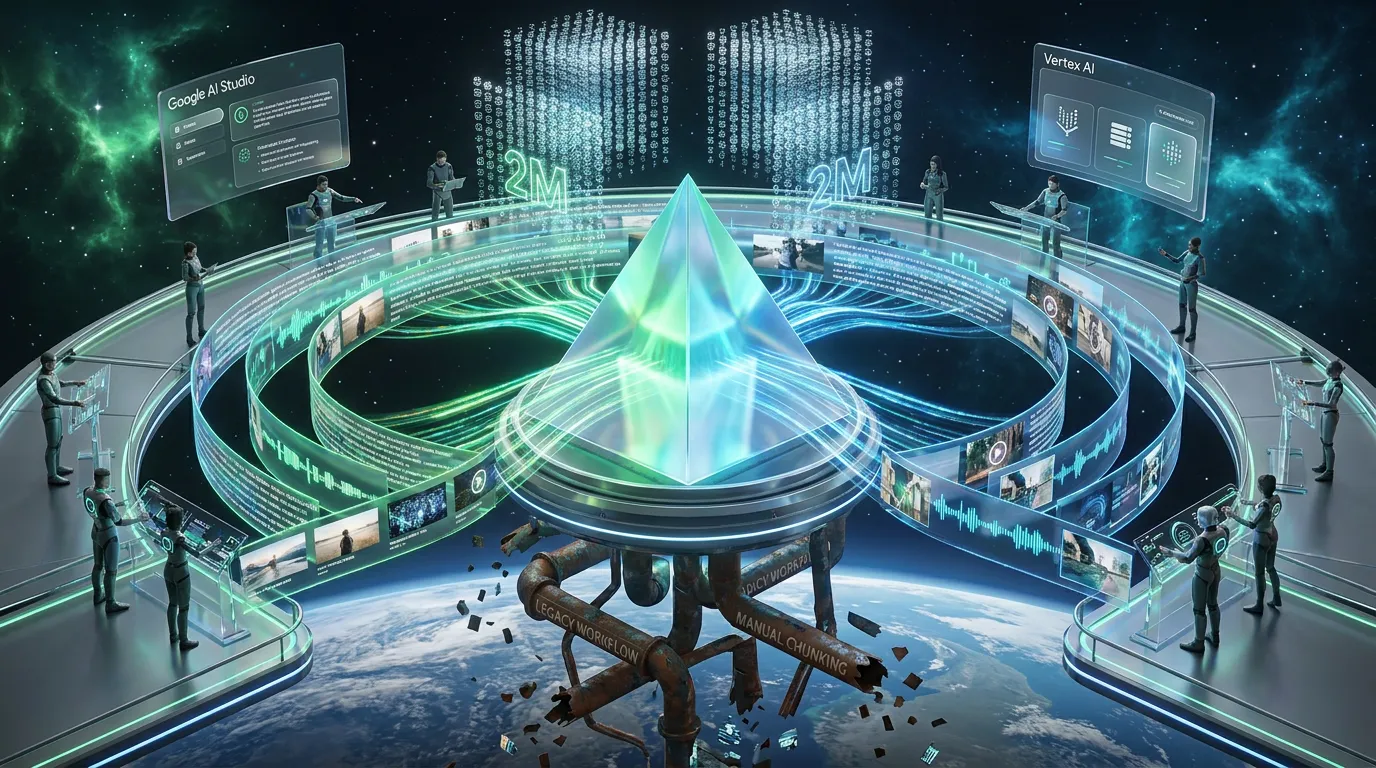
- Up to 256,000 tokens of context through the NIM API
- Open checkpoints in BF16, FP8, and NVFP4 formats
- Deployment through NVIDIA NIM, Hugging Face, and supported runtimes including TensorRT-LLM and vLLM
This combination is why the release stands out. Multimodal support alone is no longer enough. The better question is whether a model is open enough to control, efficient enough to run, and exposed enough to automate. Nemotron 3 Nano Omni checks more of those boxes than the average announcement built on vibes and benchmark screenshots.
Why the unified stack matters
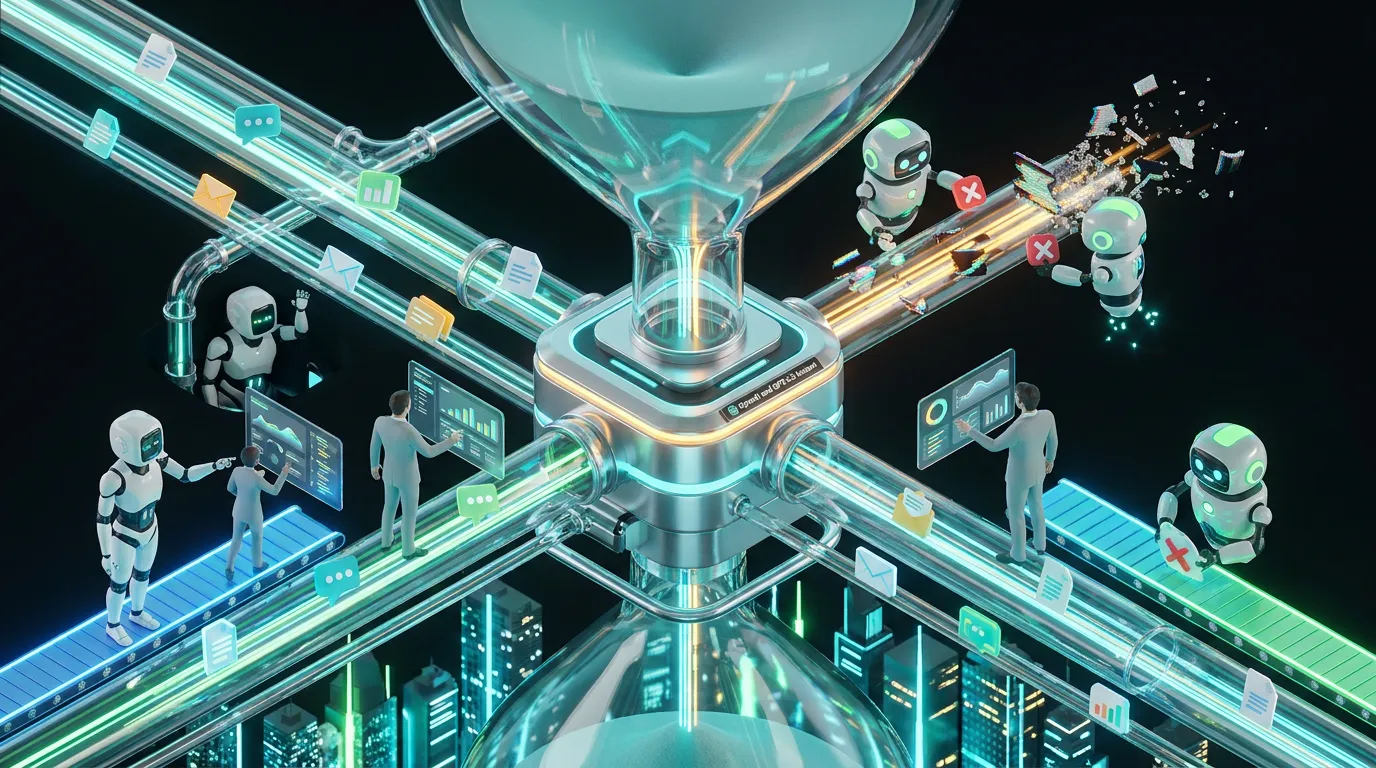
Most real-world multimodal workflows are still clunky. One service handles transcription. Another does OCR. Another looks at images. A language model tries to reason over the outputs. Then your team gets to enjoy the thrilling sport of debugging handoffs between tools that all speak slightly different dialects of chaos.
NVIDIA’s pitch is to collapse that stack into one model path. If that works reliably, it cuts down on both workflow complexity and the little fidelity losses that happen every time one tool summarizes another tool’s output before the final model even sees it.
That has obvious value for teams dealing with mixed-format inputs every day:
- meeting intelligence across slides, transcripts, recordings, and screen captures
- content review across visual assets, scripts, voiceover, and compliance text
- media monitoring across podcasts, clips, screenshots, and articles
- document operations where forms, scans, diagrams, notes, and audio all matter together
For non-technical teams, this is the practical point: fewer stitched pipelines usually means fewer brittle failure points. That does not magically guarantee accuracy, but it does reduce the amount of glue code and workflow duct tape needed to get useful output.
| Capability | What it means | Why teams care |
|---|---|---|
| Multimodal input | One model handles text, image, audio, video | Less tool chaining |
| 256K context | Can keep more source material in view | Less chunking and stitching |
| Open checkpoints | Can be hosted and controlled by your team | More privacy and cost flexibility |
API access is the real headline
This is where the release gets operational. NVIDIA is not keeping Nemotron 3 Nano Omni trapped inside a showcase app. The model is available through NIM with a documented API surface, which means there is a realistic path to calling it from internal software, automation tools, or custom agent stacks.
In plain English: yes, this can be automated.
That does not mean every brand team should immediately spin up self-hosted multimodal infrastructure before coffee. It does mean this launch is closer to production reality than a lot of multimodal products that still live behind a polished UI and a lot of wishful thinking.
For readers who do not care about SDK jargon, here is the translation:
| Question | Answer | Business meaning |
|---|---|---|
| API available? | Yes | Can plug into software workflows |
| Self-hostable? | Yes | More control over privacy and spend |
| Workflow ready? | Mostly yes | Needs orchestration and review layers |
This distinction matters. A multimodal model without a callable interface is basically an app feature. A multimodal model with open weights and an API can become part of an operating system for content and decision workflows.
Where it looks useful now
The strongest use cases are the boringly valuable ones, which is usually where real money lives.
Meetings into assets
Marketing and creative teams live inside meetings, webinars, recordings, and decks. A model that can process the transcript, slides, speaker audio, and visuals together creates a cleaner path from live conversation to summaries, action items, clips, briefs, and follow-up content.
Compliance and brand review
Reviewing media often requires checking voiceover, on-screen text, visuals, and context together. Text-only models are not enough. A unified multimodal model is better suited to catch the whole picture, though obviously not with perfect reliability. Legal still gets a chair at the table. Sorry to the automation maximalists.
Document intelligence
Contracts, scans, charts, screenshots, handwritten notes, and even attached audio explanations are normal business inputs now. Nemotron 3 Nano Omni looks well positioned for these mixed-input environments where extracting text alone is not the full task.
This also fits a broader trend we have been tracking at COEY: the market is shifting from isolated model feats toward components that can actually sit inside scalable systems. That pattern also shows up in our recent look at DeepSeek V4, where long context and open deployment paths pushed the same workflow-first direction.
What is real vs what is hype
This release is meaningful, but let’s not act like one open model just solved multimodal automation forever and cured meetings while it was at it.
Three practical limits still matter:
- Open does not mean easy. Self-hosting still requires real infrastructure, cost management, and ops maturity.
- Multimodal does not mean flawless. Long-context and multi-input reasoning still need testing against real workloads.
- API-ready does not mean autonomous. Human review, observability, and approval layers still matter a lot.
NVIDIA’s docs also include practical media limits, especially in hosted settings. For example, the NIM reference notes limits such as video inputs of about two minutes and audio inputs up to about one hour, with images submitted as image files rather than PDFs. So while the model is clearly automation-capable, teams should read this as operationally promising, not “fire your governance plan into the sun.”
The winning pattern is still human judgment plus machine throughput. Better automation removes grunt work. It does not remove accountability.
Why this matters for creative ops
Nemotron 3 Nano Omni matters because it pushes multimodal AI toward a more usable shape: open, efficient, programmable, and aimed at mixed-media workflows that real teams already have.
For executives, that means multimodal AI is becoming infrastructure, not just product theater.
For marketers, it means faster processing of the messy reality of modern work: decks, calls, videos, screenshots, docs, and assets all in one stream.
For builders, it means NVIDIA is offering something with actual stack potential. Not just a sexy announcement post and a lot of “developers can build amazing things” copy, which is usually corporate code for “good luck, nerds.”
Bottom line: Nemotron 3 Nano Omni looks like one of the more practical multimodal releases in the current market because its openness, API posture, and deployment options all point in the same direction: toward workflows. NVIDIA also claims strong efficiency, including up to 9x higher throughput in some multimodal workloads versus alternative open omni models, but teams should treat vendor benchmark framing like vendor benchmark framing and validate against their own jobs. It still needs testing, orchestration, and adult supervision. But compared with the usual shiny nonsense, this one looks much closer to real systems that can help human teams scale creativity instead of just admire the demo.