Brand DNA Engines: Your Automated Marketing Backbone
Brand DNA Engines: Your Automated Marketing Backbone
November 2, 2025
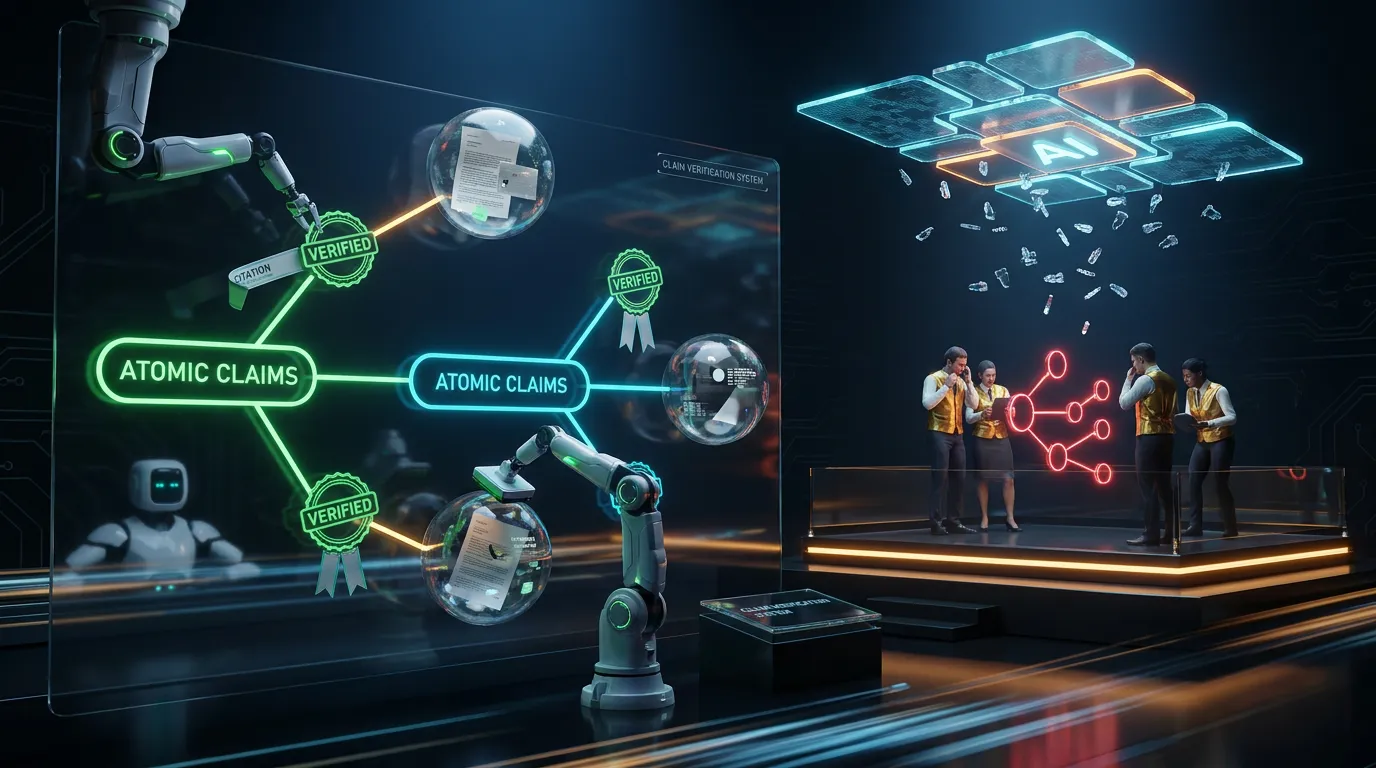
The marketing stack just got a backbone transplant. Meet the Brand DNA Engine, the automation layer that does not just copy your look and feel, but understands what makes your brand tick. Modern tools can crawl your site, infer tonal quirks, color systems, product canon, and even spot legal no‑go zones; then they use that profile to generate on‑brand creative across every channel. In other words, you get content that actually feels like you, at scale, not generic filler. Adobe Firefly Foundry is a current example. This shift is not subtle: it is redefining how scrappy SMBs and global brands automate marketing activities from copy to campaigns.
Brand DNA Engines Explained
A Brand DNA Engine is not just another AI content generator. It is a structured, evolving digital representation of your brand, modeling voice, design system, product facts, claims, audiences, and the list of items your lawyers never want to see on social. Think of it as the OS for your marketing robots. Core inputs such as your site, product docs, campaign history, and performance analytics become the source of truth. The output is production‑ready assets that move fast while keeping your brand’s soul intact.
- Voice and style: Tone, cadence, vocabulary, banned phrases, regional quirks.
- Design tokens: Brand colors, type choices, logo do’s & don’ts, clear rules for text in images.
- Product canon: SKUs, specs, pricing, feature grids, regional variants.
- Claims policy: Sourcing requirements, landmines, who needs to sign off what.
- Audience models: Segments, triggers, channel habits, send fatigue rules.
- Distribution grammar: Channel‑specific CTAs, length limits, link hygiene.
Do not call it a style guide. It is your brand’s operating system; agents boot from it every time.
Why Did Brand DNA Engines Emerge Now?
Recent platform updates have taken Brand DNA extraction mainstream. Salesforce Agentforce 360 brings agentic workflows into the CRM stack with trusted data access and guardrails. In parallel, Adobe’s content suite is elevating governance and brand controls in asset workflows, as seen in the latest direction for Experience Manager Assets at Summit 2025 (overview). Underpinning it all are machine‑readable, always‑updating brand profiles that AI systems can ingest, so you are not pasting style guides into prompts.
How Brand DNA Engines Outclass Both Assistants and Agencies
| Approach | Strengths | Limitations | Best Use |
|---|---|---|---|
| Assistant‑style AI | Instant onboarding, learns your site fast, minimal manual setup | Surface‑level brand model, basic policy, few integrations | SMB marketing, quick social ads, brainstorming |
| Brand DNA Engine | Rich rules, reusable for all tools, measurable accuracy | Needs upfront modeling, some governance overhead | Ad factories, lifecycle automation, global rollout |
| Agency‑only | Human craft, deep taste, big‑picture thinking | Slow turnarounds, higher cost, not scalable | Flagship launches, rebrands, “campaign of record” |
What Actually Goes In The DNA
The secret sauce: make your brand machine‑usable, not just human‑readable. Start tiny with a minimal JSON schema covering the basics. Expand as automation matures or complexity demands it.
Brand DNA Schema Example
{
  "brand": {
    "name": "Acme",
    "voice": {
      "tone": ["confident", "curious", "precise"],
      "avoid": ["guaranteed","fastest","best in class"],
      "style_notes": "Short sentence, punchy, concrete nouns."
    },
    "design_tokens": {
      "color_primary": "#1A73E8",
      "color_accent": "#F9AB00",
      "font_headline": "Inter",
      "font_body": "Inter",
      "logo_lockups": ["horiz", "stacked"],
      "text_in_image_rules": {
        "max_words": 10,
        "min_font_size_px": 24
      }
    },
    "claims_policy": {
      "requires_source": ["numeric", "comparative"],
      "allowed_sources": ["product_docs", "pricing", "case_studies"],
      "escalations": {
        "pricing": "legal",
        "medical": "legal",
        "security": "security_officer"
      }
    }
  },
  "products": [
    {
      "id": "sku_A",
      "name": "Acme Pro",
      "features": ["real-time sync", "audit logs"],
      "regions": ["US", "EU"],
      "price_range": {"usd": [49, 79]}
    }
  ],
  "audiences": [
    {
      "slug": "ops_leads_us",
      "motivators": ["reliability", "cost_control"],
      "channels": ["email", "linkedin"],
      "fatigue_cap": 4
    }
  ],
  "distribution": {
    "email": {"subject_len_max": 65, "preheader_len_max": 90},
    "linkedin": {"max_chars": 300, "hashtags_max": 3},
    "youtube": {"title_len_max": 70, "desc_len_max": 5000}
  }
}
Automation Pipelines: What DNA Unlocks
Typed brand DNA powers deterministic, low‑drama content chains. The key is the critic layer, like your most ornery editor, enforcing tone, claims, and schema before anything gets published. No more “who approved this?” Slack threads.
Content Automation Flow
[Trigger]
  -> [Retrieve truths + DNA]
  -> [Generate content to schema]
  -> [Critic check: schema, tone, claims, sources]
      | pass -> [Auto-publish if low risk]
      | fail -> [Auto-repair or escalate]
  -> [Attach provenance + analytics]
Critic Policy Example
{
  "critics": {
    "schema": {"enforce": true, "schema_id": "AdSchemaV5"},
    "tone": {"enforce": true, "match": "brand.voice"},
    "claims": {"require_source": true, "allowed_sources": "brand.claims_policy.allowed_sources"},
    "length": {"enforce": true, "channels": "distribution"}
  },
  "escalation": {
    "if": [
      {"missing_source": true},
      {"risk": ["pricing", "medical", "security"]},
      {"confidence_lt": 0.85}
    ],
    "to": "human_reviewer"
  }
}
Can Fully Autonomous Agents Be Trusted?
Full agentic workflows are powerful, but leave them unsupervised and they will spend your ad budget on “test” variants into oblivion. Business agent benchmarks show that single‑turn tasks are strong, but multi‑step scenarios see performance degrade fast. Tool‑using agents can bypass policies if not tightly boxed in. The translation for marketing ops: default to hybrid. Let the bots handle the rote and reserve big decisions for humans. Watch usage and costs closely or get ready for hard budget conversations with finance.
Budget Guardrails That Stop The Madness
{
  "campaign": "Q4_refresh",
  "caps": {
    "max_assets": 300,
    "max_cost_per_asset_usd": 1.20,
    "frontier_calls_per_asset": 1,
    "retry_limit": 1
  },
  "routing": {
    "small_model_first": true,
    "escalate_on": ["low_confidence", "claims_detected"]
  },
  "holdouts": {"share": 0.10, "method": "geo_split"}
}
DNA Across Content Types: Not Just Copy Anymore
- Text: DNA means a high hit rate on channel‑appropriate copy. Pair with structured output and ship straight to CMS or ad platforms.
- Photo: Design tokens and image rules reduce cringe. Modern image models are more likely to honor explicit visual constraints when given rules up front.
- Video: DNA covers scripts, shots, and lower‑thirds. AI can rough out plans and chapters; humans still do final edits for taste for now.
- Audio: Script rules stop embarrassing slip‑ups in TTS reads with guardrails for CTAs, on‑brand intros, and no‑regulatory‑trouble zones.
The Economic Angle (Automation Is Not Magic)
Yes, you will see lower costs per asset and can scale creative production. But set‑and‑forget gets ugly: recursive loops, expensive model upgrades every call, and death by endless reviews. The fixes are simple:
- Schema‑first output: Fewer manual fixes and higher validity on first try.
- Retrieval‑first prompts: Hallucination rates drop and rework falls.
- Critics and auto‑repair: Let small models mop up typos while humans handle new or risky stuff.
- Budget caps and orchestration: Hard stops on cost drift. Quality up, cost down.
Metrics Finance Actually Cares About
| Metric | Why it matters | Good signal |
|---|---|---|
| Cost per provable asset | Total cost of content with logged approvals and sources | Should decline as you scale up |
| First‑pass validity | Percent passing all critic checks first try | 80% or higher is healthy |
| Time to publish | Proposal‑to‑live by channel | Minutes for low‑risk, routine assets |
| Source coverage | Percent of claims with required citations | 95%+ for regulated or global teams |
Benchmarks Lagging Behind Real‑World Needs
Current open RAG and multimodal benchmarks look impressive, but few reflect the real demands of marketing automation like multi‑step reliability, persona‑level accuracy, or compliance with channel constraints. Waiting for benchmarks to catch up is a trap. Instead, build your own house benchmarks that reflect your audiences, automation quirks, and brand risk tolerances.
Sample House Benchmark for Marketing DNA Agents
{
  "tasks": [
    {"name": "email_variant", "channels": ["email"], "risk": "low"},
    {"name": "ad_set_linkedin", "channels": ["linkedin"], "risk": "medium"},
    {"name": "product_page_faqs", "channels": ["cms"], "risk": "high"}
  ],
  "evals": {
    "validity": ["schema", "tone", "length"],
    "grounding": ["source_present", "source_allowed"],
    "performance": ["ctr_proxy", "readability"],
    "cost": ["tokens_in", "tokens_out", "usd"]
  },
  "thresholds": {
    "low": {"validity": 0.95, "grounding": 0.90},
    "medium": {"validity": 0.90, "grounding": 0.95},
    "high": {"validity": 0.98, "grounding": 0.98}
  }
}
Practical Governance (Without Corporate Theater)
Governance is not 12 weeks of meetings. You want tight, actionable rules that every app and agent can process at machine speed.
- Risk tiers: Low risk auto‑publishes, medium triggers review, high flags legal or execs fast.
- Policy as code: Claims rules, style and tone, escalation lists, and budget all as versioned JSON, not static PDFs or dusty slides.
- Provenance manifests: Every asset logs model, prompt, sources, reviewers. Expose in your CMS or DAM if questions come up.
- Instant kill switches: One push to pause flows or unpublish troublesome assets. Sleep better.
Snippet: Policy Pack Structure
{
  "policy_pack": {
    "name": "brand_dna_v1",
    "caps": {
      "max_updates_per_day": 50,
      "max_cost_per_update_usd": 0.90
    },
    "claims": {
      "numeric_require_source": true,
      "blocked_phrases": ["guaranteed", "fastest", "best in class"]
    },
    "review": {
      "auto_publish": ["typos", "alt_text", "internal_links"],
      "editor_review": ["new_pages", "comparisons"],
      "legal_review": ["pricing", "security", "medical"]
    },
    "provenance": {
      "log_fields": ["model", "prompt_id", "sources", "schema_version"],
      "retention_days": 365
    }
  }
}
Your Four‑Week Plan for Brand DNA Automation
Week 1: Extract and Type Your DNA
- Compile voice rules, design tokens, product facts, claims, and distribution quirks.
- Create a minimal JSON schema and get quick stakeholder approval.
- Choose one asset type to start, such as FAQ, short ad, or transactional email.
Week 2: Wire Up Retrieval and Critics
- Build a retrieval endpoint for product truths, claim sources, and validation logic.
- Deploy critic checks for schema, tone, and claims policy. Let bots attempt minor auto‑repairs such as formatting.
- Set hard budget limits and simple escalation triggers, and start with lightweight small models.
Week 3: Run Hybrid Automation
- Let bots auto‑publish low‑risk changes such as typos and alt text; escalate bigger moves for review.
- Attach provenance to every asset and log all costs by phase.
Week 4: Measure, Iterate, Expand
- Set holdouts. Compare lift such as CTR, replies, and time‑to‑publish versus your old way.
- Tune policy thresholds; trim noisy or useless checks. Make escalation rarer but smarter.
- Nominate the next process. Social versions and lifecycle emails are juicy early wins.
What To Avoid
- Do not go full autopilot on day one. Keep humans for high‑stakes calls.
- Do not stash rules in decks or PDFs. Agents ignore what they cannot execute.
- Do not ignore cost signals. Budget and usage metrics should alert early and loudly.
- Do not over‑segment at launch. Reliable holdouts beat a million micro‑personas every time.
The Culture and Ethics Reality
Brand DNA Engines will scale your voice and guardrails, but they can also homogenize you into a beige blur. Make sure you are not just recycling your brand’s safe median. Protect the weird, the local quirks, and the details humans connect with. Track diversity in visuals and voices. Enforce claims discipline early, not just to avoid fines, but to avoid becoming boring.
The Take
Brand DNA Engines deliver the connective tissue missing between basic assistants and truly autonomous agents. They package your hard‑won voice, facts, and policies into a machine‑usable layer so content ships faster with fewer red flags and less babysitting. The approach is not hype. It is: type your DNA, wire up retrieval, deploy critics and cost caps, then measure and iterate. The brands winning here are not waiting for vendor magic. They are teaching their AI who they are and leaving high‑value steering to humans. That is how you automate without melting your brand into another content smoothie.
Turn AI News Into Marketing Advantage
COEY turns the latest AI developments into real marketing firepower. We deploy n8n workflows, Claude Cowork agents, and OpenClaw pipelines that keep your channels running and your team focused on strategy. See our automation approach or request a proposal.