The Silent Maestros Multimodal AI Conducts Marketing’s Bold New Symphony
The silent maestros of multimodal AI conduct marketing's bold new symphony. A practical look at what they unlock for AI marketing agencies and creative ops.
26 July 2025Team COEY
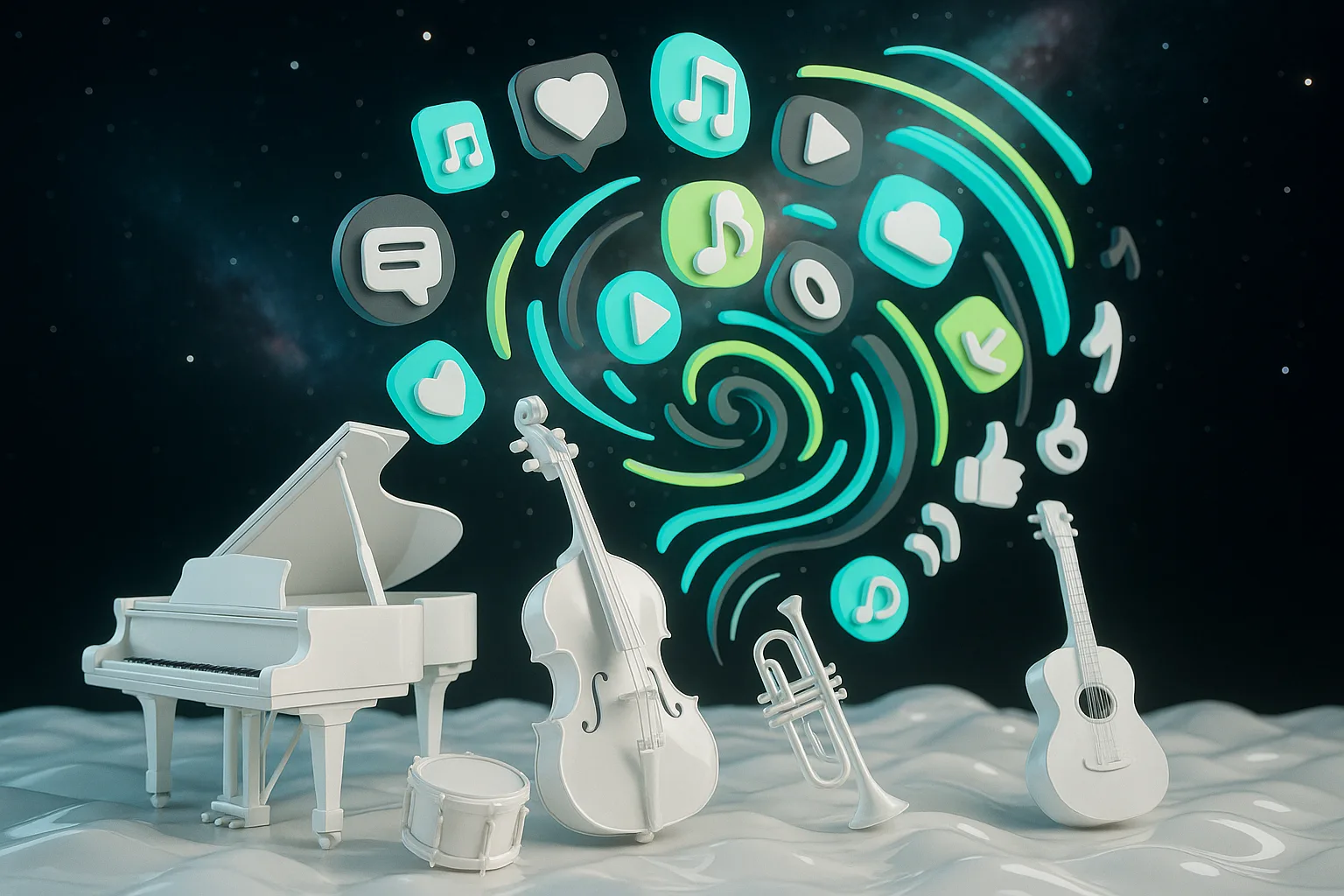
The Great Fusion: Multimodal AI’s Quiet Revolution
To the untrained eye, the evolution of generative AI feels like a frenzied parade of point updates and model leaks. But zoom out past the headline clutter, and something more profound is underway. AI systems aren’t just getting more powerful at writing, drawing, or answering your emails separately. They are learning to see, hear, and speak in a blend that finally lives up to the promise of true automation. If you are a marketer, CEO, or anyone building in the digital economy, this isn’t hype, it’s the scaffolding for your next competitive edge.
Let’s pull back the curtain on the current (and chaotic) race to multimodality, and what it means for turning today’s clunky workflows into a smooth, AI-driven creative symphony.
Text, Image, Audio, Video: The Modal Stack is Melting
For years, the AI world lived in silos: text models did text, image models did art, and audio models handled speech. Each required their own APIs, integrations, and endless rounds of fiddling to make them play nice together. Friction was everywhere, and friction is death for marketers and creators obsessed with speed.
Now the biggest foundation models are taking a “train on everything” approach, not just to show off, but to collapse these barriers for good. OpenAI, Google, Meta, and upstarts like Mistral and Cohere are racing to weave text, images, video, and even raw data into a unified interface. That doesn’t just mean you can prompt a bot with a photo and ask for snappy ad copy. It means your entire content and campaign pipeline could soon run on a single model, continuously ingesting, synthesizing, and deploying materials across platforms and formats.
| AI Provider | Multimodal Capabilities | Marketing Automation Potential |
|---|---|---|
| OpenAI | Text, image, speech; growing video analysis | Unified asset generation; channel orchestration |
| Google Gemini | Text, image, audio, code; high retrievability | Dynamic campaign adaptation; data integration |
| Meta | Text, photo, video; open-weight vision-language | Creative remixing; social-ready content |
| Mistral | Fast, small models; growing multimodal APIs | On-device and private asset generation |
From Automation to Orchestration: A New Power Shift
So what happens when your campaign isn’t just automated, but orchestrated? Imagine this: you input your product’s latest imagery, a brief, and a few data points about your audience. The system drafts landing page copy, generates social posts, builds influencer outreach DMs, and whips up sound bites for paid audio ads, in the correct brand voice, optimized by real-time analytics pulling from your CRM, and prepped for instant A/B testing.
This isn’t a far future dream. Pilot deployments of multimodal pipelines are already running in dominant brands’ content studios, combining GPT-4o-level multimodality with Zapier-style integrations and low-code automation. The role for “ops” shifts away from manual asset management and more toward setting the orchestration rules: when and how creative is generated, where it goes, and what parameters define “success.”
The Ingredients of Modern AI Orchestration
Input Multiplexing: Seamlessly blending product specs, market data, and brand guidelines into each prompt to output custom-tailored assets.
Real-Time Feedback: Using feedback loops from campaign performance and sentiment analysis to retrain and refine creative automatically.
Multichannel Deployment: Direct integration with ad networks, social schedulers, and CRM to push assets wherever they're needed, immediately.
Why “One Model to Rule Them All” Won’t Work (Yet)
Let’s get real: despite the marketing bravado, no model today delivers flawless results across every medium and business function. The “one AI to build your entire campaign” fantasy still stumbles on edge cases, hallucinations, and a universal problem: creative nuance. Blending diverse modalities exposes new cracks, text may be razor-sharp, but the same model’s video captions might come out wooden or off-brand.
The real opportunity (and risk) is in the middleware: the orchestration layer that manages when to use which model, how to fine-tune for your vertical, and how to handle safety, compliance, and privacy. Savvy marketing teams and automation specialists are building “AI conductors” to direct the orchestra, deciding what gets piped where, and flagging outputs that need human attention.
What Can Go Wrong?
Automation fails when brand-specific rules are ignored by generalist models.
Rogue hallucinations can slip into campaign copy, leading to embarrassment or regulatory headaches.
Content volume explodes, but quality control bottlenecks (because nobody wants 200 auto-generated LinkedIn posts that sound like a robot).
Security gaps appear if you let AI chew through customer data without proper guardrails.
The Rise of the Multimodal API Economy
As the boundaries between text, image, and video dissolve, there’s massive business value waiting for whoever can tie it all together. A new generation of API-first startups is racing to build the connective tissue: plugging together foundation models with SaaS platforms for marketing, asset management, compliance, and analytics. This will define the arms race for agencies, in-house teams, and automation shops.
But with great power comes new weirdness. Consider semantic search: instead of combing through old campaign assets manually, you prompt your multimodal AI to “find every ad we ran last quarter with a blue background that performed above benchmark with Gen Z women.” Now extend that to auto-generating variants, running multi-lingual sentiment tests, and rolling out adapted creative every hour. The bottleneck becomes deciding what you want, not executing it.
A Glimpse at the New Marketing Stack
| Layer | Key Automation Players | Strategic Value |
|---|---|---|
| Multimodal Models | OpenAI, Google, Meta, Mistral | Unified creative generation from text/image/video/audio |
| Orchestration Middleware | Paddle, Zapier, Make (and custom scripts!) | Rules, quality control, integration logic |
| Front-End Automation | Notion, Webflow, HubSpot, native CMS | User-friendly launch, analytics, personalization |
The brands and agencies that win aren’t those with the flashiest model, but those with the most adaptable, deeply integrated stacks, where smart workflow automation, human guardrails, and continuous feedback create a loop of perpetual learning and improvement.
Strategy Tips for Automation-Driven Marketers
Don’t wait for a perfect, out-of-the-box “multimodal AI marketer.” Instead:
Start mapping your most repetitive asset creation and review flows, and experiment with connecting them to multimodal APIs.
Invest in prompt engineering and orchestration logic, your next “creative ops” hire needs to be as fluent in API calls as marketing lingo.
Build a feedback system. Marry real campaign results with AI input tweaks in small batches, so every automation round levels up your output.
Stay paranoid about privacy and compliance: multimodal data is rich but risky. Invest in rigorous QA, guardrails, and human-in-the-loop checks.
Resist the “automate everything” temptation. Pick high-volume, low-variance segments for full AI, and keep human creativity where it counts.
Conclusion: When the Stack Thinks for Itself
The transformation from single-trick AI bots to orchestras of multimodal intelligence is quietly reshaping how work gets done. It’s not about flashy demos but about real, compounding advantages in speed, customization, and feedback-driven creativity. For marketers and creators, the question isn’t if you’ll adopt these systems, but how you’ll thread them together before your competitors do.
Like any great orchestra, AI still needs a conductor. The winners will be those who go beyond plugging in new tools to designing playbooks for AI-driven orchestration, where automation doesn’t stifle creativity but amplifies it.