
Five models, one SVG character brief
The same SVG puppet brief went to five AI systems. Each returned a different Gus. ChatGPT Astra High is the drawing. Claude Fable is a distant second. A GroundSlate puppet still needs real vector parts.
4 September 2026Team COEY
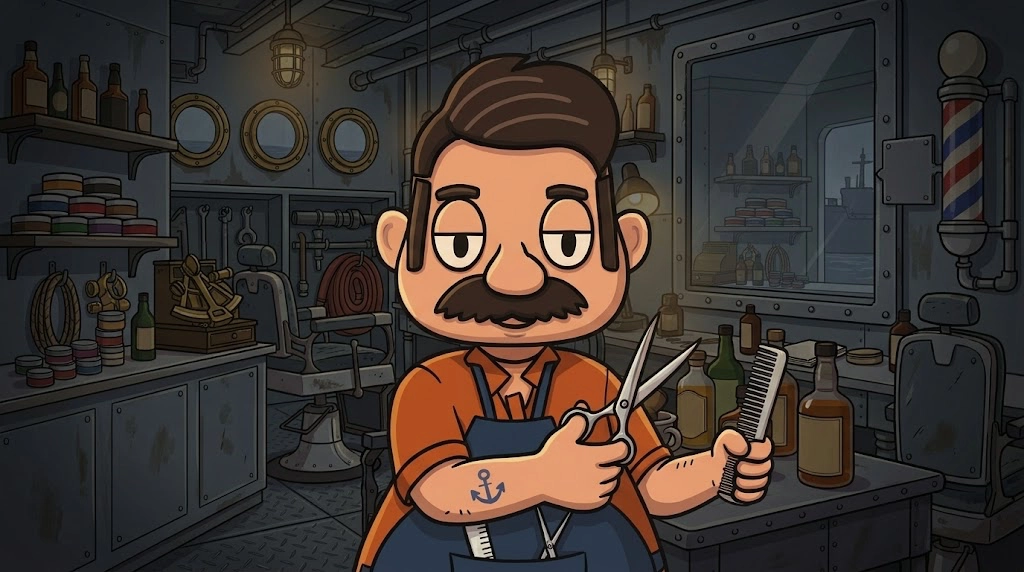
We sent one character brief to five AI systems. The brief asked for an SVG built so the character could be rigged as a puppet: named groups for every movable part, an even outline, a T-pose, facial features that move on their own, and hidden overlap at every joint.
What came back were five pictures of a barber.
They are all Gus Marchetti. They are all a pear on short legs with a quiff and a broom mustache. ChatGPT Astra High is in a different class from the rest: one weight, one silhouette, the costume and the face landing where the brief put them. Claude Fable 5 is a distant second. The line, the joints and the stacking are not the same across the set, and none of the files is a puppet. A GroundSlate puppet is SVG parts on a skeleton. A PNG of a T-pose is a look-at. You can read a silhouette from it. You cannot cut it.
A picture of a puppet is not a puppet
GroundSlate draws cartoons as HTML pages of SVG, then captures those pages into the film. The body that moves is a puppet: a named group on every joint, a mouth chart a recording can drive, hands that swap pose, a costume on the same bones. Puppets and style kits is the contract.
That only works if the front is real vector. Named groups. Independent eyes, lids, brows, nose, mustache and mouth. Limbs drawn complete under the joints so a rotation does not open a hole. One outline weight, with no doubled stroke where a sleeve meets a forearm.
A model that paints a convincing T-pose has drawn a still. The still can tell you the pear, the quiff, the navy apron. It cannot give puppet_doctor a group to hang on forearm_r. Tracing it is the failure The front that can be rigged exists to prevent.
puppet_doctor is the floor. It refuses rectangles used as a torso, a stroke that fights the kit, a mouth with nowhere to fall back to. It will not refuse a beautiful bitmap, because a bitmap never arrives as a puppet. The bar is the drawing you would put on television, in SVG, with parts.
Five fronts from one brief
The brief was identical. Palette, pear, quiff with three comb lines, half-height lids, broom mustache, anchor on the right forearm, comb and scissors in the pocket, T-pose, the whole rigging checklist. Each system produced a different Gus.
| System | Setting | The line |
|---|---|---|
| ChatGPT Astra | High | The drawing. One weight, the pear, the face |
| Claude Fable 5 | High | Distant second. Parts read as layers, seams at joints |
| ChatGPT 5.6 | Extra High | Holds through fingers and face |
| Grok 4.6 | Extra High | Doubled strokes and stray marks |
| Claude Opus 5 | High | Even weight, cream ground, visible seams |
ChatGPT Astra High
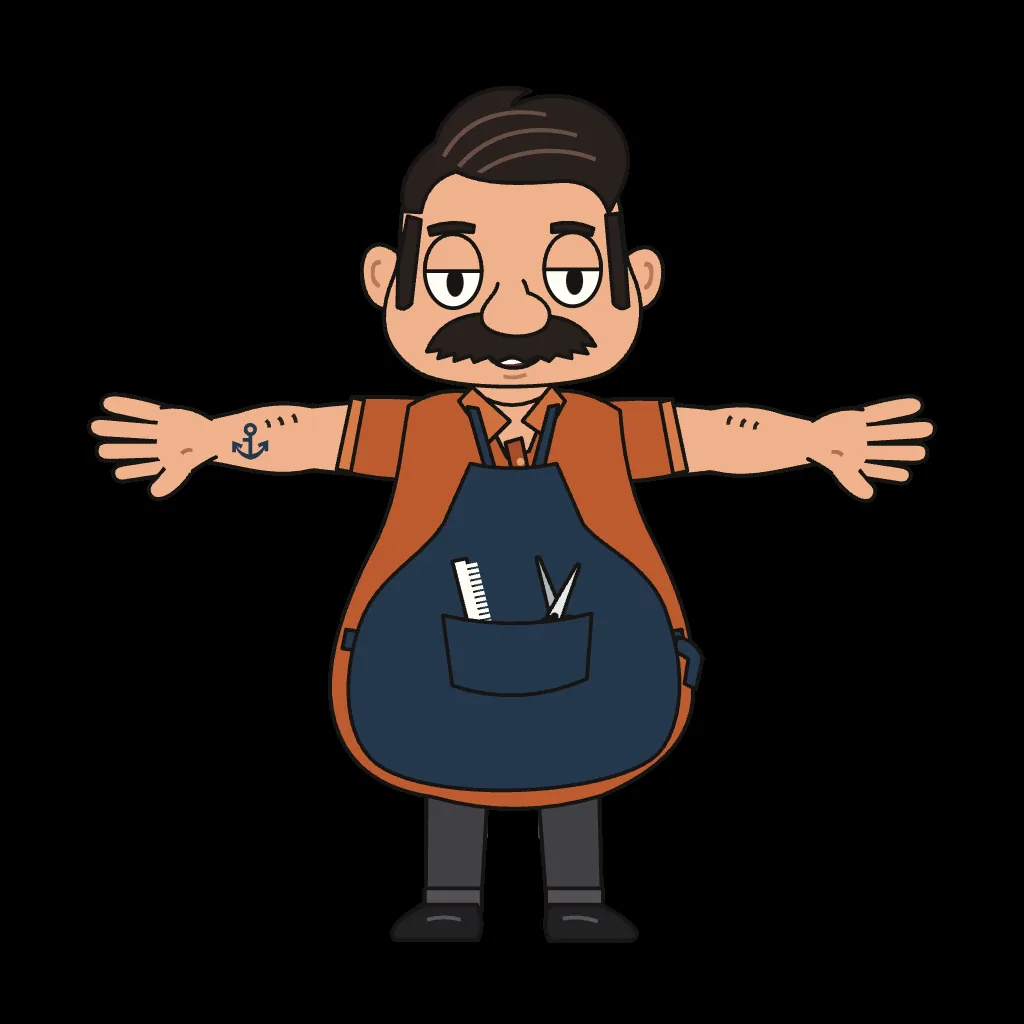
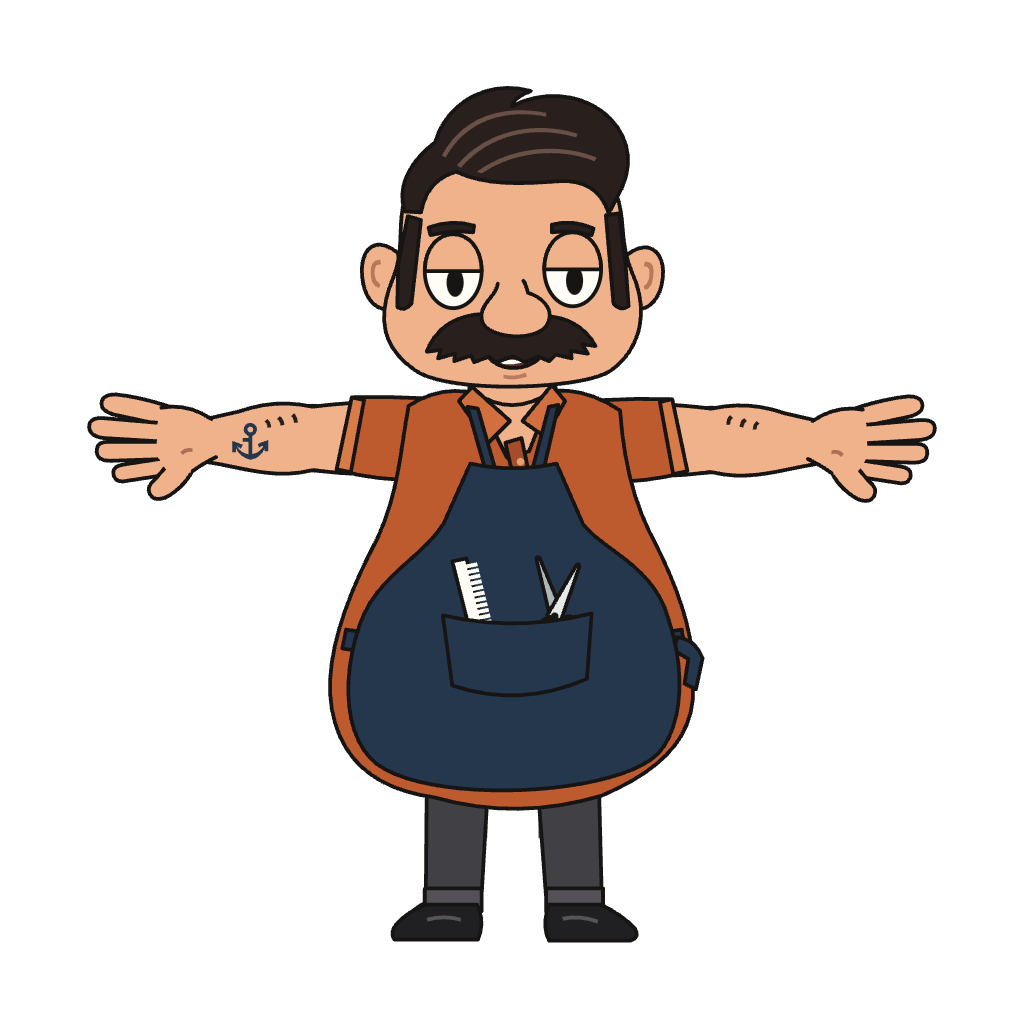
The silhouette is the one the other four were reaching for. Sloped shoulders, a belly that fills the navy apron, short legs that stay in proportion. Three comb lines sit inside the quiff. The mustache is a mass, wider than the nose, free of the mouth. The tattoo is an anchor on the right forearm. The pocket holds a comb and scissors. Palms face us. The outline does not change weight at a sleeve or a shoe.
It is still a flattened picture. You can see where a shoulder overlap would go. You cannot select it. Astra High is the look-at you would pin on the wall. It is not yet a puppet.
Claude Fable 5 High
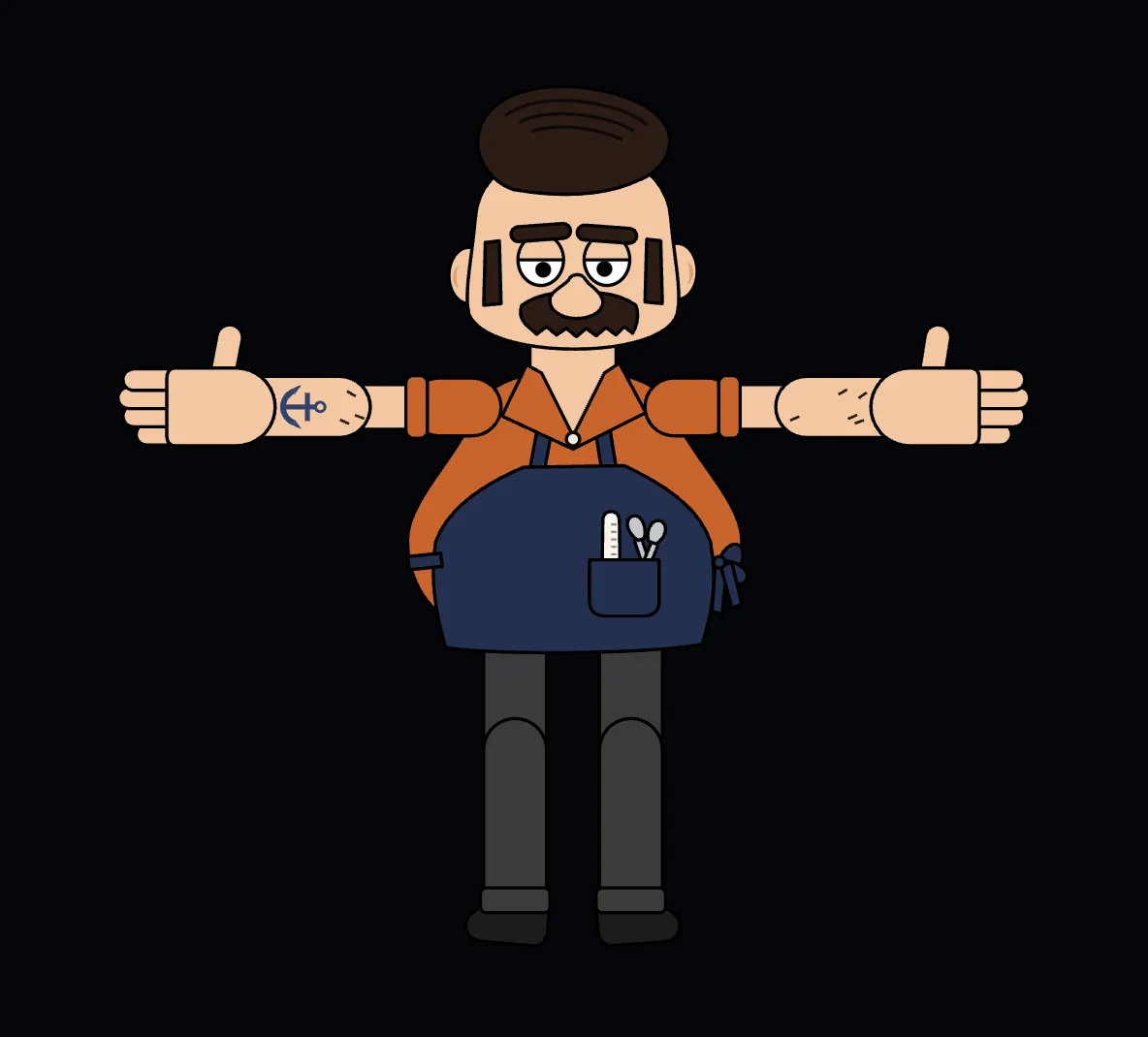
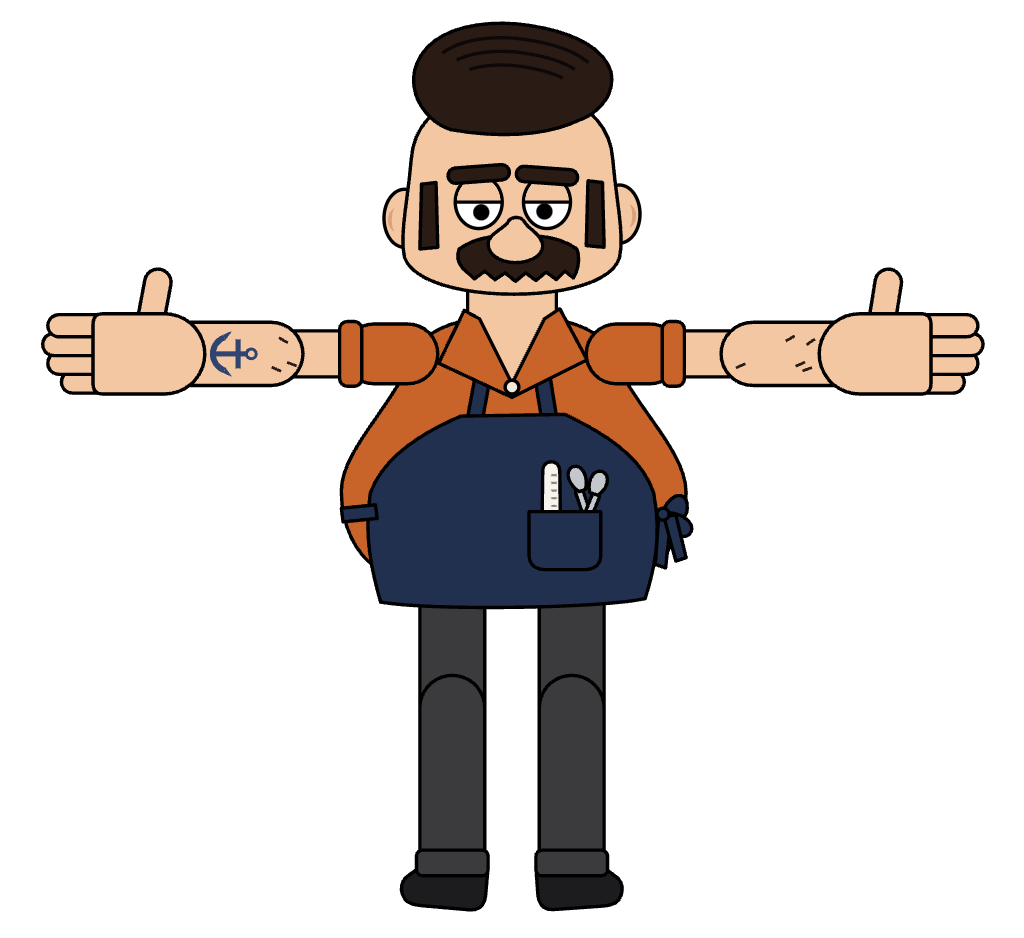
The T-pose is square. The comb lines, the sideburns, the pocket tools and the anchor are all there. The joints are advertised rather than hidden. That helps a rigger see the cut. It also means two outlines meet at every elbow, which is the doubled stroke the brief told the model not to deliver. On a bitmap you cannot fix that without redrawing.
ChatGPT 5.6 Extra High
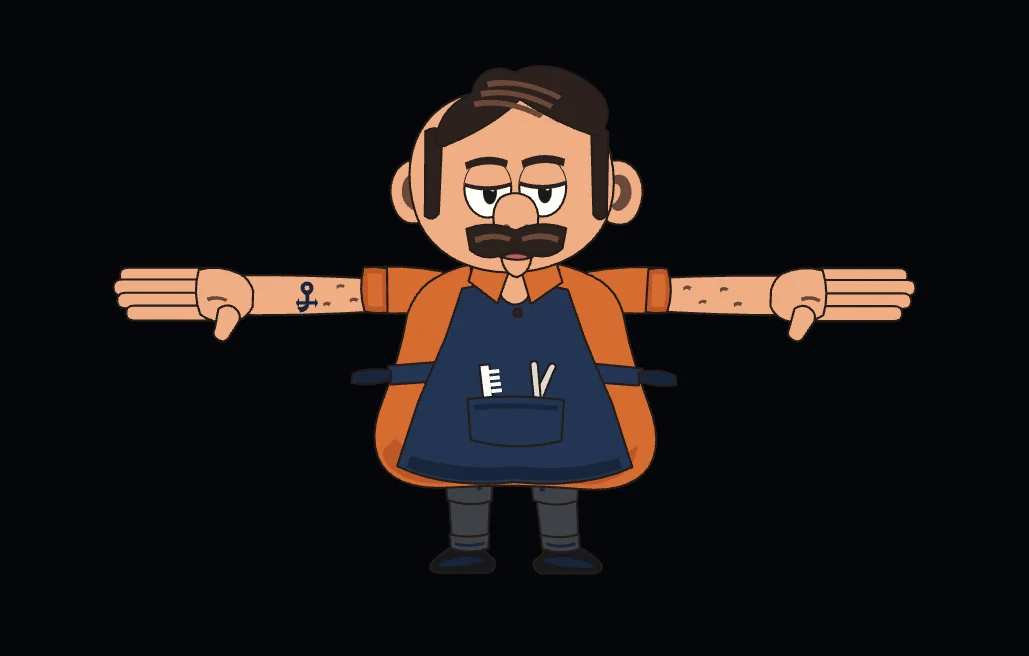
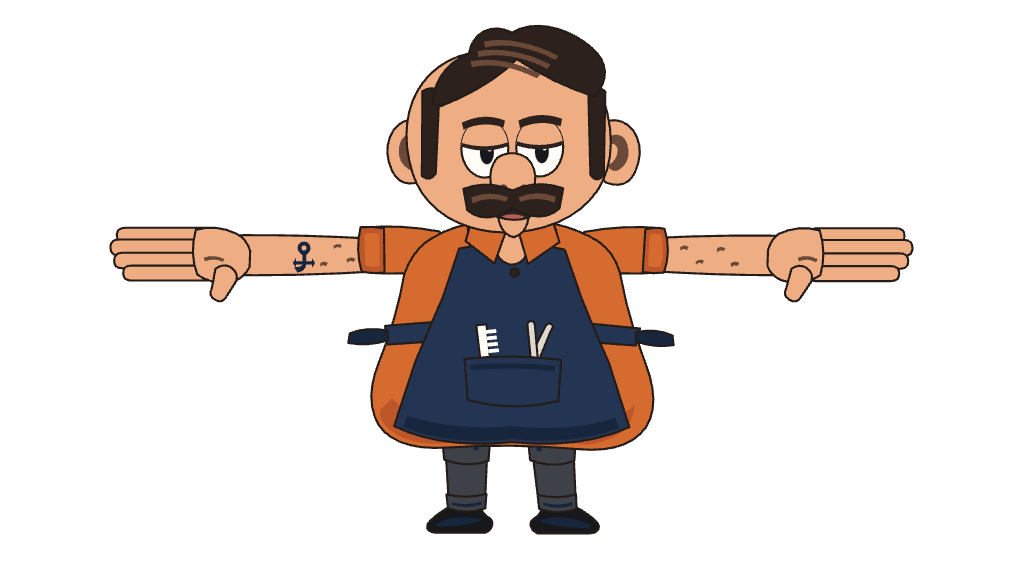
The pear still reads. Three comb lines, a broom mustache, an anchor, a comb and scissors in the pocket. Next to Astra the construction is looser: the same man, less locked.
It still arrives as a flattened picture.
Grok 4.6 Extra High
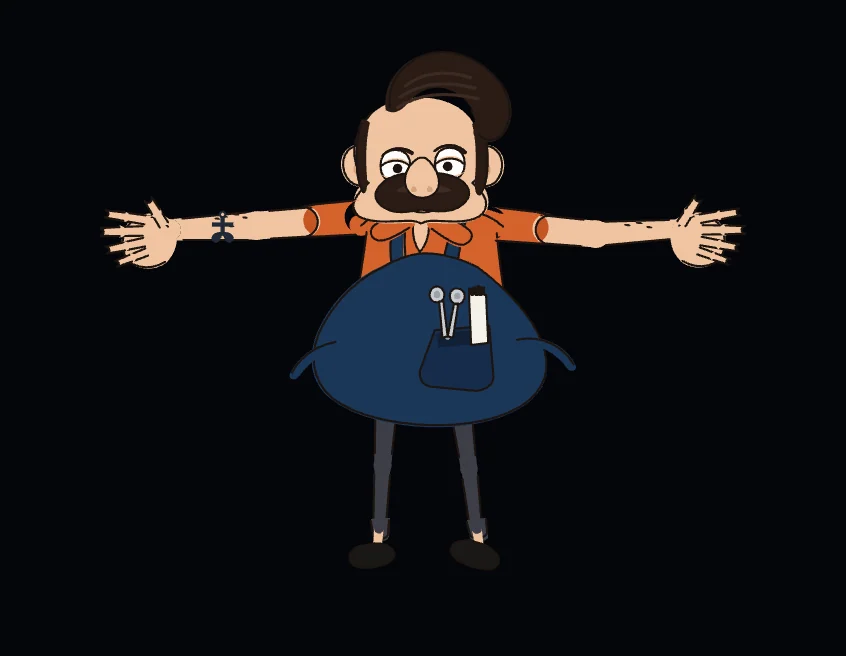
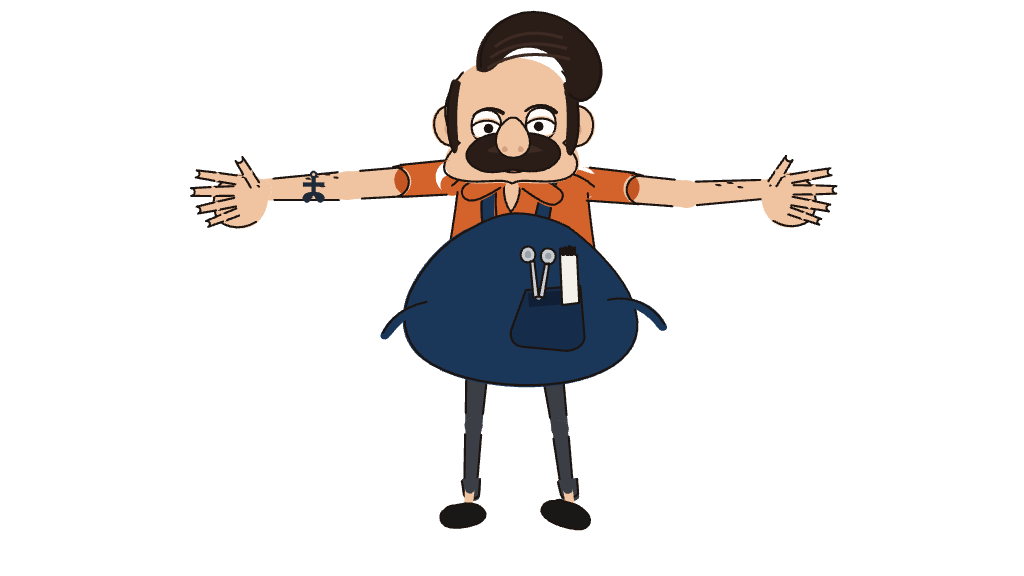
A circular join sits on one elbow. Apron straps stack as overlapping strokes on the collar. Fingers pick up stray marks. The tattoo simplifies to a mark that is barely an anchor. Arms and legs run thinner than the belly, so the outline changes weight as the eye travels.
This is the drawing that shows why the stroke checklist exists. A character whose outline changes weight at every joint will flicker the moment an arm rotates, and a flattened PNG gives you no group to correct.
Claude Opus 5 High
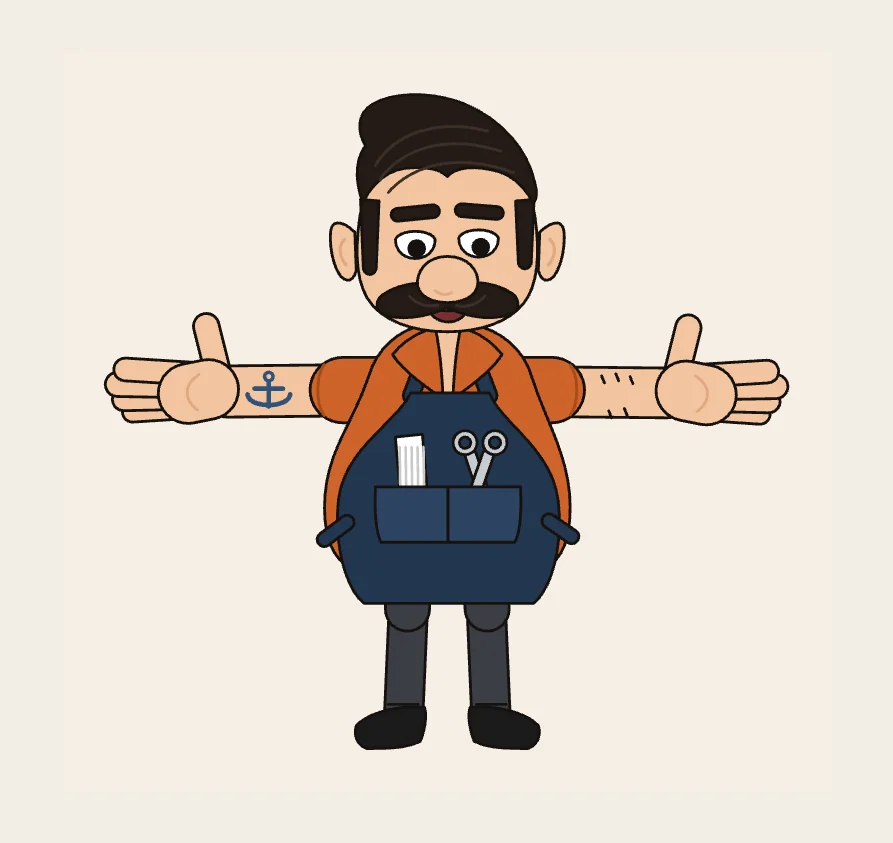
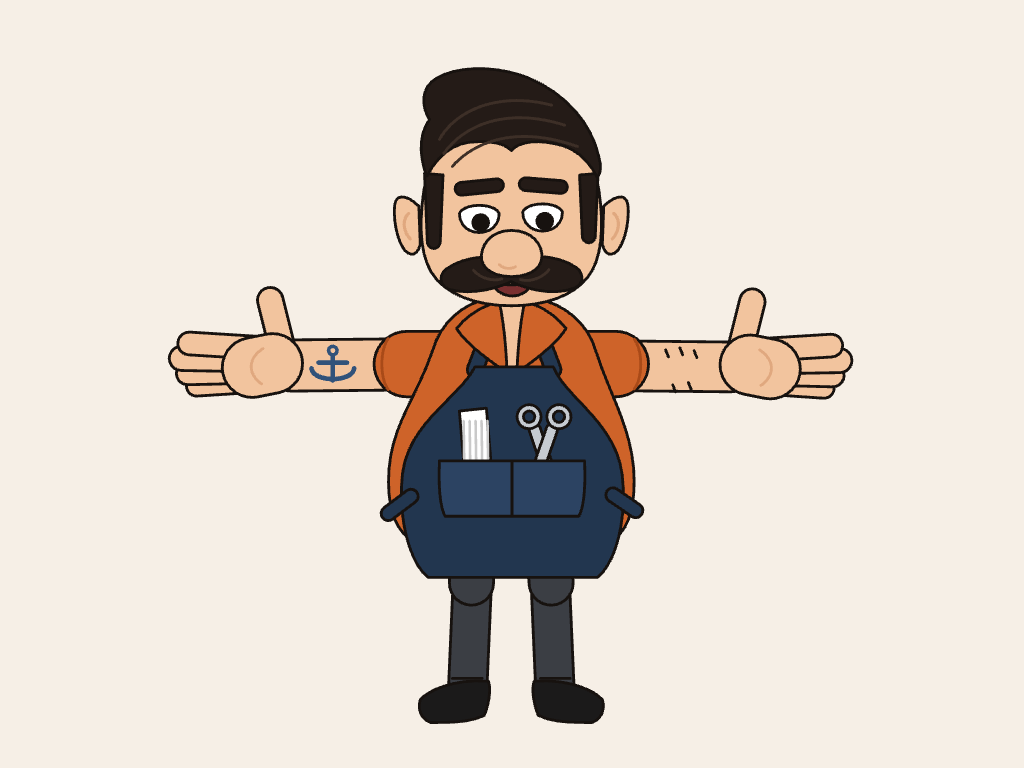
The construction is more geometric. Parts meet as stacked shapes, and you can see the seam at the elbow and the hip. Palms face us, four fingers and a thumb. The pocket is a comb and scissors. The head is the pear the brief asked for, fullest at the jaw.
The cream sheet is a tell. The brief asked for a puppet file, and this system delivered an illustration on paper. The character is readable. The file is still a picture.
What the line has to survive
A GroundSlate puppet is redrawn at every frame of a capture. The outline is the same weight at rest, at a thirty degree elbow, at a raised arm, at a three-quarter head. Two strokes stacked at a sleeve become a dark ridge that travels when the arm moves. A gap at the knee flashes paper. A mustache welded to the nose cannot lift when he talks.
That is why the brief spends as many words on groups, overlaps and stroke weight as it does on the pear. The personality is the quiff he touches up every morning. The engineering is whether that quiff is its own group.
None of these five files can answer that. They are useful as look-ats: silhouette, costume, who this is. Astra High is the one you would keep. Hand any of them to an agent as a drawing to trace and you get a traced bitmap, which is how a show inherits five styles before episode one.
A PNG of a T-pose is a picture of the work still to do.
The brief they all got
Download the prompt and run it yourself. The file is the brief as sent, including the rigging and stroke checklists.
What it actually demands:
- Flat 2D vector. No gradients. Even black outline.
- Named groups for every movable part. Face features independent. Mustache free of the mouth and the nose.
- T-pose. Hidden overlap at shoulders, elbows, wrists, hips and knees.
- Hands with a palm, four fingers and a thumb. Anchor on the right forearm.
- Inspect stacking and stroke weight before delivery. Do not ship doubled outlines.
The CHARACTER section is the part that made all five pictures read as the same man. A palette of three colours. Head as a pear. Eye size as a share of head width. Belly at least 1.4 times shoulder width. Crotch below mid height. The strongest visual idea: the most cared-for thing in the shop is the hair on his own head.
A name and a sentence would have produced five generic barbers. The part-by-part brief produced five Guses. The missing piece was the file format the brief opened with.
Download the five fronts
Each PNG is the file that system returned. The zip is all five plus the brief.
Use them as look-ats. Do not trace them into a puppet.
Draw it as SVG, then cut it
If you want Gus, or anyone like him, as a character that moves, the order is the one in How to create an animated character in GroundSlate: style kit first, front brief from that kit, one T-pose SVG with named groups, approve the front, then cut.
The front that can be rigged writes and draws that SVG. A cartoon character you can actually animate takes one character through to a puppet and a voice. The cast that reads at a glance cuts an approved front onto joints. The animated series in five steps is the whole pipeline in order.
A front another model wrote as real SVG is a front. Check it against the brief with evidence and cut it. A PNG of a T-pose is a picture of the work still to do.