
Alibaba Unifies Text, Image, Video, Audio Generation
Alibaba unifies text, image, video, and audio generation. What the new stack unlocks for AI marketing automation and end to end generative ad creative.
26 September 2025Team COEY
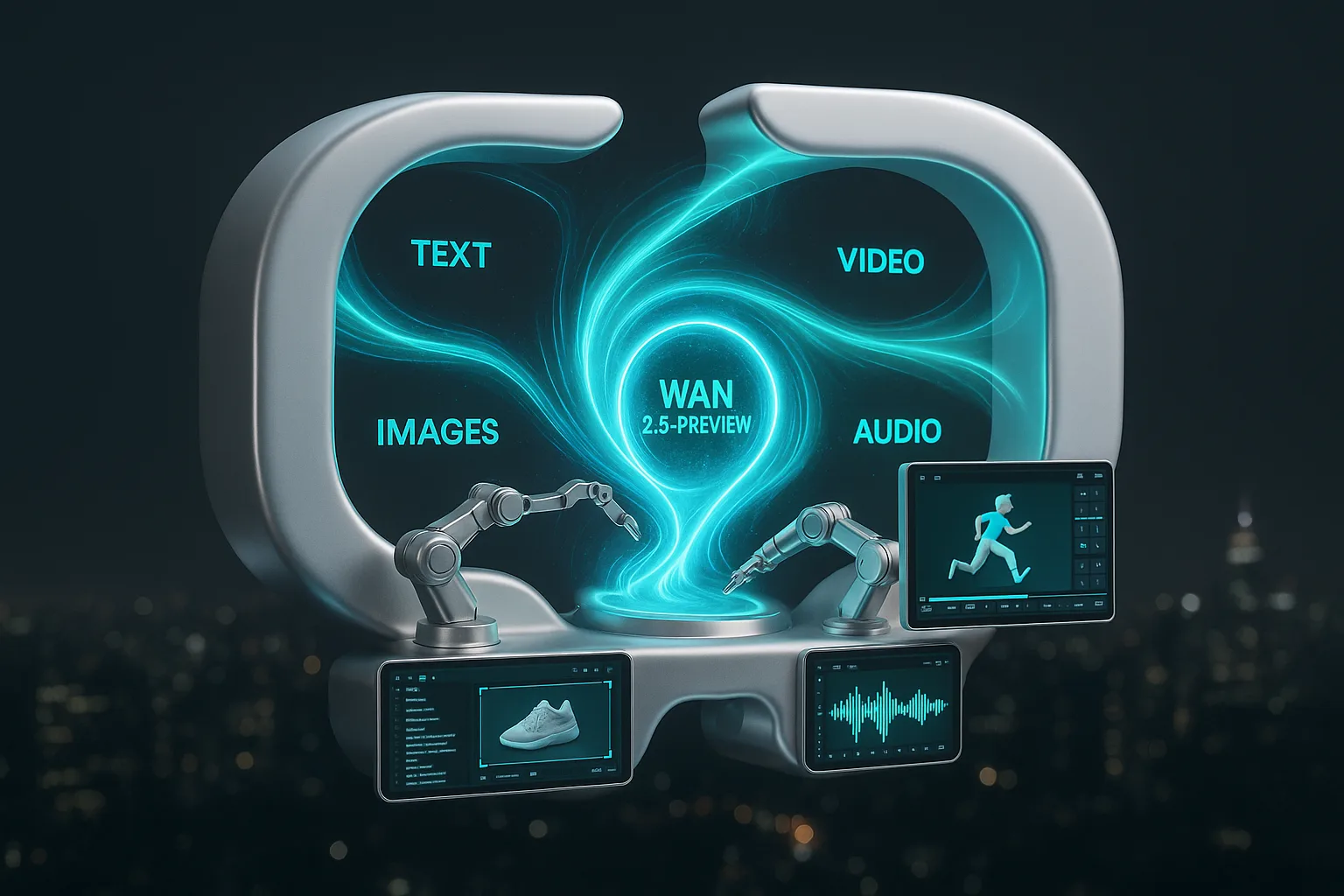
Alibaba Launches Wan 2.5 -Preview: Unified AI for Seamless Text, Image, Video, and Audio Generation
Alibaba Cloud has rolled out Wan 2.5-Preview, a natively multimodal model built to generate and edit text, images, video, and audio in a single pass. It’s available now in public preview via Alibaba Cloud Model Studio, with API access for text-to-video and image-to-video. If your creative pipeline spans storyboards, social video, product imagery, and voiceover, Wan 2.5’s pitch is simple: collapse tools, keep everything in sync, and move faster from brief to publish.
The headline: synchronized video + audio generation in one call, unified with image generation and editing , built for short-form production at scale.
What actually launched , and why it matters
Unlike pipelines that stitch together separate models, Wan 2.5-Preview uses a unified backbone to understand and generate across modalities. That joint training translates into stronger instruction-following and tighter A/V alignment. For creators and marketers, it means fewer handoffs and fewer “why doesn’t the voice match the visuals?” moments.
Capabilities in preview include:
Text-to-video with audio: Generate 5-10s clips (up to 1080p) with narration, dialogue, ambience, or music synchronized to on-screen action and timing in the prompt.
Image-to-video with audio: Animate a still while the model builds a matched soundtrack, useful for product hero shots, teasers, and loops.
Text-to-image and image editing: Instruction-led generation and conversational edits (lighting, colorways, materials, logo placement) with improved identity consistency.
The automation lens: Can this plug into your stack today?
Short answer: yes. Wan 2.5-Preview exposes REST endpoints within Model Studio. You submit a job (prompt + parameters + optional reference image or audio URL), receive a task ID, and poll for completion. Output is a downloadable asset you can route into your CMS, ad server, or editing pipeline.
What this enables immediately:
Batch social video: Feed a sheet of prompts and reference assets, generate 10-second variants with built-in VO/soundbeds, and auto-post to channels.
Dynamic ad creative: Spin out on-brand video cutdowns for geo/offer segments; push files to your ad manager once jobs complete.
Catalog-to-creative: Take product images to animated shorts with synchronized audio cues , no separate sound design roundtrip.
Variant testing: A/B brand styles, colorways, and copy lines across image and short video in one automation loop.
How to think about reliability: This is a public preview. Expect format and duration limits (typical 5 or 10 seconds; 1080p is supported), model names suffixed with -preview, and evolving rate limits. Billing is typically per generated second, with content safety and IP checks enforced; see the API docs for parameters and error codes.
Quick read: core capabilities
| Area | What’s in Wan 2.5-Preview | Automation notes |
|---|---|---|
| Video | 5-10s clips, up to 1080p, cinematic instructions (camera moves, pacing), stronger motion stability and identity | Submit prompt and parameters; receive file URL on completion via polling |
| Audio | Generates narration, dialogue, ambience, and music; aligns to cuts, motion, and prompt timing | Option to provide an audio file URL; model aligns visuals to the given audio |
| Images | Photoreal and stylized generation; conversational edits; material/color control; better typography handling | Instruction-based edits reduce manual retouching in downstream apps |
| Inputs | Text prompts, reference images, optional audio stems | Simple REST calls; fit for cron jobs, queues, and no-code connectors |
| APIs | Text-to-video, Image-to-video endpoints in Model Studio | Per-second billing; region/model rate limits; content safety checks |
Current vs. future: what’s real now, what we’re watching next
| Area | Do now (Preview) | Likely next |
|---|---|---|
| Short-form video | Automate 5-10s 1080p assets with synchronized audio; great for teasers, reels, ads | Longer durations, higher resolutions, multi-shot sequencing within a single job |
| Audio control | Provide VO/music stems or let model generate; in-sync by default | Track-level mixing, stem exports, finer loudness and ducking controls |
| Brand and identity | Improved identity consistency; reference images help lock style | Native brand embedding, persistent character IDs across sessions |
| Workflow automation | REST calls + polling fit into batch pipelines and no-code automations | Webhooks, job chaining, and multi-asset packages in a single API call |
| Safety & compliance | Content moderation and IP checks with error codes for unsafe inputs | Richer provenance signals and watermark policy options by channel |
How synchronized A/V changes creative ops
Most teams lose hours syncing VO to motion graphics, replacing soundbeds to fit cuts, or iterating around lip sync that never quite lands. Wan 2.5’s native audio gives you:
Fewer tool swaps: One job, two deliverables (video + sound) designed to fit together.
Prompt-level timing: Specify beats, cuts, or transitions in the text; reduce timeline surgery later.
Reference-led alignment: Upload an audio guide track , visuals follow the rhythm and structure.
That’s not just polish. It’s mechanical time back to apply taste and storytelling instead of wrangling timelines.
Multi-format relevance: text, photo, video, audio , together
Creators rarely reside in a single format. Wan 2.5 is built to let assets feed one another:
Text → video + audio: One prompt yields an in-sync reel for social, plus stills extracted for thumbnails.
Image → video + audio: Turn product shots into animated loops with matched sound; great for PDPs and in-app banners.
Audio → video: Draft the VO first and let visuals conform, ideal for explainer shorts and UGC scripts.
Image editing → variants: Rapid colorway and material testing across campaign imagery, feeding performance creatives.
APIs and docs: what’s exposed today
The endpoints you’ll care about are in the Model Studio docs:
Text-to-Video API : prompt fields, optional negative prompts, audio URL parameter, resolution settings, and job status handling.
Image-to-Video API : reference image input, animation controls, size/duration parameters, and billing model notes.
Real-world readiness: where Wan 2.5-Preview shines , and where to be cautious
Ready now for:
Short-form social and ads: 5-10s limits fit TikTok/Reels/Shorts and performance cutdowns.
Campaign prototyping: Storyboard options with voice and music without booking studio time.
High-volume variants: Regionalized offers, CTA swaps, and style testing on a schedule.
Mind the preview caveats:
Duration and resolution ceilings mean this is not a long-form engine yet.
Audio controls are improving , expect less granular mixing than a DAW.
Model behavior can shift between preview versions; lock prompts and test often.
What this means for scaling human creativity
Unified multimodality is not just a model milestone , it’s an operations unlock. By removing sync work and tool gymnastics, Wan 2.5-Preview lets small teams deliver multi-asset campaigns at big-team velocity. The human loop stays where it matters: picking the right angle, dialing tone, and deciding when “good” needs another pass.
For creators: more time designing stories, less time herding plugins. For marketers: faster creative cycles, tighter brand consistency, and measurable variant testing. For founders: automation-ready content engines that keep shipping while you sleep.
Bottom line: Wan 2.5-Preview is a credible step toward truly unified content generation. It’s not full cinema yet , but for 10-second, on-brand, in-sync assets you can call from an API, it’s already useful. Plug it into your pipeline, set guardrails, and let your team’s taste do the rest.