
InVideo Sora Character Targets AI Video Face Drift
InVideo Sora Character targets AI video face drift head on. What it unlocks for AI marketing automation and brand consistent generative video ad ops.
22 December 2025Team COEY
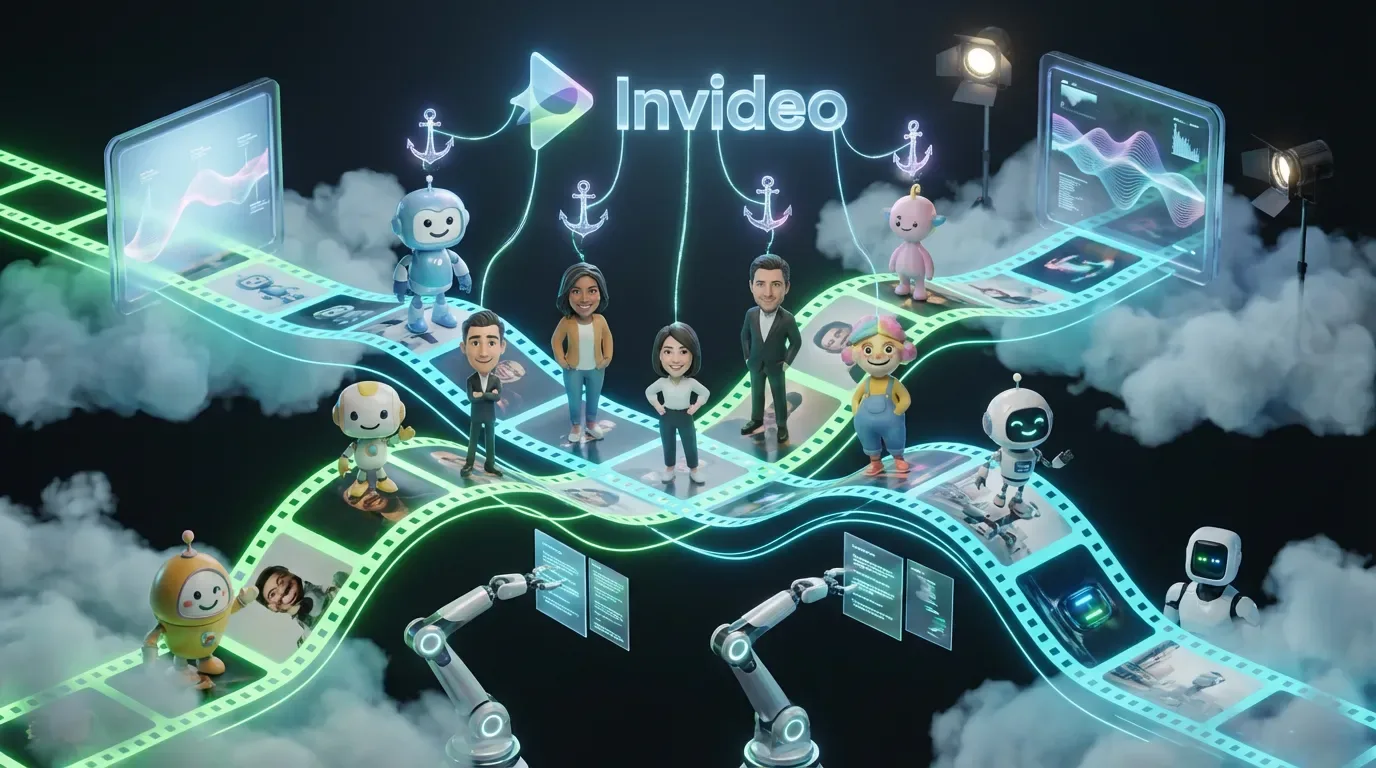
InVideo just rolled out Sora Character, a feature aimed at locking a consistent AI “talent” (human, avatar, mascot) so they stay stable across multi scene videos. InVideo has been promoting a 7 day free trial in social posts, positioning the feature for creators and marketers who want character led content without the usual production overhead.
What shipped (and what’s new)
Sora Character is InVideo’s push toward repeatable identity in generated video. You provide a reference, confirm you have consent and rights, and the system uses that as an anchor so the same person or character can hold up across different scenes, angles, lighting conditions, and environments.
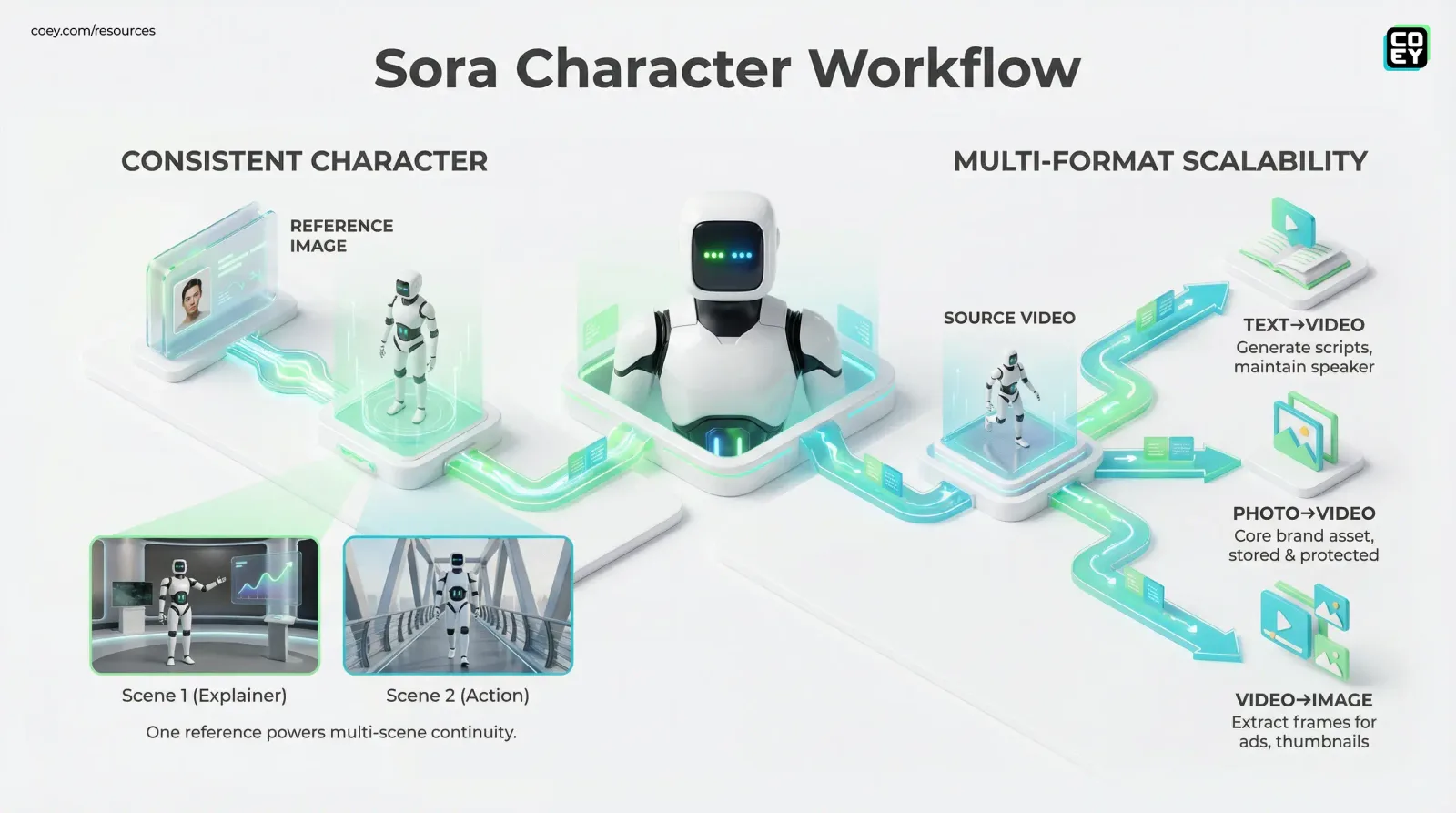
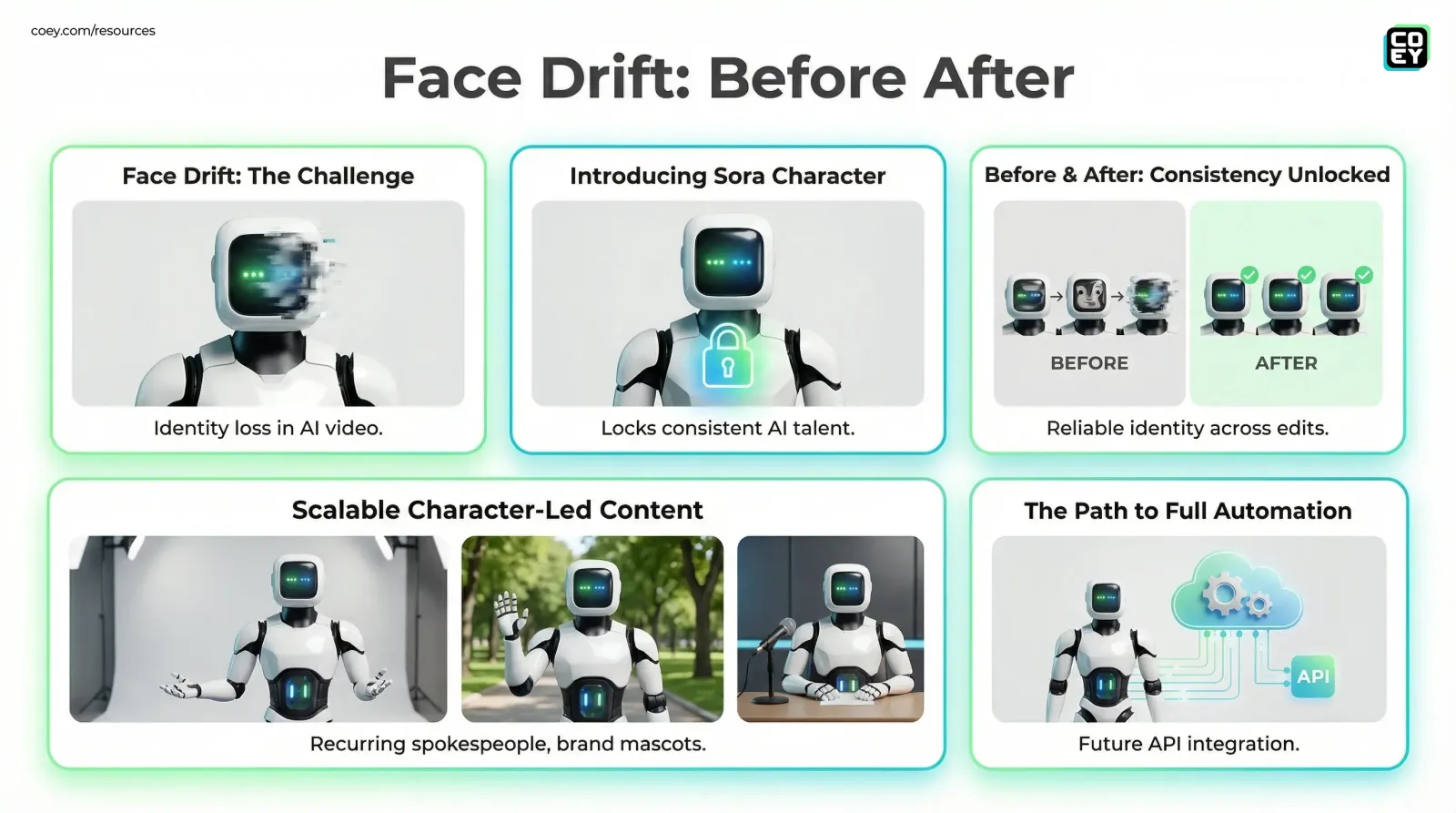
That matters because character drift has been a persistent blocker for generative video. Models have improved realism and motion, but identity consistency has often broken across edits. The result is great clips, but unreliable series.
In practical terms: this is the difference between a cool one off demo and a format a brand can run every week without someone babysitting every frame.
Why this is a bigger deal than it sounds
Consistency is what makes output scalable. If your character changes every render, you cannot reliably build:
Recurring spokespeople (product explainers, founder style content, UGC lookalikes)
Brand mascots that show up weekly without re design
Episodic content where viewers recognize who they are watching
Localized variants where you swap the script, not the face
Automation lens: can this be automated?
Today: partially. Sora Character is available inside InVideo’s web product. Based on what is publicly described so far, InVideo has not announced a dedicated public API specifically for Sora Character headless generation. That keeps the workflow optimized for humans inside the InVideo UI, not fully automated creative pipelines.
Separately, InVideo has publicly positioned itself as OpenAI’s first official partner for Sora 2, which signals broader ambition toward more robust automation over time. If you want the cleanest public reference for that partnership claim, see the announcement on PR Newswire.
What automation looks like right now
Even without a clean public API story for Sora Character specifically, teams can still automate around it:
Automate inputs: generate scripts, shot lists, and scene prompts with LLMs
Standardize character packs: approved reference images plus brand rules plus do and do not prompt constraints
Automate downstream: once video is exported, auto caption, auto resize, auto publish, auto log performance
So yes, automation is possible. But it is currently workflow automation around the tool, not full programmatic generation through exposed endpoints.
What needs to happen for real automation
If InVideo wants this to plug into serious creative ops, the missing pieces are predictable:
API endpoints that accept character reference IDs plus scene JSON plus aspect ratios plus durations
Webhooks for job completion and failure states
Stable character IDs you can reuse across campaigns and teammates
Admin and governance controls for who can upload talent, approve a character, or reuse a mascot
Current vs. future: what’s usable today?
What marketers and creators can do now
Spin up a recurring AI presenter for explainers and paid social
Build a series format with the same character across scenes without re casting
Increase iteration speed for A and B testing hooks while maintaining identity
Localize faster by swapping script, voiceover, and on screen text depending on your workflow
What’s still not set it and forget it
Full pipeline automation is gated by lack of clear programmatic access for this feature
Brand safety is still on you : plan for human review and internal policy checks
Enterprise readiness depends on controls : permissions, audit trails, and predictable governance
Multi format implications (this isn’t just video)
Sora Character is a video feature, but it naturally sits inside a multi format pipeline.
Text to video
Generate scripts, generate scenes, publish. The unlock is you can keep a consistent on screen speaker while the copy changes across campaigns and seasons.
Photo to video
Your character reference becomes a core brand asset. Treat it like design system infrastructure: approved, versioned, stored, and protected.
Video to image
Once you have consistent character led footage, you can extract frames for:
thumbnails
carousel assets
display ads
landing page hero stills
One generation session can feed multiple channels.
Video to audio (and back again)
Most teams will still generate voice separately, then sync in post. OpenAI’s Sora feature set has included discussion of reusable characters via “Character Cameos” on the Sora side. If you want a quick reference point for how this concept is described, see OpenAI’s Sora page at openai.com/sora.
What this means for brands scaling output
The operational headline is simple: character consistency turns AI video into a repeatable format, not a one off stunt. That is the difference between generating content and building a scalable creative system.
| Need | What Sora Character changes | Automation readiness |
|---|---|---|
| Recurring talent | One reference powers multi scene continuity | Medium (UI first today) |
| Series content | Less identity drift across episodes | Medium (needs templates plus QA) |
| Variant testing | Same actor, different hooks and settings | High (easy to operationalize) |
| Enterprise workflows | Potential, but needs governance plus API | Low to Medium (depends on roadmap) |
Reality check: hype vs. readiness
This is real value, not shiny AI theater. Identity drift has been one of the biggest blockers for brands trying to use generative video beyond experiments. InVideo is packaging a practical solution in a way non technical teams can use.
But for ops minded teams, the question is whether it plugs into your stack without humans clicking buttons all day. Not fully yet. If InVideo exposes stronger programmatic controls for character reuse and scene generation, this shifts from fast production tool to automated creative infrastructure.
For now, treat it like a high leverage production lane: lock a character, standardize prompts, run controlled iterations, and automate everything downstream like distribution, QA, resizing, captioning, and performance feedback loops.
Source notes used for link accuracy: InVideo product entry point at ai.invideo.io, partnership announcement coverage at PR Newswire, and OpenAI Sora overview at openai.com/sora.
Let COEY Wire Your AI Marketing Stack
We help brands and agencies connect n8n, Claude Cowork, OpenClaw, and other AI tools into marketing systems that produce real output. From content automation to full campaign orchestration across every channel. See how it works or request a proposal.