
xAI Human Emulator Agents Shift Automation Beyond APIs
xAI's human emulator agents shift automation beyond APIs. What it signals for AI marketing automation, web agents, and browser based workflows.
20 January 2026Team COEY
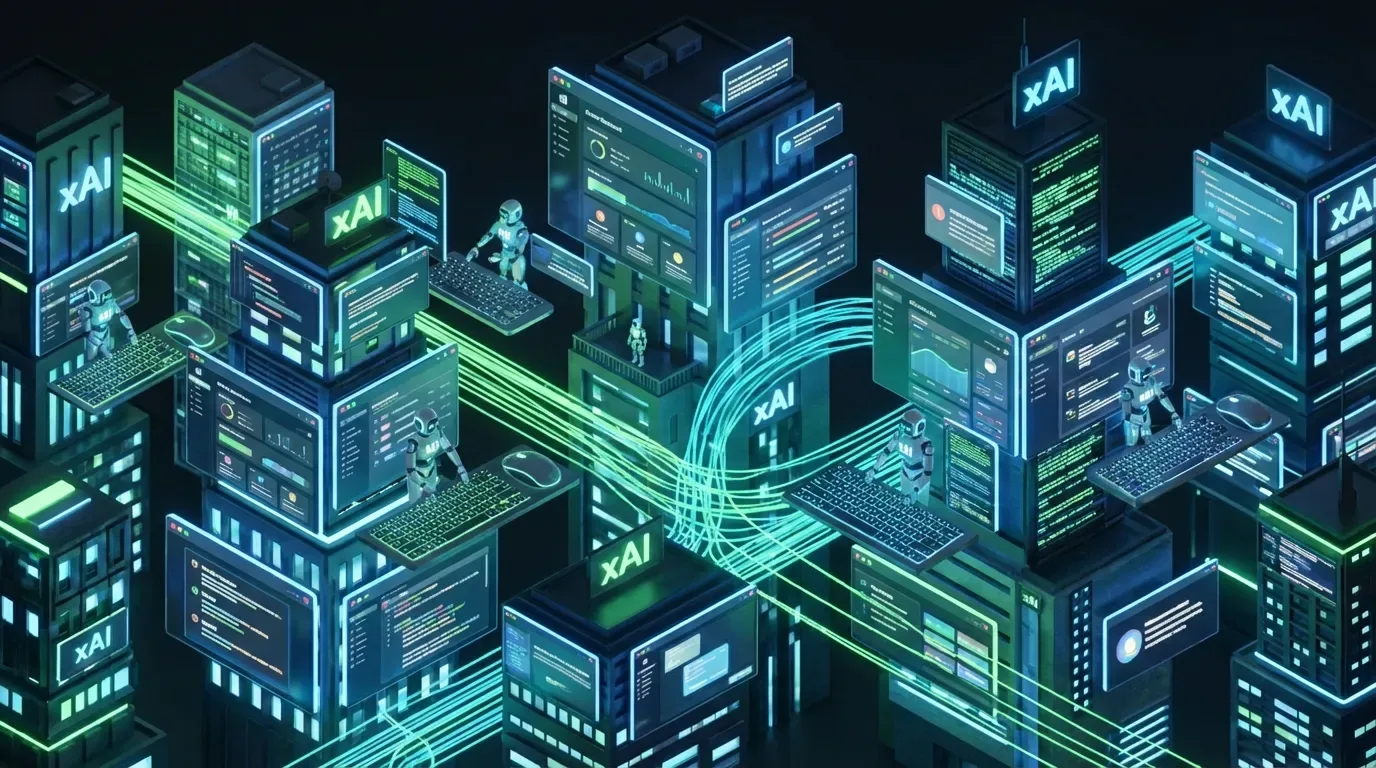
xAI goes full “hands-on-keyboard”
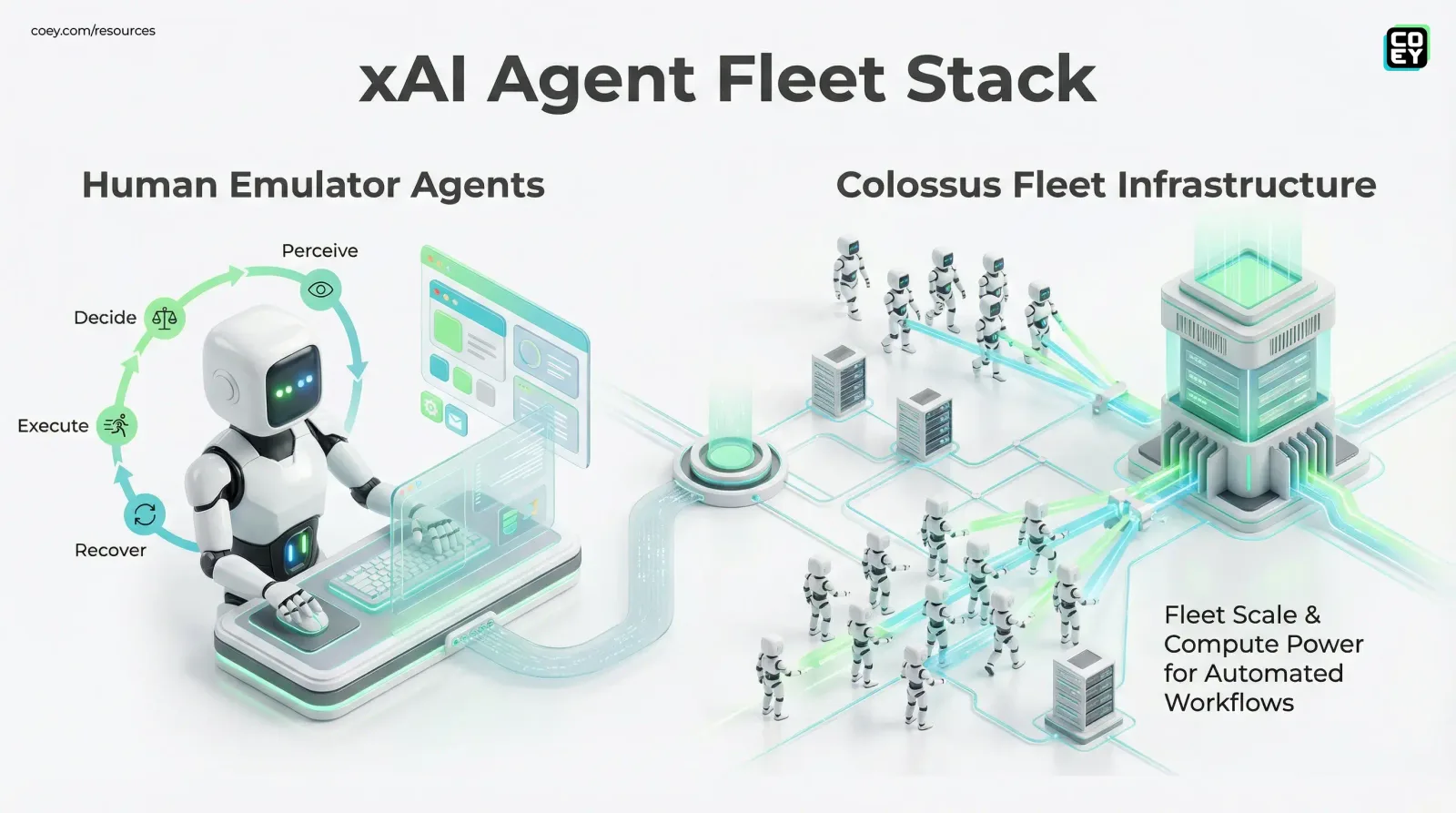
xAI has started talking publicly about a new class of automation agents it describes as “human emulator” agents, AI workers that complete tasks by operating software the way a person does: looking at the screen, moving the mouse, typing, clicking buttons, and navigating workflows that were never designed for automation in the first place. The most direct detail we have from xAI’s ecosystem right now is their positioning around agent fleets and scale, tied to their infrastructure narrative on Colossus.
If you’ve ever watched a team burn an entire quarter “waiting on the integration” (or worse, begging a legacy vendor for an API), this announcement hits a nerve. UI automation isn’t new, but the promise here is the jump from brittle macro bots to adaptive agents that can handle messy real-world interfaces: popups, weird menus, UI redesigns, error states, and the eternal enemy: “your session has timed out.”
The big implication: automation is expanding from “what has an API” to “what has a screen.” That’s a massive surface area for creative operations, marketing ops, and revenue teams.
What “human emulator” means in practice
These agents are framed as software operators rather than backend integrators. Instead of calling endpoints, they:
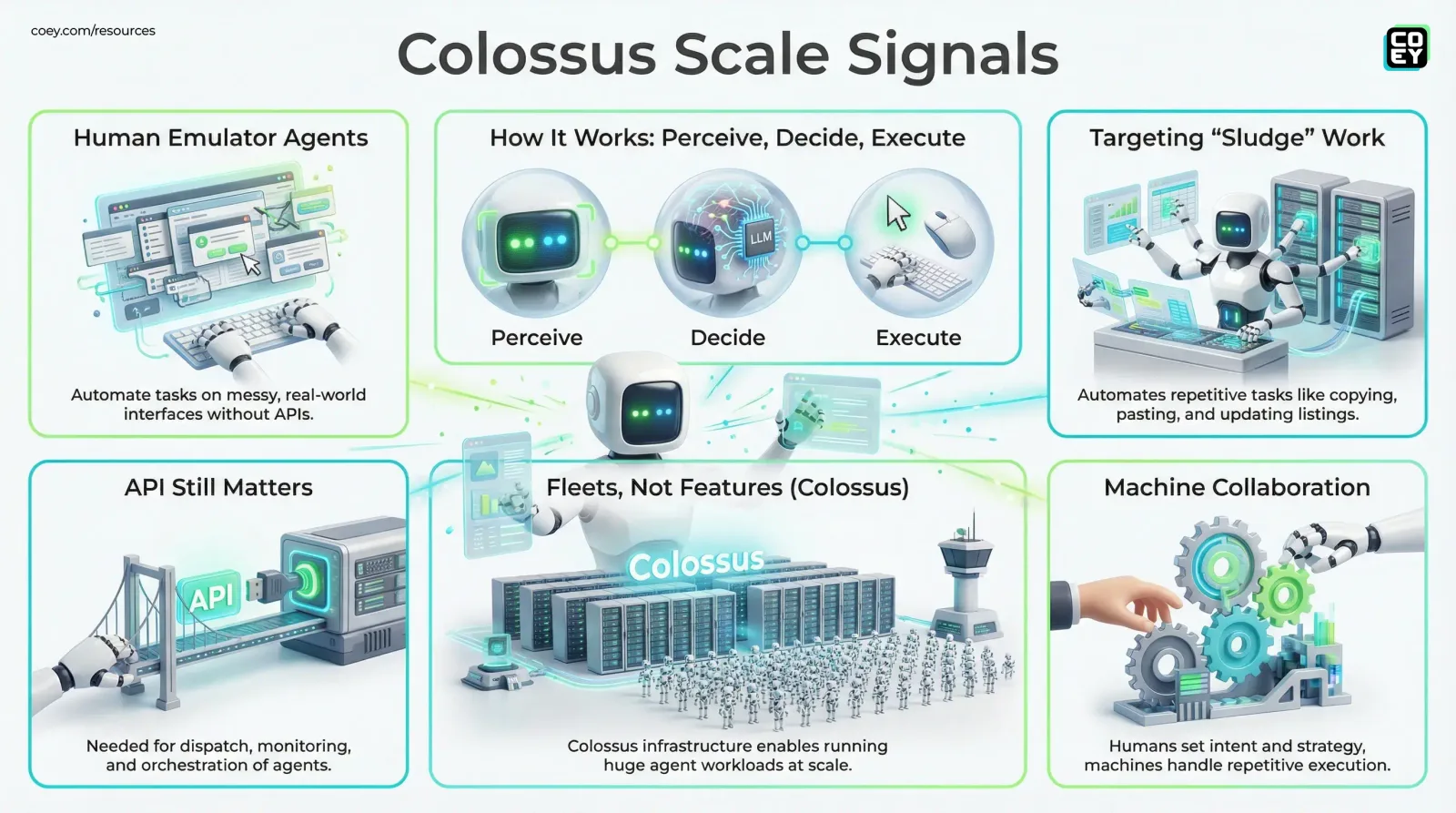
Perceive what’s on-screen (vision plus OCR-like reading)
Decide what action to take next (LLM planning plus tool execution)
Execute via mouse and keyboard events (click, type, scroll, drag)
Recover when something changes (UI shifts, errors, interruptions)
This is the same general direction as the wider “computer-use” agent trend across the industry, but xAI’s angle is explicitly about scaling these agents as fleets, not just single assistants running on one desktop. If you want a practical read on where UI agents are already landing in real ops stacks, see Automating the Screen: UI Agents Go Pro.
The automation potential is real, and also a little spicy
Marketers love to pretend the work is all “strategy and creative,” but the calendar says otherwise. The unsexy middle of execution is where time disappears:
pulling numbers from dashboards and pasting them into decks
updating dozens of listings across portals
copying campaign settings between accounts
tagging leads and cleaning CRM fields
publishing content across systems that don’t talk to each other
UI-based agents target exactly that sludge. And for organizations trapped in Frankenstein stacks (legacy CRM plus custom CMS plus old analytics plus spreadsheets taped together with “tribal knowledge”), this could be the first automation approach that doesn’t require ripping everything out.
Translation for execs: you don’t need a perfect modern stack to automate. You need repeatable workflows and a controlled environment where an agent can operate safely.
API availability: ironic, but still important
Here’s the twist: the whole point of “human emulator” agents is bypassing APIs. But if you want this to matter in the real world, you still need some programmatic surface area, otherwise it’s just a fancy demo robot you manually babysit.
Based on how agent fleets are typically deployed, the practical “API question” becomes:
Can you dispatch jobs to agents from your workflow tools?
Can you monitor progress and collect structured results?
Can you orchestrate multiple runs with retries, escalations, and cost controls?
xAI hasn’t published a clean, dedicated “Human Emulator API” spec as of the sources available. However, xAI does maintain public developer documentation for Grok models and related API building blocks, which signals the broader pieces for orchestration exist even if the computer-control layer itself is not yet documented as a standalone product. See the xAI docs at The Hitchhiker’s Guide to Grok.
Readiness check: where this can plug in now
Even without a full public SDK, you can already see how UI-native agents would slot into modern creative operations. The winning pattern is hybrid automation:
Use APIs when they exist (fast, reliable, auditable)
Use UI agents for the last-mile gaps (legacy tools, weird portals, one-off flows)
That hybrid approach is the grown-up version of automation. It avoids the two classic failure modes:
“API-only or bust” (and then nothing ships)
“Let the agent click around production unsupervised” (and then you trend on LinkedIn for the wrong reasons)
Operational reality table
| Question | What to look for | Why it matters |
|---|---|---|
| Can it run unattended? | Retries, error handling, timeouts | No babysitting equals real automation ROI |
| Can it be orchestrated? | Job queue, status callbacks, logs | Lets you plug it into Make, n8n, and Slack flows |
| Can it be governed? | Permissions, staging mode, receipts | Prevents “autopilot” from wrecking systems of record |
The Colossus angle: fleets, not features
xAI has been loud about compute. Colossus isn’t just a flex; it’s an implied product direction: if you can run huge training and inference workloads, you can also run huge agent workloads. NVIDIA has also highlighted the networking infrastructure behind Colossus, including NVIDIA Spectrum-X Ethernet and BlueField-3 SuperNICs, as a signal for how seriously xAI is treating scale-out AI systems (NVIDIA’s Colossus networking coverage).
Why should marketing leaders care about an infrastructure story? Because “one agent” is a novelty. Fifty agents executing your weekly reporting, campaign QA, and portal updates overnight is an operating model change. That’s where creativity scales: humans set intent and direction; machines grind through the repeatable execution.
Where this is legit vs. where it’s hype
UI agents are powerful, but they’re not magic. They inherit all the chaos of the UI world:
UI changes break flows (even if the agent can adapt, it still needs boundaries)
Authentication is a minefield (2FA, SSO, device trust, CAPTCHA, aka the “are you human?” boss battle)
Auditability matters (screenshots, logs, action receipts, not vibes)
Security risk is real (an agent with write access is an agent with blast radius)
The model is not the system. A deployable “human emulator” stack needs governance: permissions, staging, rate limits, and escalation to humans when uncertainty spikes.
This is also why the most credible near-term deployments won’t be “replace the team.” They’ll be:
batch work (overnight runs, repeatable checklists)
human-in-the-loop execution (agent drafts plus human approves)
exception handling (agent does the 80%, escalates the weird 20%)
What marketers should do with this news
If you lead marketing, you don’t need to become an RPA expert overnight. But you should update your mental model:
Automation scope is no longer limited by APIs.
Your biggest bottleneck is now governance.
“Can it click?” matters less than “Can it log, prove, and stop?”
In other words: UI agents are a new layer of machine collaboration. The human still owns intent, risk decisions, and creative judgment. The machine takes the repetitive execution load off your plate, assuming you build the guardrails so it doesn’t confidently speedrun into a brand incident.
And if you’re already building automation-first content ops, this is an accelerant, not a replacement. The future isn’t human or machine. It’s human plus machine, with the machine finally able to operate the same messy tools humans have been trapped inside for years.
Let COEY Wire Your AI Marketing Stack
We help brands and agencies connect n8n, Claude Cowork, OpenClaw, and other AI tools into marketing systems that produce real output. From content automation to full campaign orchestration across every channel. See how it works or request a proposal.