
OpenAI’s Agents SDK Gets Sandboxed Workspaces, and That’s a Big Deal for Real Automation
OpenAI expanded its Agents SDK with native sandboxed workspaces that let teams run agent code in isolated, permissioned environments. Manifest-based setup, session persistence, and snapshot resume features make automation safer, more governable, and easier to integrate into real business workflows across marketing, ops, analytics, and content systems.
20 April 2026Team COEY
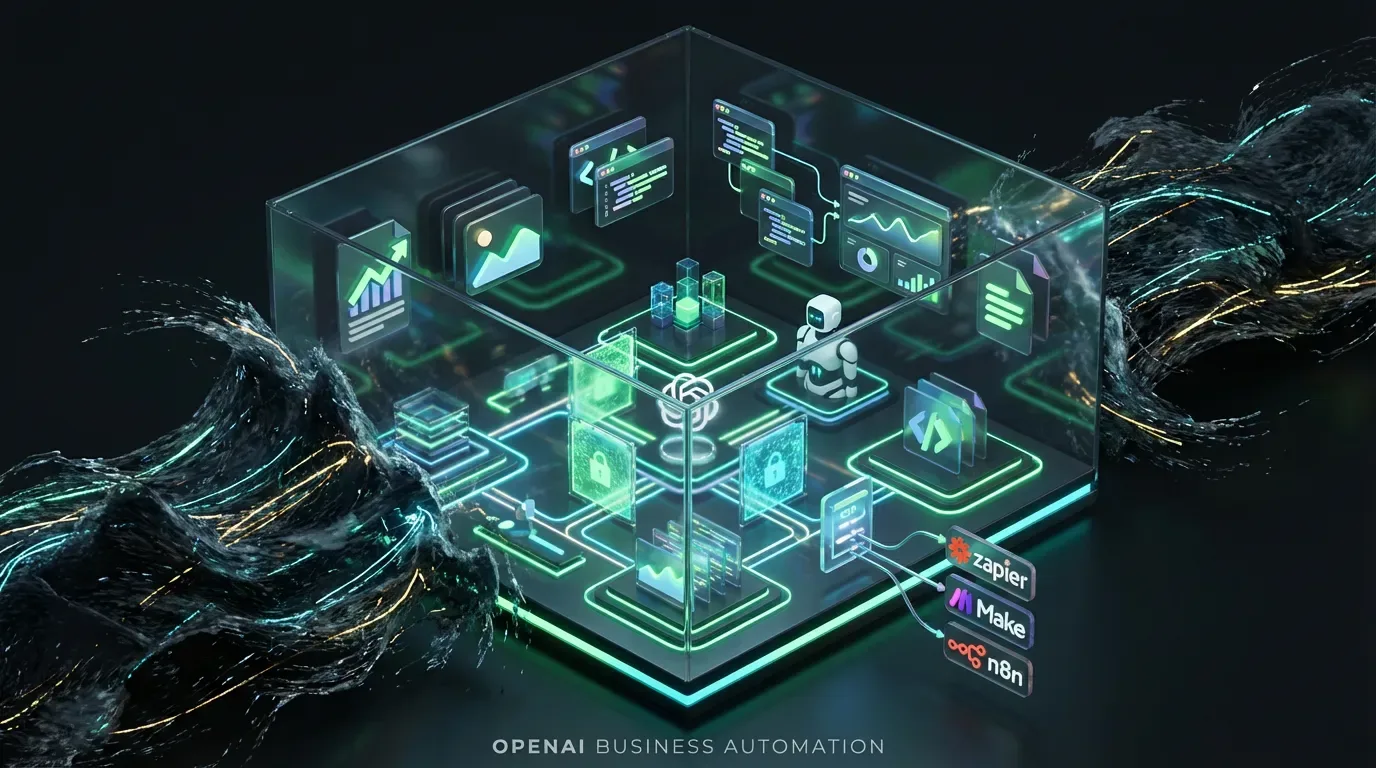
OpenAI has expanded its Agents SDK with native sandbox support and workspace-style execution controls, a practical upgrade that moves agent automation a little further out of demo-land and closer to “yes, legal and IT might actually approve this.” For teams exploring AI agents in marketing, operations, analytics, or content systems, this is the kind of release that matters more than another flashy benchmark chart. It adds tighter control over what an agent can access, where it can run code, and how its work can be resumed, reviewed, and governed.
That matters because most companies do not need an AI that can do everything everywhere all at once. They need an AI that can do the right things in the right environment without wandering into sensitive files, breaking workflows, or turning a prompt injection into a minor organizational incident. Sandboxed execution is OpenAI’s answer to that problem.
What OpenAI actually added
The update introduces native sandbox support inside the Python Agents SDK, giving developers a way to run agents inside isolated execution environments rather than in loosely defined runtime contexts. In plain English: the agent gets a fenced yard, not the whole neighborhood.
According to OpenAI’s announcement and SDK docs, developers can define a manifest that specifies what exists inside that workspace: files, directories, repos, mounts, users, permissions, and related environment setup. OpenAI also documents sandbox lifecycle controls, including fresh sessions, resuming live sessions, serialized session state, and snapshot-based restore and persistence in the sandbox guide for the Agents SDK.
The real shift here is not that agents can run code. They could already do versions of that. The shift is that OpenAI is making execution boundaries a first-class part of the product.
That distinction matters for any team that wants agents to handle real work instead of toy tasks. Running code is useful. Running code inside a controlled, auditable, isolated environment is what makes it operational.
Why this matters beyond dev teams
On the surface, this looks like developer plumbing. Underneath, it is a workflow story. Sandboxed workspaces make it easier to let agents touch business processes without handing them broad access to production systems or sensitive data.
For executives and marketing leads, the practical question is simple: can this plug into an actual workflow safely enough to save time? In many cases, the answer is now much closer to yes.
An agent can be configured to work only with a defined campaign dataset, a limited file set, or a specific reporting task. It can generate scripts, inspect outputs, transform files, or analyze performance data inside that boundary. If it fails midway through a longer task, snapshot and resume features make recovery more realistic. That is a very different operating model from “give the model access and pray it behaves.”
Where the automation upside shows up
Reporting pipelines: agents can process campaign exports, clean data, and prepare summaries in a restricted workspace.
Creative operations: agents can QA assets, rename files, validate packaging, or batch-generate variations without touching unrelated systems.
Content workflows: agents can draft, revise, classify, and package content artifacts inside a bounded environment.
Ops diagnostics: agents can inspect logs, test scripts, or run troubleshooting routines without broad infrastructure access.
This is the type of update that supports COEY’s core point about human plus machine collaboration. Humans still define scope, approvals, and intent. Machines handle the repetitive middle. Nobody needs the AI equivalent of an intern with root access.
API-ready, not just UI-deep
This release matters most because it is not just a product surface feature. It is part of the Agents SDK, which means it is designed to be programmable. OpenAI’s broader tooling direction, including code-interpreter-style workflows and the newer agent harness, points toward automation use cases where agents can execute tasks, work with files, and operate across multiple steps via API.
That makes this relevant for teams using orchestration layers like Zapier, Make, n8n, custom internal systems, or event-driven pipelines. If your workflow can trigger an agent job by API, pass in approved inputs, and collect outputs downstream, the workspace model gives you a cleaner way to operationalize it. It also fits the broader direction COEY has been tracking in our look at OpenAI’s GPT-OSS release, where the real story was not novelty but deployable, governable infrastructure.
| Capability | What it means | Business impact |
|---|---|---|
| Manifest-based workspace | Defines what the agent can access and how the workspace is initialized | Lower security risk and easier governance |
| Sandboxed execution | Runs code and file actions in isolation | Safer automation for real business tasks |
| Snapshots and resume | Lets longer jobs restore workspace state and continue | More reliable multi-step workflows |
For non-technical teams, the translation is straightforward: yes, this looks automatable. It is not trapped inside a one-off chat interface. It is being built for systems integration.
What is real vs what is still hype
Here is the balanced take. Sandboxed workspaces are a meaningful infrastructure improvement, but they are not magic. They do not automatically solve bad process design, vague prompts, poor approval logic, or missing data hygiene. If your workflow is chaos with humans, it will still be chaos with an agent wearing a little security badge.
There are also practical caveats. Teams still need to define manifests carefully, map permissions intentionally, and decide what should happen when an agent wants to write, execute, or escalate. Isolation reduces blast radius. It does not remove the need for governance.
And while OpenAI is making the platform more production-friendly, this is still a builder-oriented capability. Most non-technical teams will not adopt it directly out of the box. They will adopt it through a product team, ops partner, agency, or internal automation function that wraps it into a usable workflow.
So is it enterprise-ready?
More ready than before, yes. Especially for scoped internal workflows where the task is well-defined and the environment can be controlled.
Not plug-and-play for every company, no. Especially if the expectation is full autonomy across messy systems, undocumented processes, and five disconnected SaaS tools held together by vibes.
Sandboxing does not make agents smarter. It makes them safer to deploy where smart-enough automation already has a clear job to do.
Who should care right now
This release is especially relevant for three groups.
Marketing ops teams
If you want AI to do more than draft copy, this is the infrastructure you watch. Think campaign reporting, taxonomy cleanup, QA checks, asset handling, and repetitive workflow execution.
Executives funding AI programs
This is the kind of update that signals platform maturity. Not sexy in a keynote way, but important in a procurement, compliance, and adoption way. Safer execution models are what unlock broader internal use.
Builders creating human-plus-AI systems
If your job is stitching models into real company processes, this gives you a better foundation for designing agents that collaborate with people instead of operating like unsupervised chaos goblins.
What this changes for content teams
Content automation is often sold like a miracle and delivered like a group project. The interesting part here is not “AI can write.” We are past that. The interesting part is whether AI can reliably participate in the full content operation: organize inputs, process files, run checks, prepare outputs, and hand work back to humans for judgment.
Sandboxed workspaces make that model more believable. An agent can work inside a bounded content environment, manipulate only approved assets, and produce outputs that slot into editorial or campaign pipelines. That supports scaling without removing human authorship, review, or taste. Which, frankly, is the whole point.
For teams building around human plus machine collaboration, this is the sweet spot: let AI handle the grind, keep humans on direction, standards, and the final call. If that larger operating model is the strategy, COEY has also covered it in our post on why API access is the real dividing line in AI stacks.
Why this release matters
OpenAI’s workspace update is not pure hype, and that is exactly why it matters. It is an infrastructure release aimed at the boring, necessary question behind every AI initiative: can we trust this enough to let it do useful work?
The answer is getting stronger. With isolated execution, manifest-based access, session persistence, and snapshot restore patterns, OpenAI is making agents easier to fit into serious workflows. Not every team is ready to deploy that tomorrow. But for organizations already building automation systems, this is a meaningful step toward scalable, governed, API-connected AI collaboration.
In other words: fewer sci-fi vibes, more operational reality. And in this market, that is the upgrade that actually counts.