OpenAI Splits Speech-to-Text for Live and Batch AI Workflows
OpenAI Splits Speech-to-Text for Live and Batch AI Workflows
July 28, 2026
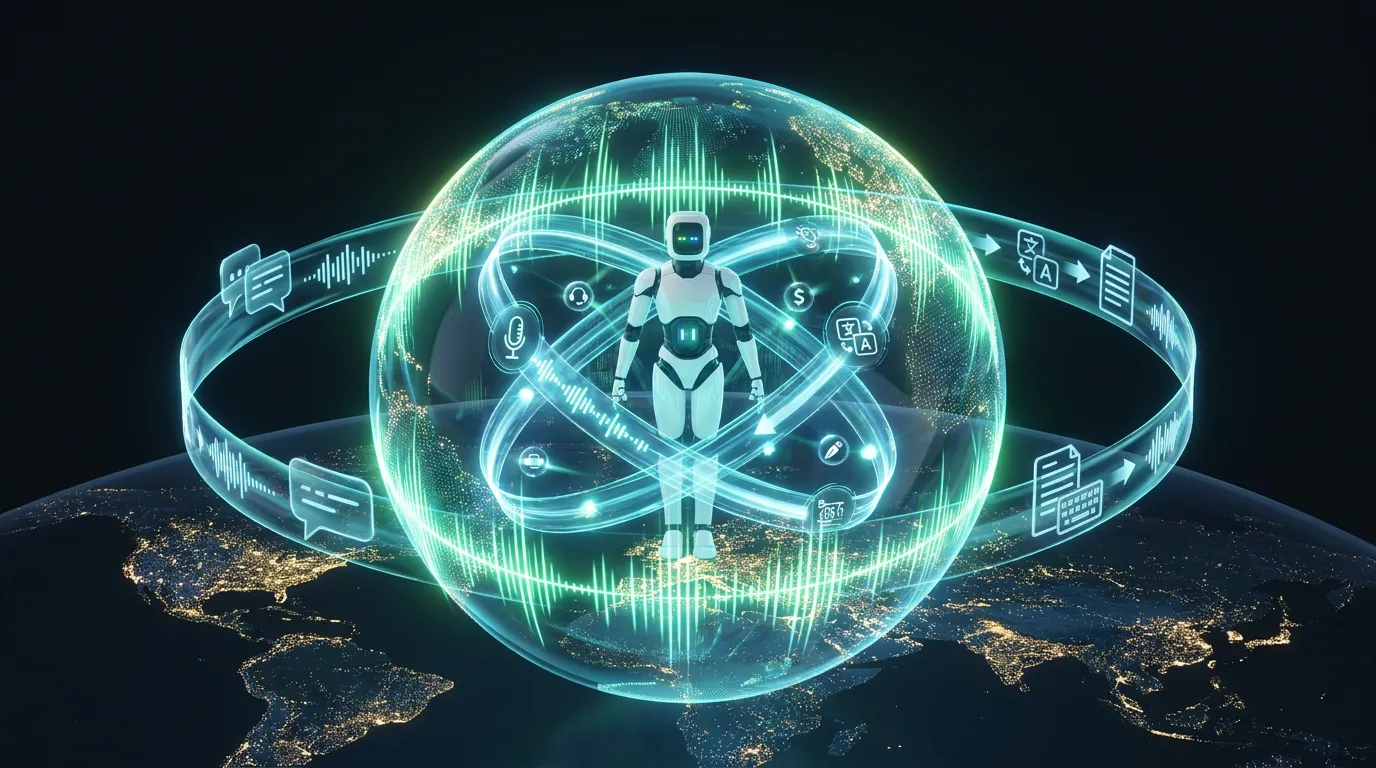
OpenAI is sharpening its speech-to-text stack around two very different realities: audio that needs to become text right now, and audio that needs to become useful after the fact. As of July 28, 2026, the clearest split is between realtime audio workflows through OpenAI’s Realtime API and file-based transcription workflows through its Audio API. Those file-based options include models such as gpt-4o-transcribe, gpt-4o-mini-transcribe, gpt-4o-transcribe-diarize, and whisper-1, while realtime workflows support live audio interaction and transcription behavior through realtime sessions.
Together, they signal a practical shift away from treating every voice workflow like the same old upload file, wait, copy text chore. For creators, marketers, sales teams, and operators, that distinction matters.

Because spoken content is everywhere now. Webinars. Podcasts. Sales calls. Product demos. Zoom brainstorms. Customer interviews. Live events. Voice agents. Executive town halls where someone says circle back 11 times and somehow it still becomes strategy. The bottleneck is no longer capturing audio. The bottleneck is turning that audio into structured, searchable, reusable intelligence without making a human suffer through playback at 1.25x speed like it is a hostage negotiation.
OpenAI’s move is less about AI can transcribe now, which has been true for years, and more about transcription becoming a programmable layer inside creative and business systems. That is the real story.
Why the split matters
Speech-to-text has traditionally been sold as one category, but real workflows do not behave that neatly. A live caption feed for a product launch has different requirements than a transcript of a two-hour podcast interview. A voice agent needs near-instant text to respond naturally. A compliance archive needs completeness, timestamps, and reliability. A marketer needs the good quotes before the campaign meeting ends.
By separating realtime and batch-style transcription use cases, OpenAI is acknowledging what production teams already know: latency and depth are different games.
The important shift is not just better transcription. It is transcription that can trigger the next step automatically.
That means spoken language can move directly into summaries, CRM notes, content calendars, subtitle files, sentiment analysis, internal knowledge bases, and follow-up sequences. The transcript stops being a dead document. It becomes machine-readable creative fuel.
Live vs batch
The live side of the stack is built for streaming scenarios where delay breaks the experience. Think real-time captions, meeting transcripts, voice interfaces, accessibility overlays, live commerce, support calls, and interactive training tools. OpenAI’s realtime stack supports streaming audio workflows using interfaces such as WebRTC and WebSockets, and supported realtime workflows also include SIP for phone-style integrations. That matters because developers can pipe audio into applications while the conversation is still happening.
The batch side is for completed recordings: interviews, webinars, call archives, podcasts, workshops, field recordings, and internal training libraries. OpenAI’s file-based transcription story is centered on the Audio API, with models such as gpt-4o-transcribe and gpt-4o-mini-transcribe positioned as newer successors to older Whisper-era workflows. OpenAI’s next-generation audio model announcement frames these models around improved transcription accuracy, especially across noisy audio, accents, and varied speech patterns.
| Use case | Best fit | Workflow value |
|---|---|---|
| Live webinar captions | Realtime transcription | Accessibility and audience engagement |
| Podcast transcript | Batch transcription | Repurposing, SEO, quote extraction |
| Sales call notes | Either, depending on timing | CRM updates and follow-up automation |
| Voice agent input | Realtime transcription | Natural response timing |
| Training archive | Batch transcription | Searchable institutional knowledge |
This is not glamorous in the AI made a movie trailer about a cyberpunk raccoon CEO sense. But it is operationally huge. The mundane stuff is where automation starts printing time back into the calendar.
What improved
OpenAI says its newer audio and transcription models improve accuracy across real-world audio, including accents, noisy environments, language recognition, numbers, jargon, and variable speaking speeds. That is not a small detail. Most teams do not record in pristine podcast studios with $900 microphones and sound-treated walls. They record in conference rooms, on Bluetooth earbuds, in airports, in cars, and occasionally from someone’s laptop mic positioned spiritually near the keyboard.
Better handling of noise and accents makes transcription more viable in the messy world where business actually happens. For marketing and content teams, the gains show up as fewer cleanup passes, better pull quotes, cleaner captions, and summaries that do not hallucinate a product name into a minor felony.
There are also practical features around timestamps, response formats, streaming, chunking, and diarization where supported. Developers can specify supported transcription models, language hints, prompts or context, audio formats, and response behavior. Speaker labels are available through diarization-specific transcription models and response formats. In plain English: developers can choose how audio enters the system and what kind of text or metadata comes back.
API availability
The API piece is the difference between nice product feature and actual workflow infrastructure. If transcription only lives inside a closed app, teams can use it manually. If transcription is available through an API, teams can automate around it.
For executives and non-technical operators, API availability means this:
- It can plug into your stack. Audio can flow from meetings, call tools, media libraries, or apps into transcription automatically.
- It can trigger other actions. A transcript can become a summary, task list, CRM note, Slack post, CMS draft, or review queue.
- It can be customized. Teams can decide whether they need speed, cost efficiency, higher accuracy, timestamps, supported language hints, prompts, chunking, or speaker-aware output where diarization is supported.
- It can scale. Hundreds or thousands of recordings can be processed without a human dragging files around like it is 2014.
That last point is where the creative leverage shows up. A single podcast transcript is useful. A system that turns every episode into clips, newsletter snippets, search metadata, sales enablement quotes, and social hooks is a content engine.
Automation potential
The most immediate impact is in workflows where speech is currently trapped inside recordings. Teams often say they are data-driven, then leave 80% of their best customer and creator insights buried in calls no one will ever replay. Transcription APIs make that archive usable.
Marketing and content
For marketers, the obvious win is repurposing. A webinar can become a transcript, then a summary, then a blog outline, then short-form clips, then email copy, then LinkedIn posts. The human still decides the angle, tone, and truth. The machine handles the first-pass extraction and formatting. That is human plus machine in the least cringe, most useful sense.
Sales and customer teams
Sales and support teams can turn calls into structured notes, objection trends, feature requests, and follow-up tasks. Instead of relying on reps to write perfect CRM updates after six demos and one sad desk salad, audio can be captured and processed automatically. Humans review the important bits. Machines handle the repetitive capture.
Accessibility and events
Realtime transcription also strengthens accessibility. Live captions for virtual events, training sessions, and product demos are no longer nice to have polish. They are table stakes for inclusive communication. Better realtime transcription means more people can participate without waiting for post-production.
This broader movement toward programmable voice infrastructure is the same pattern COEY has tracked in OpenAI’s GPT-Realtime-2 push: voice is becoming something teams can wire into systems, not just something they experience inside a demo.
Readiness check
This is real enough for teams to start testing, but not magical enough to run unattended in every context. Transcription quality still depends on audio quality, speaker overlap, domain vocabulary, language mix, and integration design. Anyone promising perfect transcripts from chaotic panel audio recorded on a potato is selling vibes, not infrastructure.
| Question | Practical answer | Risk |
|---|---|---|
| Can it automate workflows? | Yes, through API-based transcription | Needs integration planning |
| Is it plug-and-play? | Partly for developers and tools | Non-technical teams need setup |
| Is it production-ready? | For many clear-audio use cases | Review needed for compliance |
| Does it replace humans? | No, it reduces manual capture | Human QA still matters |
Teams should also pay attention to privacy, consent, retention, and compliance. Voice data can include sensitive information. If transcripts are being pushed into CRMs, analytics tools, or shared workspaces, governance matters. We automated it is not a defense strategy when customer data ends up in the wrong place. Responsible automation is not slower. It is sturdier.
The bigger signal
OpenAI’s speech-to-text direction points toward a broader pattern: AI systems are becoming less like standalone destinations and more like connective tissue between human expression and machine execution. Voice is one of the most natural inputs humans have. APIs make that input operational.
For creative teams, that means fewer blank pages and fewer administrative dead zones. For marketing teams, it means campaigns can listen to customers faster. For executives, it means institutional knowledge can stop evaporating after every meeting. For builders, it means voice-driven products and agents have a stronger foundation.
The smart move now is not to rip out every transcription tool overnight. It is to map where spoken content already enters your organization, then identify which moments deserve realtime processing and which deserve deeper batch analysis. Live events, calls, interviews, internal meetings, podcasts, trainings: each one has different value once the audio becomes structured text.
That is the practical magic here. Not AI replaces note-taking. More like: the human says the thing, the machine captures the thing, the system routes the thing, and the team gets to spend more time creating, selling, learning, and deciding. Less grind. More signal. Better output.
And honestly, if AI can finally rescue us from manually scrubbing through a 67-minute recording to find the one good quote, that is not hype. That is civilization.