
How Synthetic Data Pipelines Power Automation
Synthetic data pipelines are transforming marketing automation. No more endless human labeling or fragile prompt libraries, now you can manufacture scenarios, improve automated QA, safely scale campaigns, and future-proof your workflow. This playful but practical guide covers where synthetic data fits, how real pipelines are built, and why it is the fast path to operational maturity for AI-powered marketing.
31 July 2026Team COEY
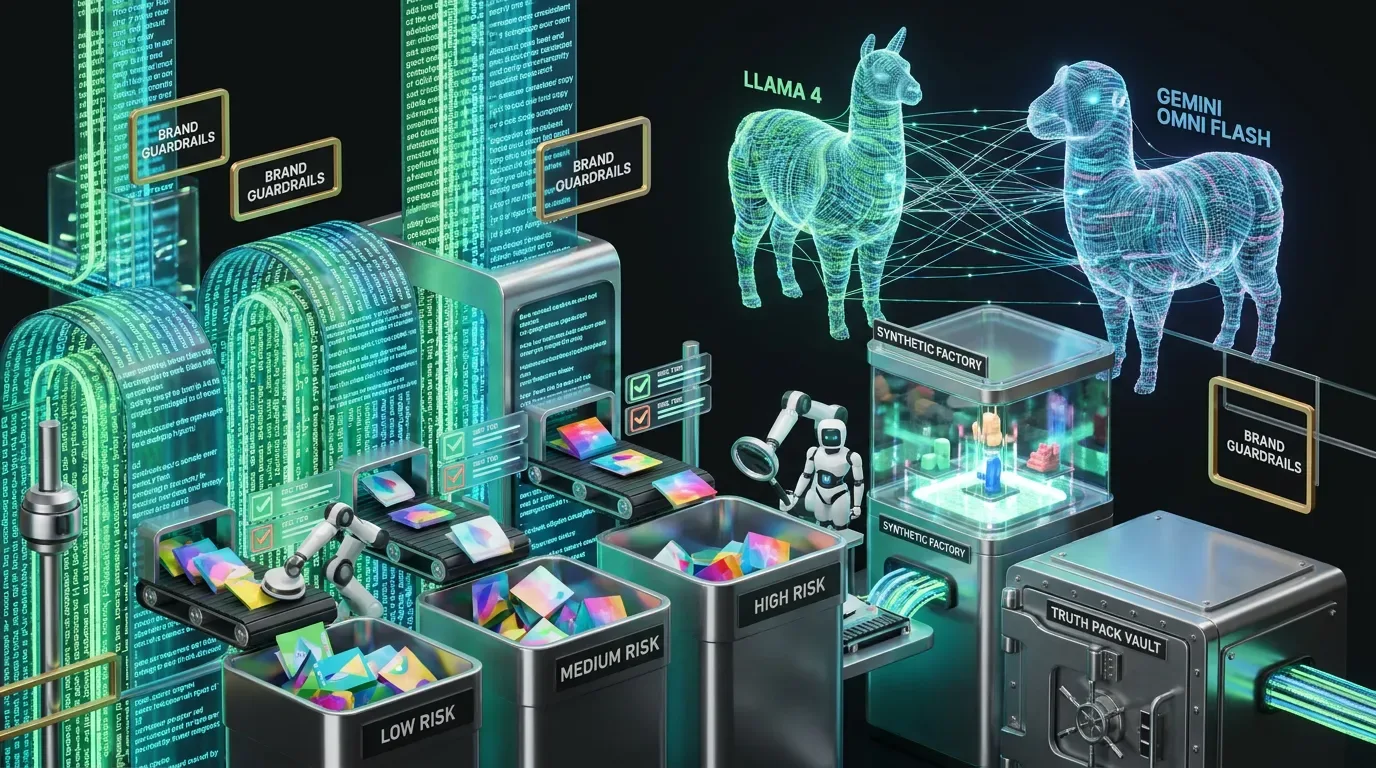
Marketing Automation Has Entered Its Weird, Pivotal Phase
Every marketing crew lusts after the same dreamy backlog: more campaigns shipped, tighter personalization, abundant A/B tests, all while dodging lawsuits, cancels, and the tedium of feeding pulses into endless reporting dashboards. Then reality shows up, wearing yesterday’s socks and waving around another misnamed CSV.
Let’s talk about why most “AI marketing” still feels like trying to force a square peg through a spreadsheet:
No one has enough labeled data for their hyper-specific business scenario
Brand rules live in lonely PDFs no one reads or enforces
CRM fields mean different things to different teams (and sometimes even within teams)
Each additional output means the review bottleneck scales up linearly
The common instinct? Prompt harder, generate more, cross your fingers and hope. Cute, but not a plan.
Thesis: The most important shift in AI-powered marketing is not some futuristic unicorn model. It is the rise of synthetic data pipelines , repeatable, controllable systems that manufacture the training and evaluation data you never had, making automation not just possible, but genuinely defensible.
Synthetic Data Is Not “Fake” Data. It Is Manufactured Experience
Synthetic data gets a bad rap, probably because “synthetic” makes people think of plastic plants or questionable influencers. Behind the buzzword, though, is a discipline that gives your models the experience they desperately need, without exposing customer data or waiting for unicorn-sized labeled sets to rain down.
Translated for marketing ops, synthetic data means:
Generating hundreds of on-brand ad variants paired with honest-to-goodness structure: claims, CTAs, compliance risk, and so on
Creating libraries of sales handoff notes mapped to your CRM’s actual objects and status fields
Building test sets of support and churn scenarios for safe, thorough QA, without touching personally identifiable info
Simulating weird edge cases that only occur the week your CMO is at a conference
One-off synthetic sets are toy projects. Pipelines are what transform the approach into an operational superpower, enabling systems to learn and adapt over time.
Why Synthetic Data Is Suddenly the Linchpin of Modern Marketing Automation
The last AI wave made content generation gloriously cheap. The current one, powered by next-gen models like Llama 4 and Gemini Omni Flash, is making end-to-end automation trivial, for better and worse.
Here’s the trade-off: automation multiplies any existing flaws. Garbage in, exponentially scaled garbage out.
Enter synthetic data pipelines, letting you engineer automation like software:
Author precise specs
Generate and label targeted training and test sets
Automatically evaluate output quality, risk, and compliance
Route only hard cases to actual humans
Keep receipts, so you actually know where (and why) things broke
This is automation done the COEY way: evidence-driven, auditable, and mostly immune to churn-and-burn tactics.