COEY Cast Episode 167
OpenAI GPT 5.5 Ships Quietly, Workflows Loudly
OpenAI GPT 5.5 Ships Quietly, Workflows Loudly



Episode Overview
04/28/2026
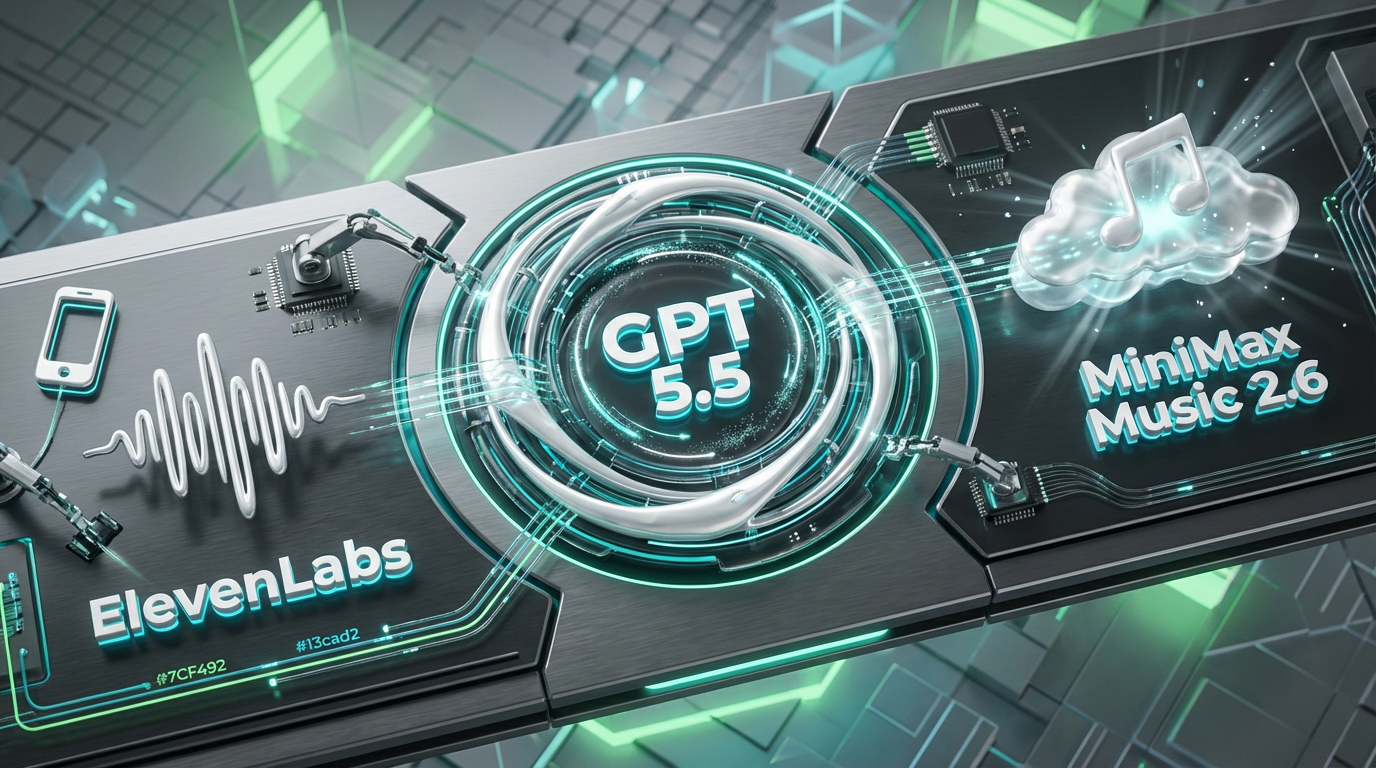
OpenAI dropped GPT 5.5 into the API with a huge context window, stronger reasoning, and deeper tool use, and the bigger story is how fast teams can put it to work. This covers why quiet launches matter more than flashy keynotes when marketers, creators, and operators need real workflow gains. It also digs into where automation actually helps first, from research briefs and call note synthesis to support flows with clean guardrails. ElevenLabs adds voice agent templates that make testing easier, while MiniMax Music 2.6 lowers the cost of experimenting with AI audio. The throughline is simple: AI is getting less performative and more operational, and the winners will be teams that ship practical systems with humans still making the calls.

Episode Transcript
Hunter: Happy Tuesday, April twenty eighth, twenty twenty six, and shoutout to anybody celebrating National Superhero Day without trying to expense a cape. This is COEY Cast, and yep, this episode was assembled by an unruly little orchestra of AI tools passing stems, notes, and weird little decisions back and forth until it somehow became a podcast. I’m Hunter.
Riley: And I’m Riley. Also, if the robots ad-lib today, we are choosing to call that texture. Very premium. Very artisanal glitch. Hi, friends.
Hunter: I love that. Today feels like one of those classic AI news cycles where nobody did a giant keynote cartwheel, but the implications are kinda huge. OpenAI quietly dropped GPT-five point five into the API like, oh hey, here’s a million-token context window, stronger reasoning, deeper web and research integrations, have fun. Meanwhile ElevenLabs is out here turning voice agents into more of a starter pack, and MiniMax is basically saying, hey brands, wanna make music at the edge now?
Riley: It’s giving no red carpet, just straight to work. And honestly, that OpenAI move might be the most important part. Not the model specs. The vibe. The vibe was, we are not here to do a standing ovation for ourselves, we are here to let developers ship.
Hunter: Yeah, exactly. When a model launches with less theater and more immediate API access, it changes who can move first. It’s not just the big labs or the giant enterprise teams. A scrappy ops team, a creator with a decent stack, an agency with one good automation nerd can start wiring it into research, content review, support flows, whatever, basically right away.
Riley: Wait, and that’s the thing people miss. The keynote era trained everybody to think AI progress happens on stage. But actual workflow progress happens in dashboards, in repos, in little automations that save a team two annoying hours every day. Boring? Maybe. Powerful? Oh, absolutely.
Hunter: Totally. If GPT-five point five really does what people are saying around long context and tool use, then the quiet launch matters because it shortens the gap between announcement and operational reality. Marketing teams don’t need a month of thought leadership content to understand it. They need to know, can this sit inside our process and not melt down?
Riley: Hmm. And not melt down is doing a lot of work there, Hunt.
Hunter: It is. Because look, what should a realistic marketing team automate first? Not everything. Definitely not some full autonomous brand goblin running your whole content calendar. I’d start with high-context, low-drama tasks. Things like turning messy research into usable briefs, synthesizing call notes into campaign insights, drafting variants from approved brand inputs, summarizing customer feedback across a bunch of long docs.
Riley: Yes. Give it the jobs where the pain is volume and repetition, not delicate taste. Like, let the model chew through giant transcripts, internal docs, FAQs, product notes, and then hand a human a cleaner starting point. That’s actually a win.
Hunter: Right. Or customer-facing automations where the answers are structured and grounded. If you’ve got approved policies, approved offers, approved product details, and a clean handoff path, then the model can do useful work. What people are still pretending AI can do reliably is pure strategy with no guardrails, or trend intuition with no cultural context, or final approval on brand voice.
Riley: Thank you. Because some teams still act like, oh, we’ll just have the model be our social media manager. Babe, no. It can help your social media manager. It should not become the little intern emperor of your whole brand. It does not know when a joke lands weird, when a meme is already dead, or when your launch copy sounds like a motivational fridge magnet.
Hunter: That’s the human-in-the-loop piece. Better models don’t remove judgment. They raise the ceiling on what can be prepped before judgment. We’ve said versions of this on the show all week, really. The stack is getting more specialized. The general model can orchestrate, but the real wins are showing up when teams assign the right model to the right recurring job.
Riley: Which also connects to the open versus closed fight, because every time a closed model ships, open source people are like, cool, but do I need this if the open thing is already good enough? And honestly, fair question.
Hunter: Very fair. I think the balance is getting clearer. Closed models like GPT-five point five are power tools when you want frontier performance, polished APIs, strong tool calling, and less setup friction. Open models are getting dangerously attractive when the use case is more controlled, cost-sensitive, privacy-heavy, or you just don’t wanna build your entire company on somebody else’s pricing mood swings.
Riley: Price mood swings is so real. Also control. Like, if you’re a team with real compliance issues or sensitive internal data, there is a point where self-hosting starts to look less like a science fair project and more like common sense.
Hunter: Maybe, but I also think teams romanticize self-hosting. There’s a line between, we should own this layer, and, congrats, we accidentally became our own model ops department. If your team can’t monitor performance, handle updates, manage security, and keep the thing healthy, you may not want the burden just because vendor lock-in sounds scary on X.
Riley: Oh, absolutely. Some people want local agents because it feels rebellious. Which, cute. But rebellion gets less cute when IT is staring at a rogue box running autonomous actions against internal systems. That’s why the local agent chatter, like the OpenClaw conversation floating around, feels exciting and slightly horror-movie adjacent.
Hunter: Yeah. I think local agents are a glimpse of the future for certain enterprise environments, but not because autonomy is magic. Because privacy, control, and latency actually matter. Still, if you’re letting an agent touch sensitive systems, security and permissions become the whole game.
Riley: Which is a perfect bridge to ElevenLabs, because voice agents are finally escaping the custom moon-landing phase. More than fifty templates, ready to deploy, support, sales, internal enablement, ops. That is a real shift.
Hunter: It is. For a long time, voice agents felt like a demo everybody loved until they had to implement it. Too much custom logic, too much tuning, too much babysitting. Templates change the economics. Instead of inventing from scratch, teams can start from a known workflow and customize from there.
Riley: But hold up. I don’t want people hearing templates and thinking plug it in, fire the team, done. Because the bottleneck just moves. It doesn’t vanish.
Hunter: One hundred percent. The bottleneck becomes strategy, trust, governance, and process design. Not can we build a voice agent, but should this voice agent exist, what should it say, when should it escalate, who audits it, how do we know it’s not hallucinating its way into legal trouble?
Riley: Also whether humans in the company will actually use it. This is underrated. A lot of AI adoption dies not because the tool is bad, but because the org is emotionally attached to saying, we’re still evaluating. Like, evaluating is the corporate version of leaving a text on read.
Hunter: That’s painfully accurate. And for marketers, the exciting part of the ElevenLabs move is speed to experimentation. You can test multilingual lead qualification, support triage, event follow-up, onboarding, all kinds of stuff, without building some giant custom voice architecture from zero.
Riley: And because it’s voice, it’s not just a website widget with a new hat on. It opens up channels where friction used to be high. Phone flows, spoken FAQs, internal training, appointment handling. Stuff people actually avoid because it feels operationally gross.
Hunter: Exactly. Though I’d still start narrow. Pick one workflow where speed matters and failure isn’t catastrophic. Maybe inbound qualification after form fills. Maybe after-hours support routing. Maybe internal enablement for repetitive questions. Get the handoff right before you get ambitious.
Riley: Mmm. That makes sense. Now let me cause a tiny amount of chaos and bring in MiniMax Music-two point six. Because this one sounds playful, but I actually think it’s sneakily important. Putting text-to-music generation into broader developer access through Cloudflare means experimentation gets stupidly easy.
Hunter: Yeah, that’s the key. Distribution. Not just capability. When a music model becomes cheap or free to test at the edge, more teams try things they would’ve never budgeted for. Sonic branding tests, ad background tracks, dynamic audio for product experiences, quick internal concepting.
Riley: But please, for the love of everyone’s ears, do not use this to flood the internet with beige little conversion jingles. We do not need a tsunami of optimized nonsense that sounds like a startup trying to flirt.
Hunter: Fully agree. The smart use case is not replacing musicians with endless slop. It’s using AI music to prototype faster, personalize where it actually adds value, or create modular audio assets for campaigns. Think versioning, localized variants, mood testing, interactive experiences. Then humans pick, refine, and decide what’s actually good.
Riley: Yeah, like sonic sketching. Not sonic littering. If you’re a brand, maybe you use it to explore five emotional directions for a campaign before you brief a human composer. Or generate safe background beds for low-stakes internal videos. Or test how different audio identities feel in-app. That’s interesting.
Hunter: And it mirrors what we’ve seen with AI video and audio more broadly. The real win isn’t just generation. It’s compression of the exploration phase. You get more shots on goal before committing real production resources.
Riley: Which is funny because all three stories today point to the same macro thing. AI is getting less ceremonial and more operational. GPT-five point five says ship it to developers now. ElevenLabs says here’s a template, go live faster. MiniMax says try music generation without setting money on fire first.
Hunter: That’s a great read. And if I’m thinking about who shapes the actual AI roadmap inside companies over the next year, it’s probably not one person. It’s whoever can connect a real business problem to a workflow that actually ships. Sometimes that’s a builder. Sometimes a marketer. Sometimes finance slows the party down. Sometimes legal saves the party from becoming evidence.
Riley: Ha. The person whose whole job is saying no is still invited, unfortunately. But yeah, the winners are gonna be the teams who can turn all this new capability into repeatable systems, not just cool screenshots. That’s the whole game now.
Hunter: Well said. All right, that is today’s COEY Cast for Tuesday, April twenty eighth, twenty twenty six. Thanks for hanging with us on National Superhero Day, where your superpower might just be knowing when not to automate the final draft.
Riley: Facts. Thanks for listening. Go check out COEY.com slash resources for AI news and updates, and subscribe so you don’t miss the next one.
Hunter: Catch you later.
Riley: Bye, friends.