GLM-Image Targets Reliable Text in AI Ads
GLM Image targets reliable text in AI ads, a long standing pain point. What it unlocks for AI marketing automation and on brand ad creative pipelines.
16 January 2026Team COEY
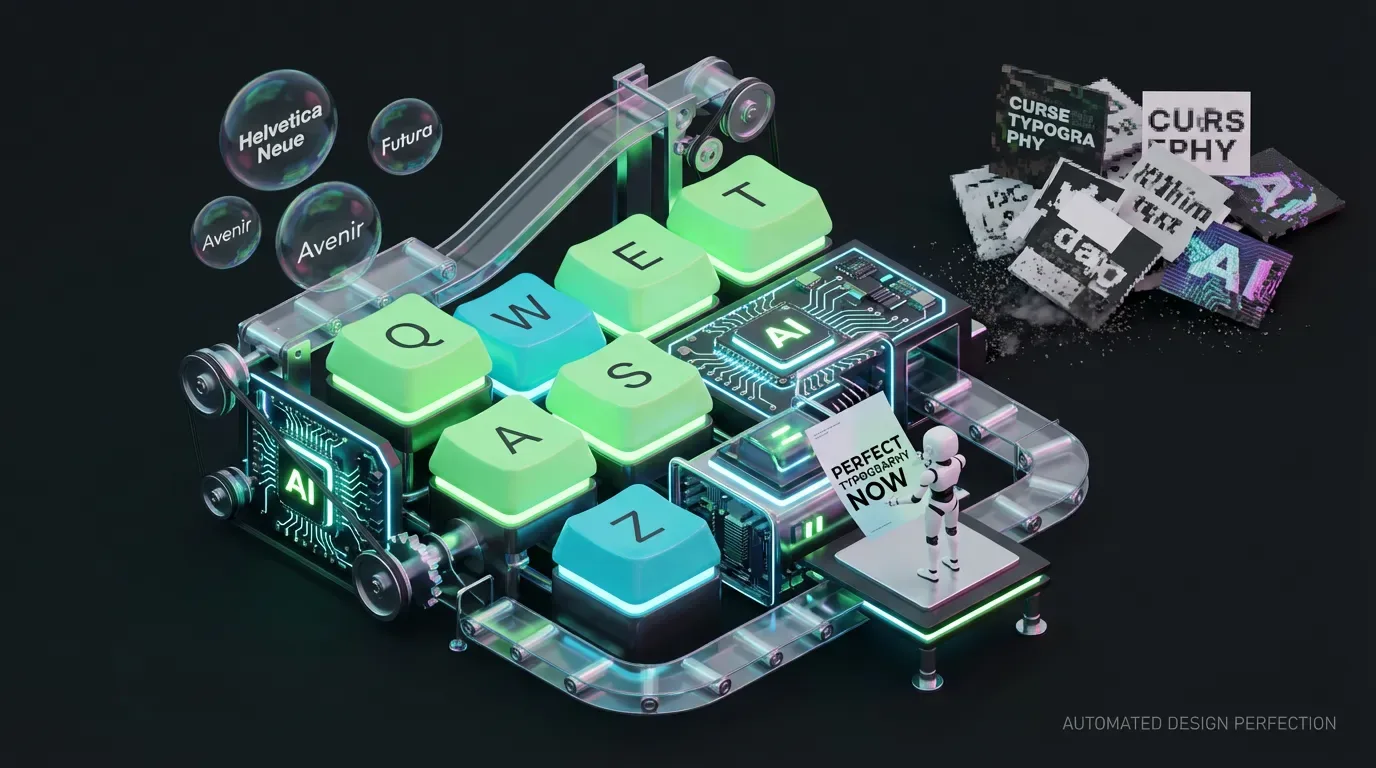
Z.ai just released GLM-Image, an open-weights image generation model explicitly aimed at the most annoying bottleneck in AI design: getting text to render correctly inside images. Not “kinda readable if you squint.” Not “close enough for a moodboard.” The pitch is: posters, slides, infographics, labels, and marketing layouts where letters actually matter.
If you’ve ever tried to ship an AI-generated promo tile and ended up rebuilding the headline in Figma because the model produced “SΛLE 5O% 0FF” like it’s summoning a demon, you already understand the stakes. Text is the difference between “cool demo” and “usable asset.” GLM-Image is Z.ai’s bet that typography reliability is now a competitive moat and a workflow unlock.
What actually shipped
GLM-Image is a hybrid image model: an autoregressive (AR) generator for structure plus semantics, paired with a diffusion decoder for detail and fidelity. In release materials and developer documentation, Z.ai describes this as an AR model for global planning combined with a diffusion-style decoder for final image quality, aimed at better prompt alignment and cleaner text rendering.
It’s also distributed with open weights, which matters more than most people realize. Open weights mean this isn’t trapped behind one UI. You can run it where your stack lives, version it like software, and build repeatable creative lanes instead of manually prompting like it’s a hobby.
The quiet headline: when text-in-image becomes dependable, image generation stops being art roulette and starts behaving like a design automation primitive.
Typography is the real product feature
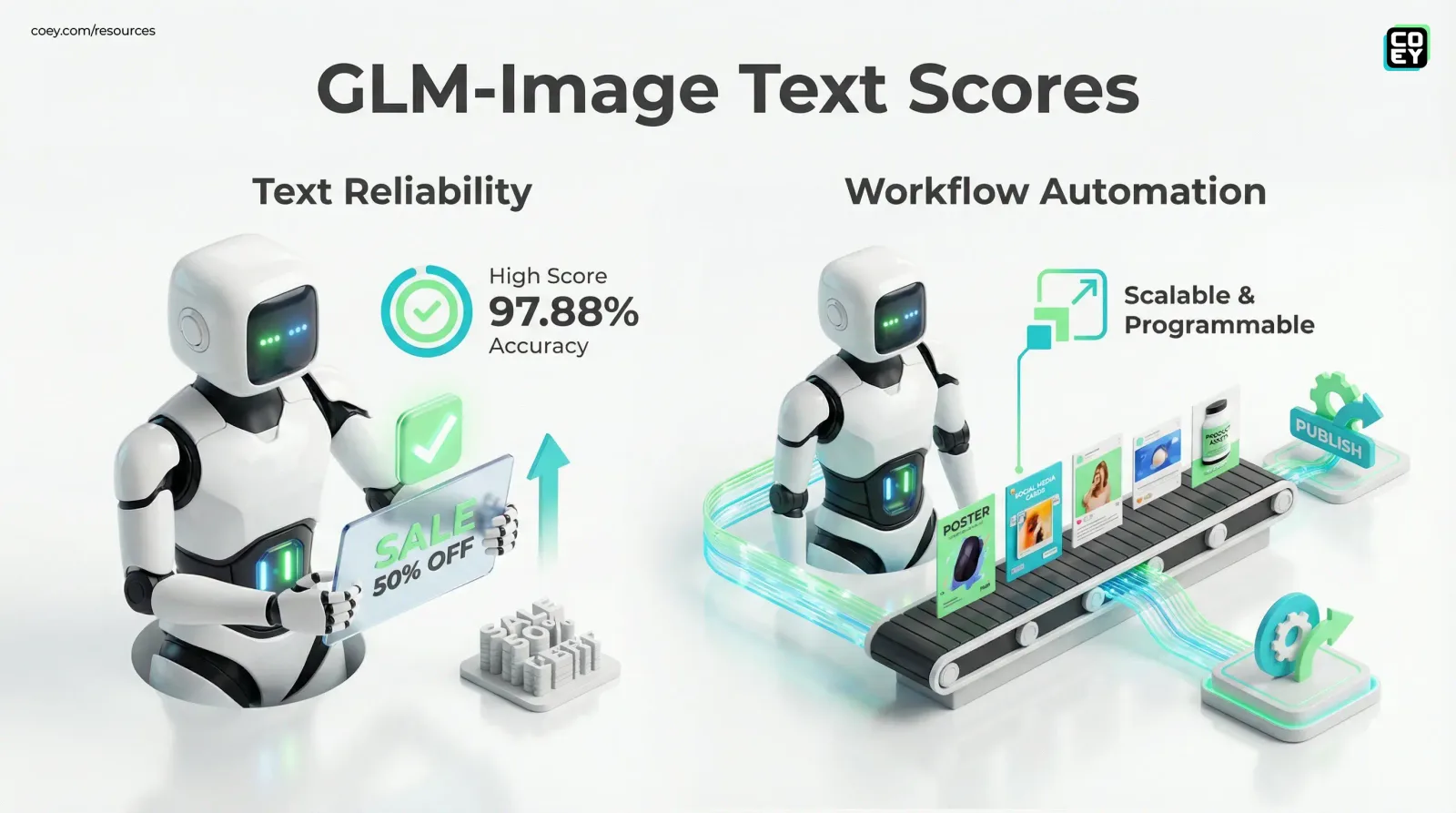
Z.ai is targeting the commercial design zone: ad tiles, event posters, product callouts, educational diagrams, and the kind of corporate visuals that are allergic to randomness. GLM-Image’s core claim is significantly higher text accuracy on text-focused benchmarks, including reported results like 91.16% word accuracy on CVTG-2K and 97.88% on a LongText-Bench Chinese setting (as shared in launch benchmarking posts and discussions around the release).
That’s not a vanity metric. It determines whether a marketing team can:
Generate assets in bulk without a designer doing rescue operations
Localize visuals without re-typesetting everything by hand
Template creative (the holy grail of performance marketing)
In other words, it’s not just better images. It’s fewer broken workflow steps.
API access and automation posture
GLM-Image lands with two paths that matter for automation-minded teams:
1) Self-hosting (open weights)
Because it ships with open weights, technical teams can deploy it internally and expose it as a private endpoint. That’s the difference between a tool some designers play with and a capability your company owns. Once it’s an endpoint, it can be triggered by anything: a campaign brief form, a product feed, a spreadsheet, or a CMS publish event.
2) Hosted access (Z.ai platform)
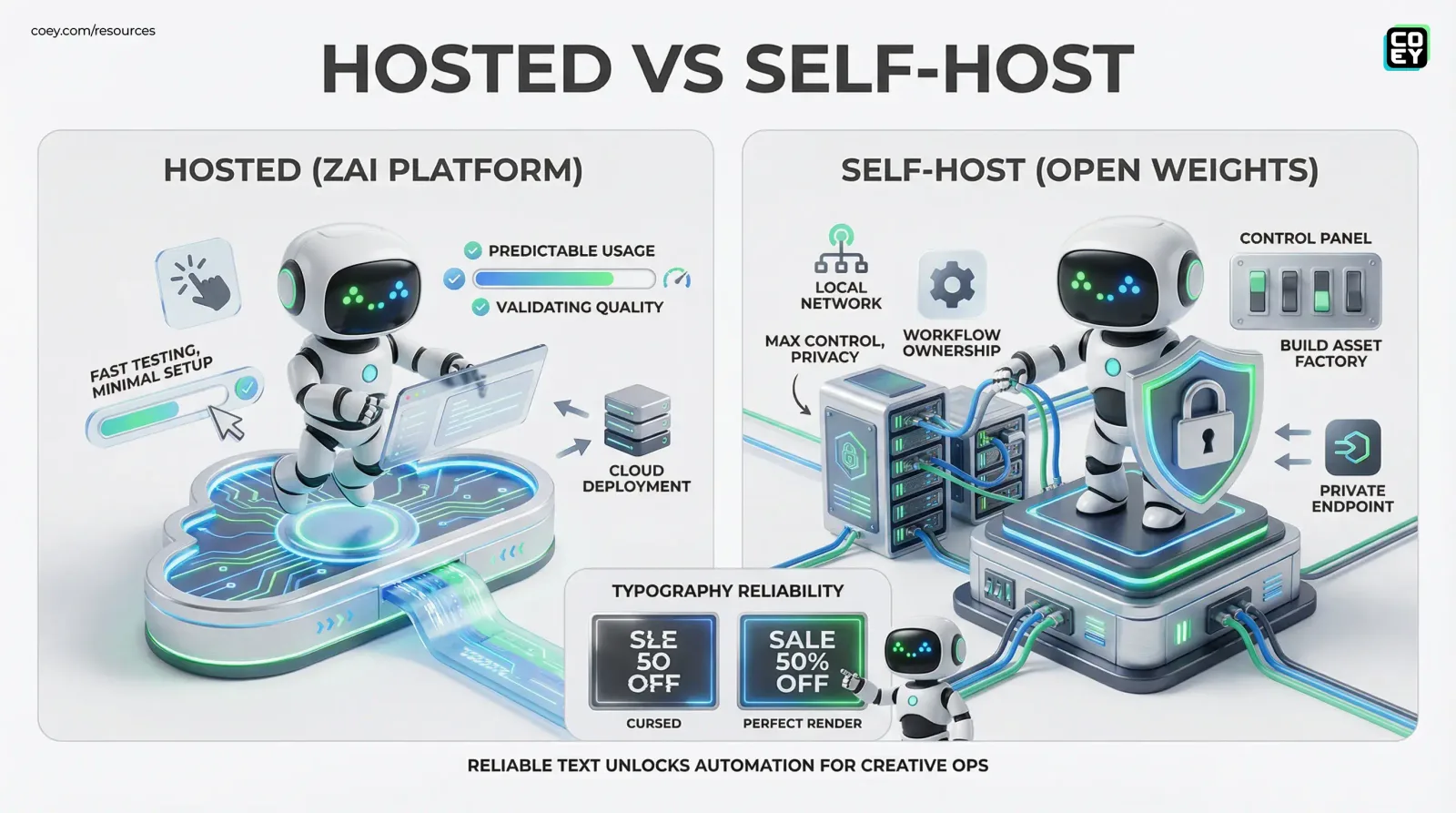
Z.ai also offers a hosted interface at glm-image.io, which is the fastest way to trial without setting up GPUs. Recent release posts around the demo indicate support for text-to-image plus image editing, with output resolutions up to 1536px. For marketing teams, hosted access is the prove value first lane. For creative ops, self-host is the make it infrastructure lane.
| Integration path | What you get | Best for |
|---|---|---|
| Hosted (glm-image.io) | Fast testing, minimal setup, predictable usage | Teams validating quality and use cases |
| Self-host (open weights) | Max control, privacy, workflow ownership | Brands and agencies building an asset factory |
| Hybrid | Pilot hosted, scale with internal endpoint later | Most enterprise rollouts (realistically) |
Translate API availability into plain outcomes: yes, you can automate it, but whether it’s turnkey depends on whether you use the hosted surface or build your own service wrapper around the open model.
Hardware independence: why Ascend matters
This launch also carries geopolitical and operational weight: GLM-Image was reported as trained on Huawei Ascend hardware using the MindSpore framework (including training on Ascend Atlas-class servers), rather than a default Nvidia-centric pipeline. Coverage and launch discussion framed this as a signal of a maturing domestic stack capable of training competitive multimodal systems.
For marketers, that sounds abstract until you map it to real constraints:
GPU scarcity: if your org can’t reliably procure high-end Nvidia capacity, alternative stacks become strategic
Data sovereignty: regulated industries often need on-prem or region-locked processing
Vendor risk: fewer single points of failure in your creative pipeline
Even if your team never touches Ascend hardware, the macro signal is important: the ecosystem for deployable generative models is widening, and we can’t scale because GPUs is slowly losing its power as an excuse.
Real-world readiness: what’s legit vs hype
Text rendering is one of those features that gets overpromised in demos. So here’s the pragmatic split.
What looks ready now
Text-forward marketing drafts: promo tiles, simple posters, product labels, social cards
Batch variants: same layout, different offers and headlines, multiple languages
Automation pilots: wiring image generation into Slack approvals, DAM uploads, or CMS scheduling
What still needs human control
Brand typography perfection: exact font matching, kerning, and optical alignment are still safer in design tools
Legal and compliance text: disclaimers, pricing, and regulated claims should remain human-reviewed (and ideally auto-checked with OCR)
Logo integrity: even good at text doesn’t mean perfect at trademarks
Reality check: GLM-Image can reduce rework. It won’t remove the need for brand governance. Automation scales output, governance scales trust.
What this unlocks for creative ops
When text-in-image becomes reliable, you can finally treat visuals like a programmable system. That’s the shift COEY cares about: human intent plus machine throughput. Humans decide the message, the offer, the taste level. Machines generate the volume, the variants, the localization.
In practical workflow terms, GLM-Image makes these plays more realistic:
Spreadsheet to assets: rows of headline, CTA, and price become exportable creative sets
Localization lanes: same composition, swapped language strings, fewer QA disasters
Campaign velocity: faster first shippable draft means more testing and fewer bottlenecks
The broader trend is clear: image models are no longer competing only on aesthetics. They’re competing on operational reliability, the boring stuff that makes automation possible.
Bottom line
GLM-Image is Z.ai explicitly optimizing for what marketers actually need: legible text, stable layouts, and a path to automation. The open-weights release means teams can integrate it into real pipelines instead of living inside a single product UI, while the hosted surface gives non-technical teams a quick way to validate quality before investing in infrastructure.
If your creative workflow involves posters, infographics, promo tiles, or anything where typography is non-negotiable, this is the kind of release worth taking seriously because it attacks the exact friction point that has kept image generation stuck in demo land for a lot of brand work.
For more on Z.ai’s recent open model releases and why they matter for automation-first teams, see our earlier coverage: GLM-4.7: Open Model Built for Agent Workflows.
And yes: if it truly reduces cursed typography, your designers may finally stop treating AI images like that one coworker who’s talented but never hits deadlines.