
PersonaPlex-7B Brings Full-Duplex Voice Agents to Open Source (and That’s a Big Deal)
PersonaPlex 7B brings full duplex voice agents to open source, and that is a big deal for AI voice agents and marketing voice automation stacks.
31 January 2026Team COEY
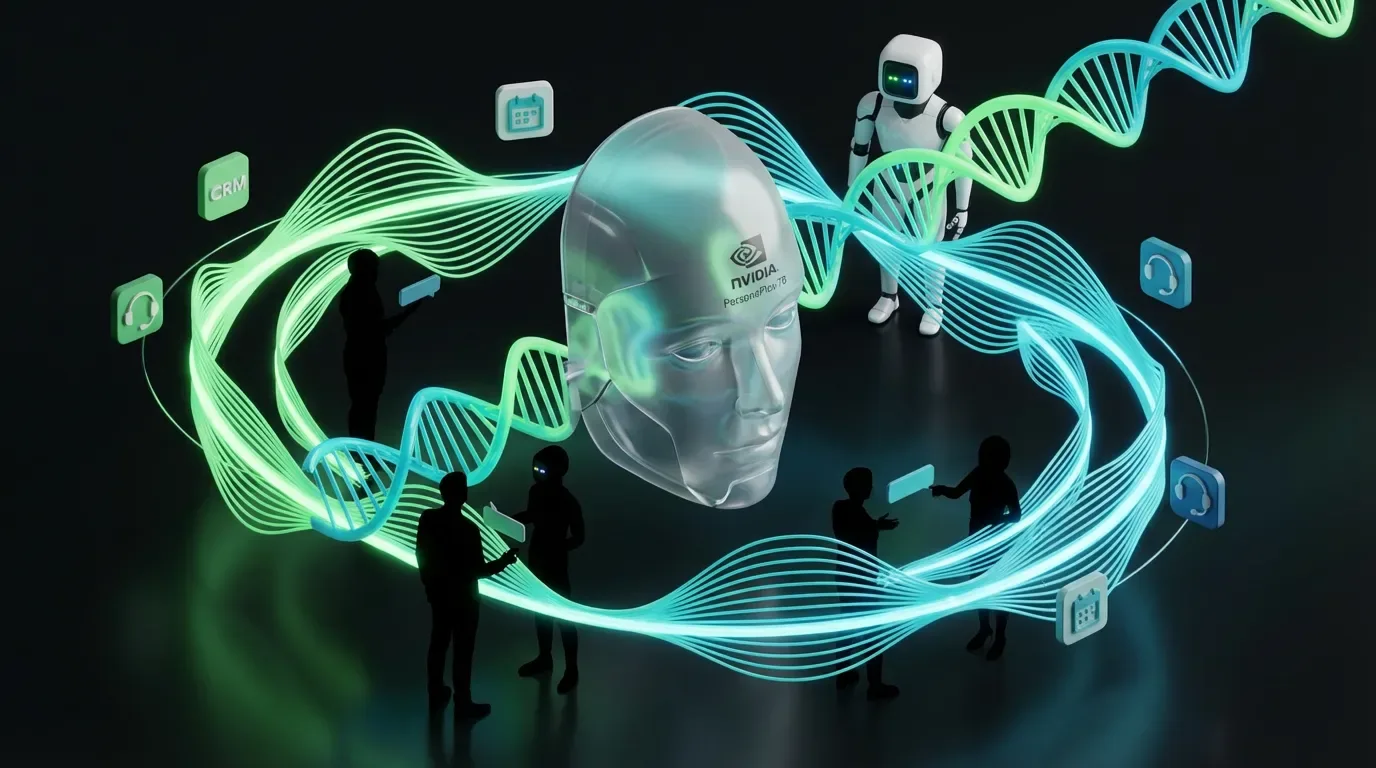
NVIDIA is pushing voice AI out of the “wait… now you talk… now I talk” era with PersonaPlex-7B v1, an open-weights model built for real-time, full-duplex conversation. That means it can listen and speak at the same time like an actual human on a call.
If you want the fastest trailhead into what shipped plus how it is being framed publicly, start here: MarkTechPost’s release write-up.
This matters because the practical future of voice agents is not “better voices.” It is better turn-taking, and the ability to integrate conversations into real systems without the whole experience collapsing into awkward pauses.
Most voice bots still feel like you are leaving a voicemail for a toaster. PersonaPlex is NVIDIA’s attempt to fix the core UX failure: conversational flow. And because it is distributed as open weights, the bigger implication is operational: you can build on it, not just demo it.
Voice AI doesn’t fail because the model can’t speak. It fails because latency, turn-taking, and interruptions turn “conversation” into a buffering simulator.
What NVIDIA actually shipped
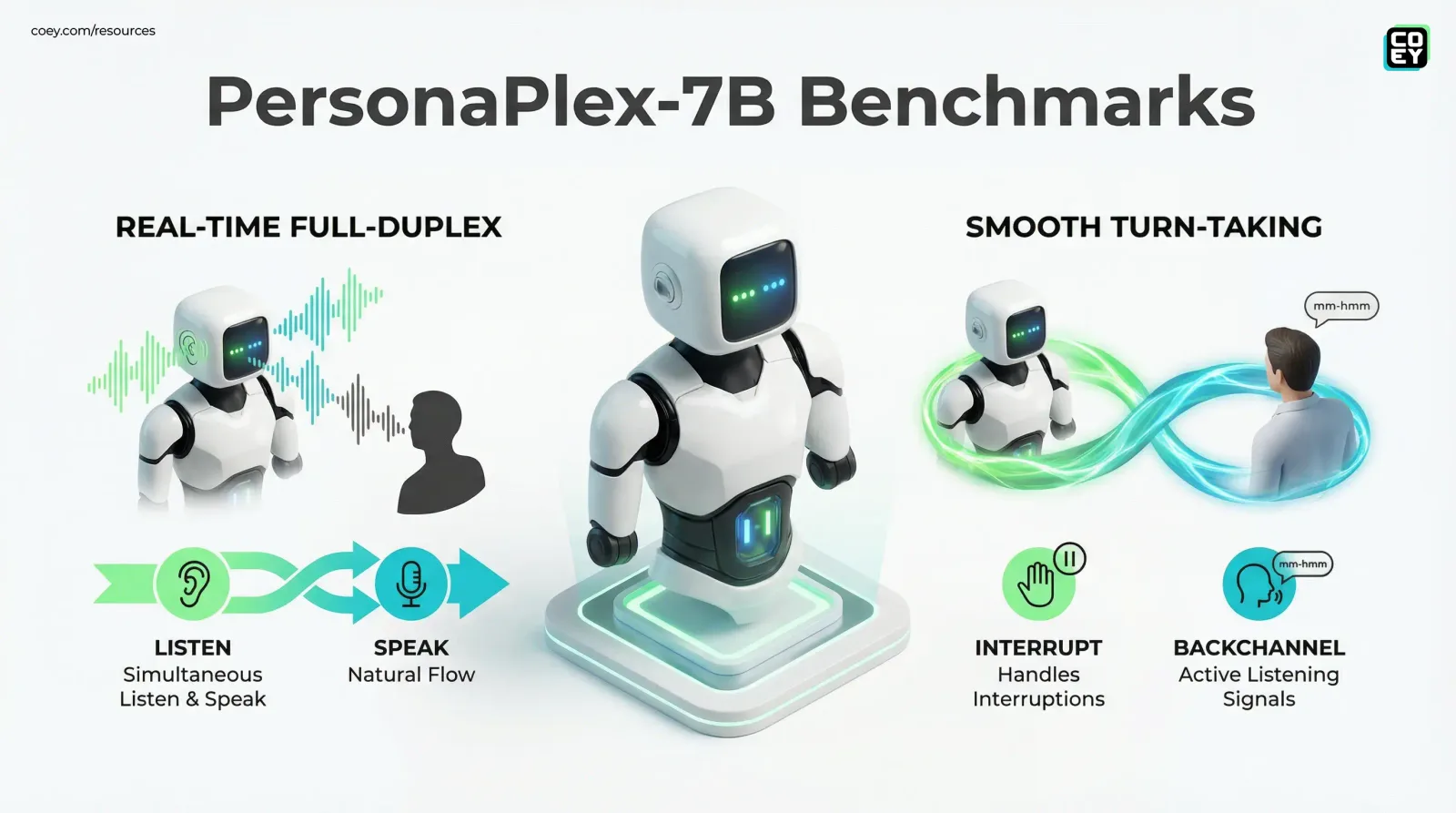
PersonaPlex-7B v1 is a 7B parameter, speech-to-speech model designed for full-duplex dialogue. Instead of treating voice like a pipeline (ASR → LLM → TTS), it is positioned as an integrated approach that can keep up in real time, especially when humans do the thing humans always do: interrupt.
The key behavior claims you keep seeing across coverage are:
Overlapping speech (barge-in) without derailing
Backchannels (the “mm-hmm / right / got it” behaviors that signal active listening)
Lower perceived latency because it does not force strict “your turn / my turn” mechanics
For the primary artifact most builders will actually use, here is the model card and weights: nvidia/personaplex-7b-v1 on Hugging Face.
On paper, this is the difference between a voice agent you tolerate and one you will actually keep talking to.
Why full-duplex is a workflow upgrade
Marketing and customer teams do not buy voice because it is cute. They buy it because voice is where friction lives: lead qualification, support intake, scheduling, onboarding, renewals, event engagement, and internal enablement. But the second a user tries to clarify mid-response and the bot ignores them, trust drops to zero.
Full-duplex changes the economics of voice automation:
Shorter calls (fewer repeats, fewer “sorry, say that again” loops)
Higher task completion (users can correct in-flight instead of restarting)
Better conversion (less frustration equals fewer hang-ups)
And it is not just customer-facing. Internally, a full-duplex agent can become a real-time producer for meetings: capturing intent, confirming details, and generating structured notes while people talk naturally.
API availability: open weights vs. hosted endpoints
Here is the pragmatic split for execs: open weights do not automatically equal plug-and-play.
PersonaPlex’s availability story is primarily “download and serve it” rather than “call an official hosted endpoint.” In practice, open-weight production patterns usually look like:
deploy the model behind your own service (REST/WebSocket)
stream audio in and out
connect tool calls to your systems (CRM, ticketing, scheduling)
log everything (transcripts, events, outcomes)
If you are expecting a no-code button that says “Full Duplex Voice,” you will be waiting. But if you have even modest engineering support, open distribution is an advantage: you can control latency, privacy, and cost.
Automation readiness snapshot
| Question | Best read | Operational meaning |
|---|---|---|
| Can we automate it? | Yes, if you can serve it | Wrap as an internal API and call it from workflows |
| Is there a turnkey hosted API? | Not the core posture | Great for builders; less immediate for no-code teams |
| Is it real-time in practice? | Designed for it | Your audio streaming and infra will decide the outcome |
Where marketers will feel this first
Full-duplex voice is a creator tool in disguise. Once conversation stops being brittle, you can treat calls as high-volume creative input.
1) Voice-based lead qualification that doesn’t feel like IVR jail
When the agent can handle interruption, you can ask real questions (“What are you using today?”) and let the user answer naturally, then push structured fields to CRM. That is not “AI copywriting.” That is pipeline acceleration.
2) Event and community engagement
Brands keep trying “voice booths” and interactive assistants and then learning the hard way that humans talk over machines. Full-duplex is what makes live interaction feel like interaction, not a demo kiosk.
3) Content intelligence flywheels
Calls become assets:
objections → ad angles
FAQs → landing page updates
feature requests → product messaging tests
This is the COEY mission in motion: humans create intent, machines capture and structure at scale.
Hype vs. reality: what to pressure-test
Yes, this category is hot. Also yes, voice agents are where “looks great in a demo” goes to die. Before anyone bets a customer experience on this, pressure-test the boring killers:
Latency under load: one fast demo does not equal 200 concurrent calls
Interruption behavior: does it yield correctly, or bulldoze the user?
Noise and accents: real audio is messy, always
Stability over time: does the voice drift after 20 turns?
Observability: can you log interruptions, handoffs, failure states?
The model is not the system. Production voice means streaming, monitoring, permissions, escalation, and a kill switch.
How this fits the bigger voice market shift
COEY has been tracking the same directional pattern across voice releases: the stack is collapsing from a relay race into fewer components. PersonaPlex is another strong signal that the winning voice systems will be the ones that behave like infrastructure.
If you want a strong internal comparison point in the same “real-time speech-to-speech” lane, read: Chroma 1.0 Makes Real-Time Voice Agents Practical.
Bottom line
PersonaPlex-7B v1 is interesting because it targets the part of voice automation that actually determines adoption: conversational flow. Full-duplex is not a spec sheet flex. It is what stops users from rage-quitting when they talk like humans.
If NVIDIA’s open release posture holds up in practice, PersonaPlex becomes a serious building block for teams who want voice agents that can be integrated, automated, and controlled, not just demoed. The shiny part is that it talks. The scalable part is that it can finally keep up.
Let COEY Wire Your AI Marketing Stack
We help brands and agencies connect n8n, Claude Cowork, OpenClaw, and other AI tools into marketing systems that produce real output. From content automation to full campaign orchestration across every channel. See how it works or request a proposal.